
Google Search is moving beyond a results page that simply returns a list of links. Its newer AI features are designed to help people research, compare options and complete more detailed tasks within Search. Google refers to part of this direction as Search agents: AI-powered assistance that can handle more complex, multi-step requests.
For SEO teams, this does not mean traditional Google search has disappeared. Pages can still attract visitors through standard organic results, image search, product results and other search features. The change is that users may now ask more detailed questions, refine the response and move through several related tasks before choosing which websites to visit.
That creates a stronger reason to publish pages that are genuinely useful beyond one exact keyword. A thin page that only repeats a service phrase offers little in an AI-assisted search journey. A clear page with useful explanations, evidence, comparisons and a logical next step can be relevant across a wider range of questions.
Google has described its newer AI Search direction as a way to support more complex searches and agent-style help. You can read Google’s own overview here: A new era for AI Search.
What are Search agents?
A Search agent is not a separate search engine that website owners can optimise for in isolation. It is better understood as an AI layer that helps users carry out research or actions through Google Search.
For example, instead of searching separately for:
- “best guest posting sites UK”
- “guest post pricing”
- “how to check publisher quality”
- “guest blogging outreach service”
A user may ask a much broader question about how to build links safely for a UK business with a particular budget and niche. The AI system may break that request into several subtopics before presenting a response and useful sources.
This is closely related to query fan-out, where AI search systems explore multiple related searches to answer a broader question. GuestPost.uk already covers that concept in What Is Query Fan-Out in AI Search?.
The key point is that your content should make sense when it is discovered through a related question, not only when someone enters one perfect target keyword.
Why this matters for SEO and guest posting
Search agents may make comparison, research and decision-making queries more detailed. That is especially relevant to sectors such as SEO, SaaS, AI tools, guest posting and link building, where people often need to compare several options before contacting a provider.
A potential client may not ask only “guest posting service UK”. They may ask:
- Which type of guest-post placement suits a B2B SaaS company?
- How do I assess a publisher before buying a sponsored article?
- What should a quality guest post cost in the UK?
- Which SEO tools can help identify content and backlink opportunities?
A well-structured page can answer parts of those questions directly, while also linking users to the next useful resource. This is why commercial pages need supporting informational content, and why informational articles should internally link to the relevant service or tool page.
For GuestPost.uk, that means strengthening the relationship between practical guides, free tools and service pages. Someone reading about publisher quality should be able to move naturally to the Guest Post Site Finder or Guest Posting Services. Someone researching AI-driven SEO should be able to find the Google AI Guide and the AI Search Optimisation Checklist.
Content still needs to earn the visit
AI-assisted search does not remove the need for strong content. It makes weak content easier to ignore.
The pages most likely to remain useful clearly explain a topic, show practical judgment, and help a reader make a decision. For a service business, that means avoiding vague claims such as “we deliver high-quality links” without showing how you assess quality.
Instead, explain the real considerations:
- Relevance between the publisher and the client’s topic.
- Audience country and commercial fit.
- Editorial standards and topical history.
- Organic visibility, indexing and page quality.
- Natural anchor-text planning.
- Whether a placement supports a wider content and link-building strategy.
This type of content is more useful to a human reader and easier for an AI system to understand in context.
How to prepare pages for agent-style search
The best preparation is not to write for a mysterious new algorithm. It is to make every important page easier for a person to understand, trust and act on.
Start with a clear page purpose. A service page should explain the service, who it is for, how the process works and what a client should expect. A tool page should explain what it does, where its data comes from and how users can apply the result. A guide should answer the main question before moving into supporting detail.
This gives search systems clearer information to match a page to a broader task.
Build topic clusters instead of isolated pages
Search agents are likely to handle connected questions. Your site should connect related pages, too.
For example, a guest-posting cluster could include:
- A core Guest Posting Services page.
- A pricing guide explaining the factors that affect cost.
- A guide to checking publisher quality.
- A page about natural anchor-text strategy.
- A guest-post site finder tool.
- Niche-specific guides for SaaS, ecommerce, local businesses or B2B companies.
Each page should have a different purpose. The service page helps a potential buyer understand the offer. The pricing guide answers a commercial research question. The quality guide builds confidence, and the tool gives the visitor a practical action to take.
Internal links then show both users and search engines how these subjects connect. This is much stronger than publishing several pages that all target small variations of “buy guest posts”.
The same applies to an AI SEO cluster. A broad article about AI search can link to practical pages on how to rank in ChatGPT Search, technical SEO for AI search and measuring AI search visibility.
Make commercial content genuinely decision-ready
People using AI-assisted search may reach your page later in their research journey. They may already understand the basics and want help deciding.
That makes commercial pages more valuable when they include specific, helpful information rather than generic sales copy.
A strong service page can cover:
- The type of businesses the service suits.
- What is included and what is not included.
- How publisher relevance is checked.
- How we handle content and anchor text.
- Typical turnaround expectations.
- The difference between a sponsored placement, a digital PR placement and a purely editorial mention.
- The next practical step for someone who is ready to discuss a campaign.
For affiliate and SaaS content, the same principle applies. A review should explain the tool’s main use cases, limitations, pricing approach and the type of user who will benefit most. A comparison should help the reader choose, rather than forcing one tool to “win” every category.
This is especially important for AI and SEO tools because users need to know whether a feature produces verified data, an estimate, a draft or a recommendation. Being clear about that builds trust.
Keep technical SEO straightforward
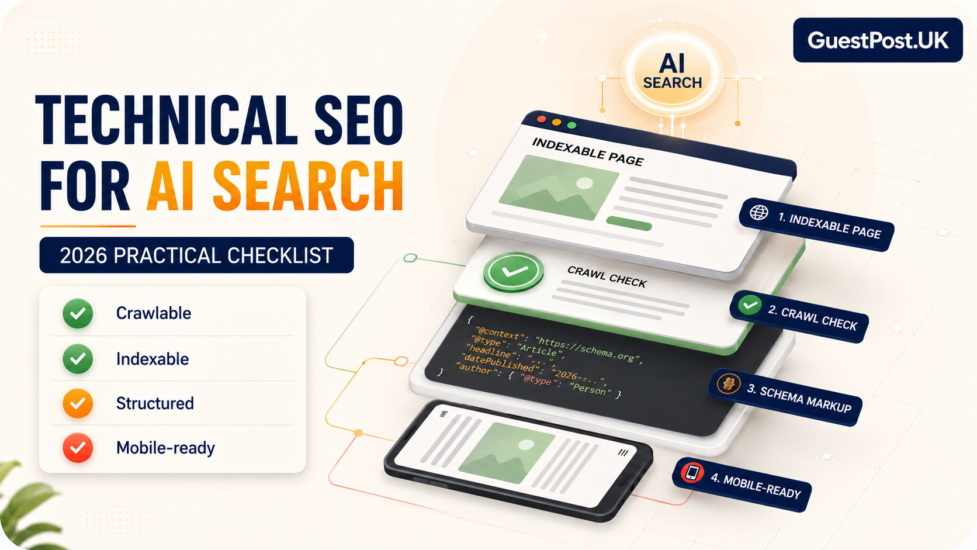
Search agents still rely on websites being accessible and understandable. The technical foundations remain familiar:
- Important pages should be indexable and use a self-referencing canonical.
- Headings should reflect the real structure of the page.
- Internal links should be crawlable and descriptive.
- Key content should be visible in the HTML, not hidden behind unnecessary scripts.
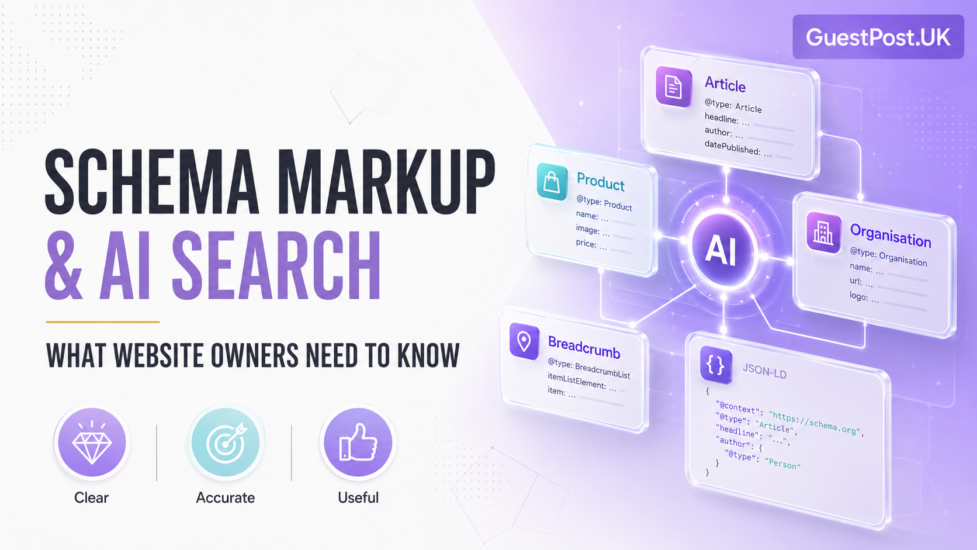
- Structured data should match visible page content.
- Mobile users should be able to read the page and take action without friction.
There is no special “agent SEO” markup that guarantees visibility. The practical advantage comes from having useful, well-organised content on a technically sound website.
For GuestPost.uk, the strongest opportunity is to keep turning the site into a connected decision resource: tools for initial research, guides for understanding the process and service pages for users ready to take action.