
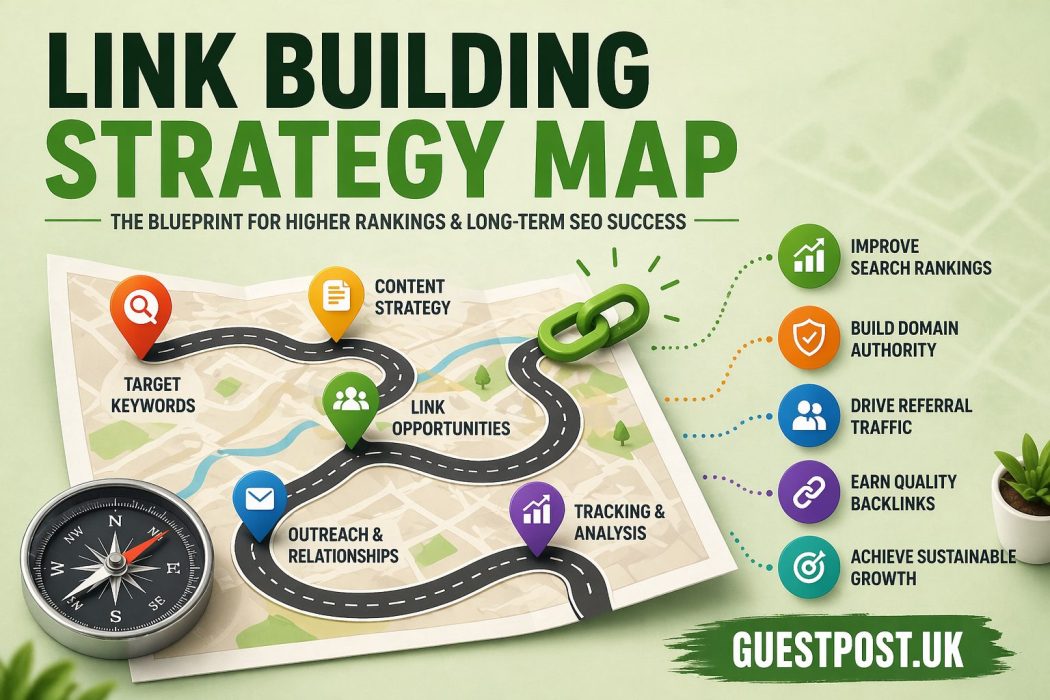
A well-structured link building strategy map is no longer optional—it’s the backbone of any SEO campaign aiming for sustainable growth. Without a clear roadmap, link acquisition becomes reactive, inconsistent, and often ineffective.
If you’ve ever struggled with disorganised outreach, poor-quality backlinks, or stagnant rankings, this guide will help you fix that. You’ll learn how to design, implement, and scale a link building strategy map that aligns with search intent, improves authority, and drives measurable results.
According to a study by Backlinko, pages ranking in position #1 on Google have 3.8x more backlinks than those ranking below. Meanwhile, Ahrefs reports that 91% of web pages get zero organic traffic, largely due to a lack of backlinks. These numbers underline a simple truth: your link strategy determines your visibility.
What is a Link Building Strategy Map?
A link building strategy map is a structured framework that outlines:
- Target pages (money pages, blog content, landing pages)
- Link acquisition methods (guest posts, niche edits, digital PR)
- Anchor text distribution
- Competitor link gap analysis
- Timeline and scaling plan
Think of it like a GPS system for your SEO campaign. Without it, you may still move—but you’ll waste time, resources, and miss optimal routes to ranking success.
Why a Link Building Strategy Map Matters for SEO
A random approach to backlinks often leads to:
- Over-optimised anchor text penalties
- Low-quality or irrelevant links
- Poor ROI from outreach campaigns
A structured map ensures:
- Consistent link velocity
- Balanced anchor text profile
- Strategic targeting of high-impact pages
Key Benefits
- Improves keyword rankings faster
- Strengthens domain authority
- Enhances topical relevance
- Maximises outreach efficiency
Core Components of a High-Performing Link Building Strategy Map
1. Target Page Segmentation
Divide your pages into:
- Primary pages: Commercial landing pages
- Supporting content: Blog posts and guides
- Linkable assets: Data studies, infographics, tools
2. Link Types Allocation
A balanced link building strategy map includes:
- Guest posts
- Niche edits
- Digital PR links
- Directory citations
- Resource page links
3. Anchor Text Distribution
Maintain a natural ratio:
- Branded anchors (40–60%)
- Partial match (20–30%)
- Exact match (5–10%)
- Generic anchors (10–20%)
4. Competitor Link Gap Analysis
Analyse competitors to identify:
- Missing backlinks
- High-authority domains
- Content opportunities
5. Timeline and Scaling Plan
A strong strategy includes:
- Monthly link targets
- Budget allocation
- Outreach tracking
Link Building Strategy Map vs Random Link Building
| Feature | Link Building Strategy Map | Random Link Building |
|---|---|---|
| Structure | Clearly defined roadmap | No structure |
| ROI | High and measurable | Unpredictable |
| Risk | Low (controlled) | High (penalties) |
| Scalability | Easy to scale | Difficult |
| Consistency | Stable growth | Fluctuating results |
Best Tools to Build a Link Building Strategy Map
Choosing the right tools is essential for executing your strategy efficiently. Below is a detailed comparison.
Top Link Building Tools Comparison
| Tool | Key Features | Pricing | Best For | Limitations |
|---|---|---|---|---|
| Ahrefs | Backlink analysis, competitor research | High | Agencies & professionals | Expensive |
| SEMrush | Link building tool, outreach CRM | Medium–High | All-in-one SEO users | Learning curve |
| BuzzStream | Outreach management, relationship tracking | Medium | Outreach-heavy campaigns | Limited backlink data |
| Pitchbox | Automated outreach workflows | High | Enterprise link building | Costly |
| Hunter.io | Email finding & verification | Low–Medium | Outreach support | Not a full SEO tool |
Which Tool Should You Choose?
- Beginners: SEMrush (balanced features)
- Agencies: Ahrefs + Pitchbox combo
- Outreach-focused teams: BuzzStream
- Budget users: Hunter.io + manual tracking
Step-by-Step Process to Create a Link Building Strategy Map
Step 1: Define Your SEO Goals
Identify:
- Target keywords
- Ranking objectives
- Traffic goals
Step 2: Audit Existing Backlinks
Analyse:
- Toxic links
- Authority distribution
- Anchor text profile
Step 3: Map Content to Link Opportunities
Assign:
- Blog posts → guest posting
- Landing pages → niche edits
- Data content → digital PR
Step 4: Build Outreach Pipelines
Create:
- Prospect lists
- Email templates
- Follow-up sequences
Step 5: Track and Optimise
Monitor:
- Link acquisition rate
- Domain authority growth
- Keyword movement
Simple Visual Representation of a Link Building Strategy Map
[Keyword Targets]
        ↓
[Content Pages]
        ↓
[Link Types]
  ↙   ↓   ↘
Guest  PR  Niche Edits
        ↓
[Anchor Strategy]
        ↓
[Outreach Execution]
        ↓
[Tracking & Optimisation]
Advanced Link Building Strategies for Competitive Niches
1. Authority Stacking
Acquire multiple links from:
- High DR sites
- Relevant niche blogs
- Industry publications
2. Topical Relevance Clustering
Build links around:
- Specific topic clusters
- Semantic keyword groups
3. Digital PR Campaigns
Create:
- Data-driven content
- Surveys and reports
- Newsworthy assets
4. Tiered Link Building
Structure:
- Tier 1: High-quality backlinks
- Tier 2: Supporting links to Tier 1
Pros and Cons of Using a Link Building Strategy Map
Pros
- Clear direction and execution
- Improved ROI
- Reduced risk of penalties
- Easier scaling
Cons
- Requires planning time
- Needs ongoing tracking
- Tool costs can be high
Expert Tips to Maximise Your Link Building Strategy Map
- Focus on quality over quantity
- Prioritise relevance over authority alone
- Track link velocity trends
- Diversify link sources
- Avoid over-optimised anchors
Pro Insight
Many SEO campaigns fail because they chase links without context. A link building strategy map ensures every backlink serves a purpose within your broader SEO ecosystem.
Common Mistakes to Avoid
- Building links without targeting specific pages
- Ignoring anchor text diversity
- Over-relying on one link type
- Neglecting competitor analysis
- Failing to track performance
Link Building Strategy Map for Different Use Cases
For Local SEO
- Citations and local directories
- Local guest posts
- Regional PR
For SaaS Websites
- Data-driven content
- Industry guest posts
- Integration partnerships
For Affiliate Sites
- Niche edits
- Content-driven backlinks
- Resource page links
Final Verdict: Is a Link Building Strategy Map Worth It?
A link building strategy map transforms SEO from guesswork into a scalable system. It aligns your efforts, improves efficiency, and significantly increases your chances of ranking on page one.
For anyone serious about organic growth—whether an SEO consultant, agency, or business owner—this approach is not just beneficial, it’s essential.
Frequently Asked Questions About Link Building Strategy Map
What is the main purpose of a link building strategy map?
It provides a structured plan for acquiring backlinks that improve rankings, authority, and traffic.
How many backlinks should I build per month?
It depends on your niche and competition, but consistency is more important than volume.
Can I rank without a link building strategy map?
It’s possible in low-competition niches, but highly unlikely in competitive industries.
What is the best tool for link building strategy planning?
Ahrefs and SEMrush are the most comprehensive options for data-driven planning.
How long does it take to see results?
Typically 3–6 months, depending on competition and execution quality.
Is guest posting still effective?
Yes, when done strategically with relevant, high-quality sites.
A well-executed link building strategy map is the difference between slow progress and exponential SEO growth. If your current approach lacks structure, now is the time to refine it and turn backlinks into a predictable growth engine.