
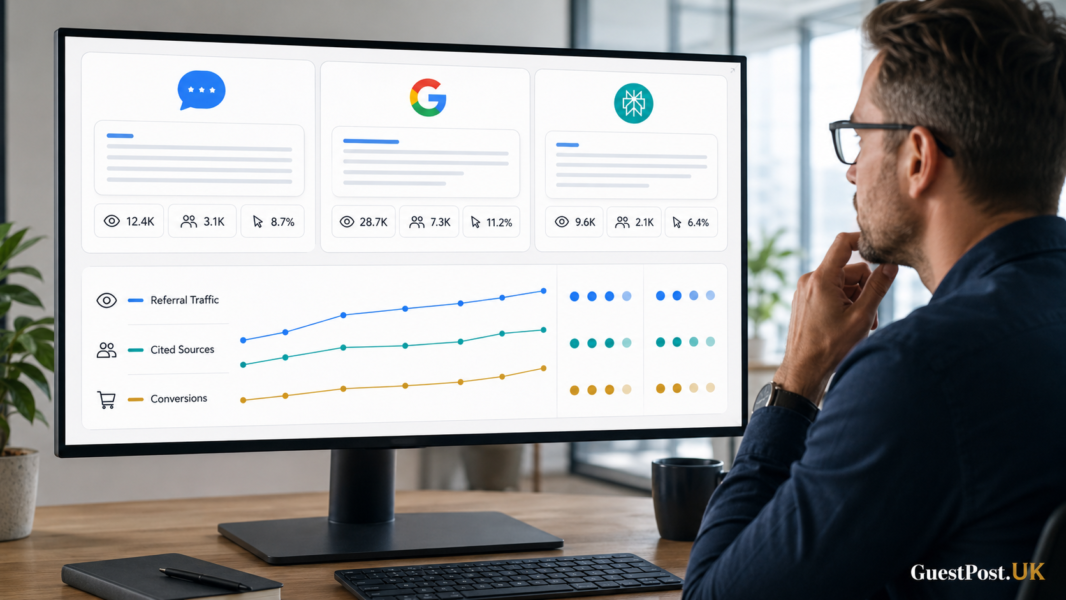
How to Measure AI Search Visibility: A Practical Reporting Framework for ChatGPT, Google AI Mode and Perplexity
AI search visibility is becoming a serious SEO metric, but it is also easy to report badly.
A brand appearing in a ChatGPT answer may look impressive. A page cited in Google AI Mode may feel like a ranking win. Yet neither result means much on its own unless it leads to the right audience, qualified visits or commercial action.
The answer is not to replace traditional SEO reporting. It is to add a practical AI search layer that shows what is being seen, what is being clicked, and the value it creates.
Start with three levels of measurement
A useful AI visibility report should separate three different signals.
1. Visibility
This is about whether your brand, website, or content appears in AI-generated answers to relevant prompts.
For example, an SEO agency might track prompts such as:
- Best guest posting services in the UK
- How can a small business build high-quality backlinks?
- What is generative engine optimisation?
- Best link building agency for SaaS companies
Record whether the brand is mentioned, cited, recommended or absent. Also note which competitor brands appear and the pages or sources being referenced.
Visibility is important because it shows whether AI platforms understand your business as relevant to a topic. However, it is an awareness signal, not proof of revenue.
2. Referral traffic
The next question is whether people actually visit your website from AI search platforms.
Google now has a dedicated Generative AI performance report in Search Console for eligible properties. It shows impression data from AI Overviews and AI Mode, including the pages, countries and devices generating that visibility. Google is rolling access out gradually, so the report may not yet appear in every account. Google’s guidance confirms that these generative impressions are also included in overall Search performance data.
For ChatGPT, check GA4 acquisition reports and filter traffic using utm_source=chatgpt.com. OpenAI confirms that ChatGPT Search referral links include this parameter, allowing publishers to identify relevant visits in analytics. OpenAI’s publisher guidance explains the tracking approach.
For Perplexity and other answer engines, review GA4 source, medium and referral data. Referral volume may initially be small, so combine it with manual visibility checks rather than dismissing the platform too early.
3. Business impact
Traffic is only useful if it moves the business forward. Add the same conversion events you use for ordinary organic search:
- Contact-form submissions
- Phone-call clicks
- Quote requests
- Booked consultations
- Newsletter sign-ups
- Product purchases
- Assisted conversions
This prevents a common reporting mistake: celebrating AI mentions while ignoring whether those visitors become leads or customers.
Build an AI visibility scorecard
A simple monthly scorecard is enough for most businesses. It should show the trend, not just an isolated screenshot.
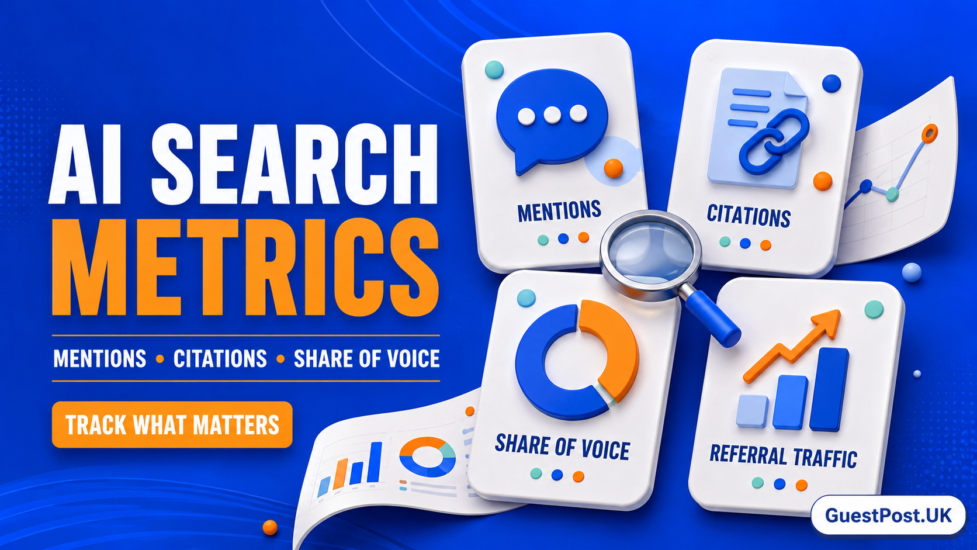
| Metric | What to measure | Why it matters |
|---|---|---|
| Brand mentions | Number of priority prompts where the brand appears | Shows awareness and topical relevance |
| Citations | Number of prompts where the website is linked or named as a source | Indicates content visibility |
| Competitor share | Which competitors appear more often | Reveals the real visibility gap |
| AI referral sessions | Visits from ChatGPT, Perplexity and other platforms | Measures genuine audience movement |
| AI-feature impressions | Google AI Overview and AI Mode impressions in Search Console | Shows visibility inside Google’s AI results |
| Conversions | Leads, sales or assisted conversions from AI referrals | Connects visibility to commercial value |
Keep the prompt set focused. Twenty carefully chosen commercial and informational prompts are far more useful than checking hundreds of vague questions.
Track prompts by intent, not only by keyword
Traditional rank tracking often starts with a keyword list. AI search reporting works better when prompts are grouped by the user’s intended outcome.
A guest-posting business could use four prompt groups:
Service-intent prompts
These are people looking for a supplier, such as “best UK guest posting service” or “guest posting agency for finance websites”.
Problem-solving prompts
These target people looking for advice: “how to choose safe guest post sites” or “how to tell if a backlink is high quality”.
Comparison prompts
These reveal whether your brand is included in buying decisions, for example “guest posting vs digital PR” or “best alternatives to manual blogger outreach”.
Brand prompts
Track searches for your company name, branded services and key team members. This helps show whether authority-building work is improving brand recognition, not only direct-response traffic.
Save the exact prompt, country, date, platform, brands mentioned, cited URLs and a short note about the answer. Repeat the same set every month so you can compare fairly.
Do not judge AI visibility by position alone
AI platforms do not work like a conventional results page with ten fixed blue links. An answer can change based on location, previous conversation, the wording of the prompt, current information and the platform itself.
That means a report should avoid claiming “position one in ChatGPT” unless there is a clearly defined measurement method behind it. Better wording is:
- Mentioned in 12 of 20 tracked ChatGPT prompts
- Cited by Google AI features for 8 priority pages
- AI referral sessions increased 34% month on month
- Appeared alongside three leading competitors in commercial comparison prompts
This is more honest, easier for clients to understand, and much more useful for decision-making.
Connect the findings to action
The value of reporting comes from what happens next.
If a competitor is repeatedly recommended for “best” or “alternative” searches, review the sources that support its visibility. They may have stronger comparison content, better third-party coverage, clearer product information or more trusted mentions.
If your content receives AI-feature impressions but few clicks, strengthen the page’s unique value. Add original examples, useful templates, expert insight, current data or a clearer next step. Google’s own AI-search guidance stresses that valuable, non-commodity content remains the foundation for visibility in generative search. Read Google’s guidance here.
If ChatGPT referral traffic grows but does not convert, examine the landing page. The visitor may need a more relevant service page, stronger trust signals or a clearer call to action.
AI search is not a separate world from SEO. It is another way people discover and evaluate brands. The businesses that benefit most will measure it calmly, connect it to real outcomes and use the findings to improve their content, reputation and customer journey.
For support with tracking AI mentions, identifying competitor gaps and improving answer-engine visibility, explore our GEO services, SEO client reporting and guide on how to rank in ChatGPT, Gemini and Perplexity.