
For nearly two decades, businesses have focused on one objective:
Getting higher rankings in Google.
Today, another challenge has emerged.
How do you get your business mentioned when somebody asks ChatGPT a question?
The answer is not as simple as ranking number one in Google.
Many businesses with strong organic rankings rarely appear in ChatGPT recommendations.
Meanwhile, some brands consistently show up even though they don’t dominate every search result.
This has led to the rise of Generative Engine Optimisation (GEO), a discipline focused on improving visibility inside AI-generated answers.
If you’re wondering how to rank in ChatGPT Search, the short answer is this:
ChatGPT doesn’t rank websites in the traditional sense. It recommends brands, entities, products, services, and sources it considers authoritative, relevant, and trustworthy.
The rest of this guide explains how to become one of those recommendations.
Understanding How ChatGPT Search Actually Works
One of the biggest mistakes marketers make is treating ChatGPT like Google.
Google primarily returns links.
ChatGPT primarily returns answers.
This changes the optimisation process dramatically.
Traditional SEO asks:
“How do I rank for this keyword?”
ChatGPT optimisation asks:
“How do I become one of the brands worth mentioning?”
That distinction is crucial.
The future belongs not only to businesses that rank.
It belongs to businesses that get recommended.
Why Some Brands Appear Constantly in ChatGPT
Try asking ChatGPT questions such as:
- Best SEO tools
- Best CRM software
- Best project management platform
- Best email outreach software
Certain brands appear repeatedly.
Examples often include:
- Ahrefs
- Semrush
- HubSpot
- Salesforce
- Asana
- Monday.com
This is not an accident.
These companies have spent years building authority signals that AI systems can recognise.
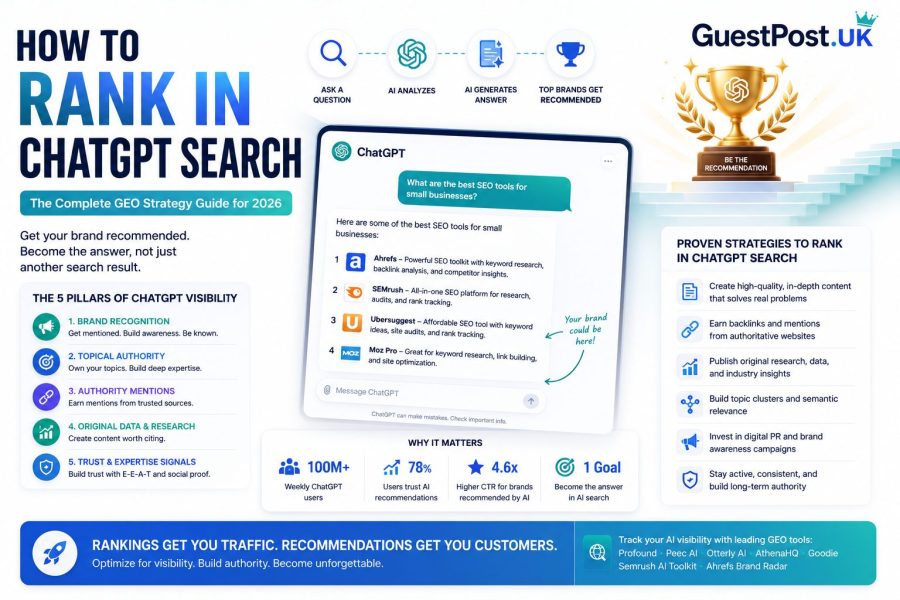
The Five Pillars of ChatGPT Visibility
After analysing hundreds of AI-generated recommendations, several patterns become obvious.
The brands most frequently mentioned tend to excel in five areas.
1. Strong Brand Recognition
AI systems appear more confident recommending recognised brands.
This means:
- Industry awareness matters
- Brand searches matter
- Online mentions matter
- Citations matter
A company nobody talks about is less likely to become an AI recommendation.
2. Topical Authority
ChatGPT often associates brands with specific subjects.
Examples:
HubSpot → CRM
Ahrefs → SEO
Canva → Graphic Design
Notion → Productivity
The goal is not to become known for everything.
The goal is to become known for something.
The Topic Cluster Strategy
Imagine you’re running a guest posting agency.
Publishing these articles helps establish topical authority:
- Guest Posting Services
- Blogger Outreach Services
- Link Building Strategies
- Guest Posting vs Link Building
- Digital PR Campaigns
- White Hat Link Building
- Outreach Email Templates
Over time, AI systems begin associating your brand with those topics.
This increases recommendation potential.
3. Authority Mentions
One recurring pattern appears everywhere.
Brands that receive frequent mentions from trusted sources are often recommended more frequently.
Examples include:
- Industry publications
- Research websites
- Universities
- News sites
- Expert interviews
- Podcast appearances
Think of mentions of authority as modern trust signals.
Why Digital PR Matters More Than Ever
Historically, businesses invested in digital PR primarily for:
- Backlinks
- Brand awareness
- Referral traffic
Today, there is another benefit.
AI visibility.
When respected websites mention your company repeatedly, your chances of becoming part of AI-generated recommendations increase.
One GEO consultant recently noted:
“The future value of digital PR may exceed the future value of backlinks.”
That statement may sound extreme today, but the trend is becoming increasingly visible.
4. Original Data and Research
ChatGPT appears to favour information-rich sources.
Companies publishing:
- Industry studies
- Surveys
- Original statistics
- Benchmarks
- Research reports
often gain disproportionate visibility.
Why?
Because original research creates citations.
Citations create authority.
Authority creates recommendations.
5. Consistent Expertise Signals
Many businesses publish content randomly.
The brands dominating AI search usually do not.
Instead, they demonstrate expertise repeatedly over time.
A cybersecurity company publishing 200 cybersecurity articles sends a stronger signal than a company publishing:
- Cybersecurity
- Cooking
- Travel
- Fashion
all on the same website.
Consistency matters.
The GEO Framework for Ranking in ChatGPT
The process can be simplified into five stages.
Stage 1: Become Discoverable
Traditional SEO remains essential.
You still need:
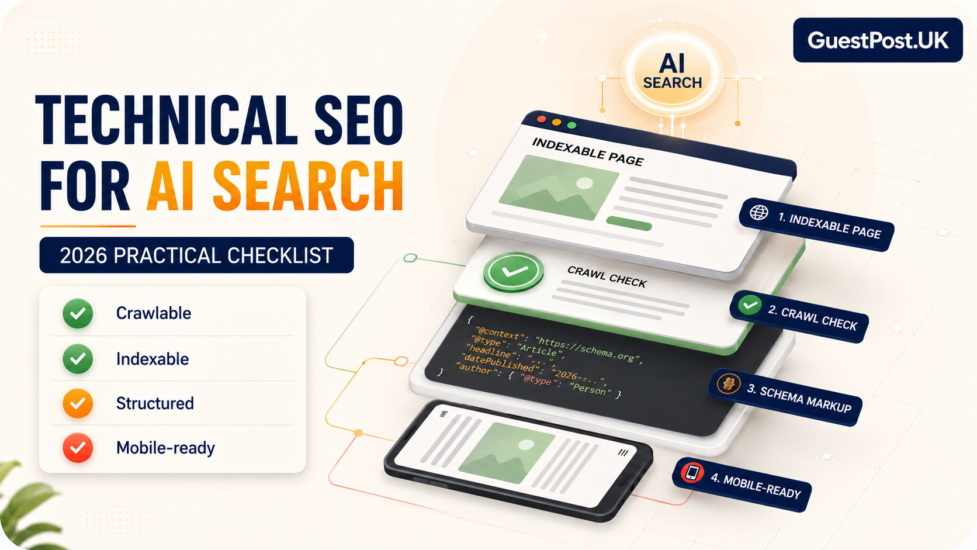
- Technical SEO
- Indexable content
- Internal linking
- Strong site structure
Without discoverability, authority becomes difficult to build.
Stage 2: Become Visible
Increase exposure through:
- Guest posting
- PR campaigns
- Industry partnerships
- Interviews
- Podcasts
Visibility creates familiarity.
Stage 3: Become Referenced
The goal is to appear across trusted sources.
Examples:
- Industry blogs
- Resource pages
- Roundups
- Comparison articles
The more frequently your brand appears, the stronger your entity profile becomes.
Stage 4: Become Trusted
Trust signals include:
- Reviews
- Case studies
- Testimonials
- Expert authorship
- Recognised credentials
This stage separates leaders from competitors.
Stage 5: Become Recommended
Recommendations are the outcome.
Not the starting point.
Most businesses focus on stage five.
Successful businesses focus on stages one through four.
Practical GEO Tactics That Work Today
Create Comparison Pages
AI systems frequently reference comparison content.
Examples:
- Ahrefs vs Semrush
- Smartlead vs Instantly
- Guest Posting vs Link Building
These pages help establish relevance within buying journeys.
Publish Industry Statistics
Statistics are frequently cited by:
- Journalists
- Bloggers
- Researchers
- AI systems
Original data creates long-term visibility.
Build Author Profiles
Expert authorship matters.
Show:
- Credentials
- Experience
- Expertise
- Industry involvement
Authority increasingly attaches to people as well as brands.
Earn Mentions Beyond Your Own Website
Many companies focus exclusively on publishing.
The strongest GEO performers often focus equally on being discussed elsewhere.
Common Reasons Brands Fail to Appear in ChatGPT
Weak Brand Recognition
A few mentions across the web.
No Topical Authority
Content lacks focus.
Limited Industry Presence
Little PR or outreach activity.
Thin Content
No unique insights.
No Original Research
Nothing worth citing.
These weaknesses often prevent recommendation growth.
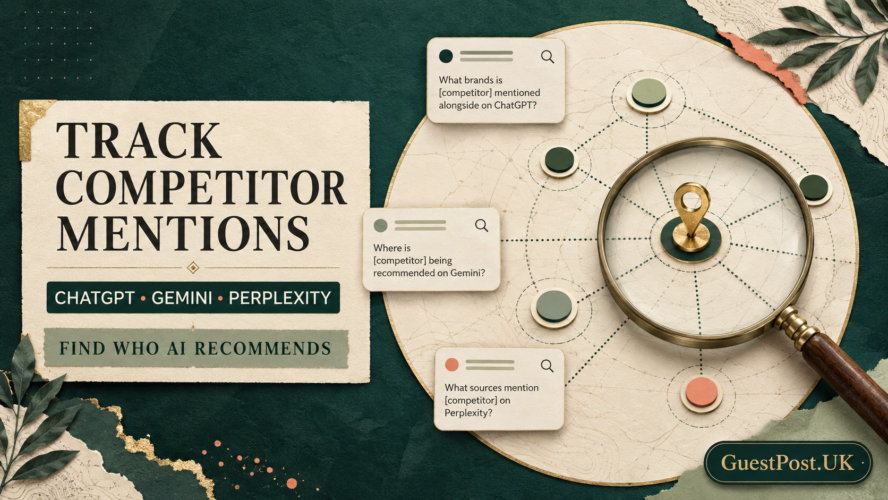
How to Measure ChatGPT Visibility
Since ChatGPT doesn’t provide rankings, businesses need alternative metrics.
Track:
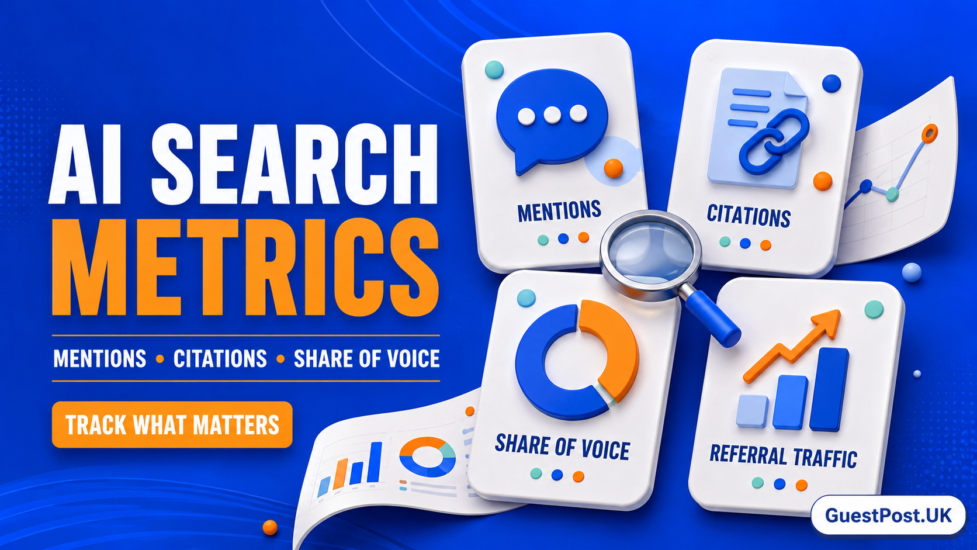
Brand Mentions
How often are you mentioned?
Citation Sources
Who references your brand?
Competitive Share
Who gets recommended instead?
Topic Ownership
Which subjects are associated with your business?
AI Visibility Trends
Is recommendation frequency increasing?
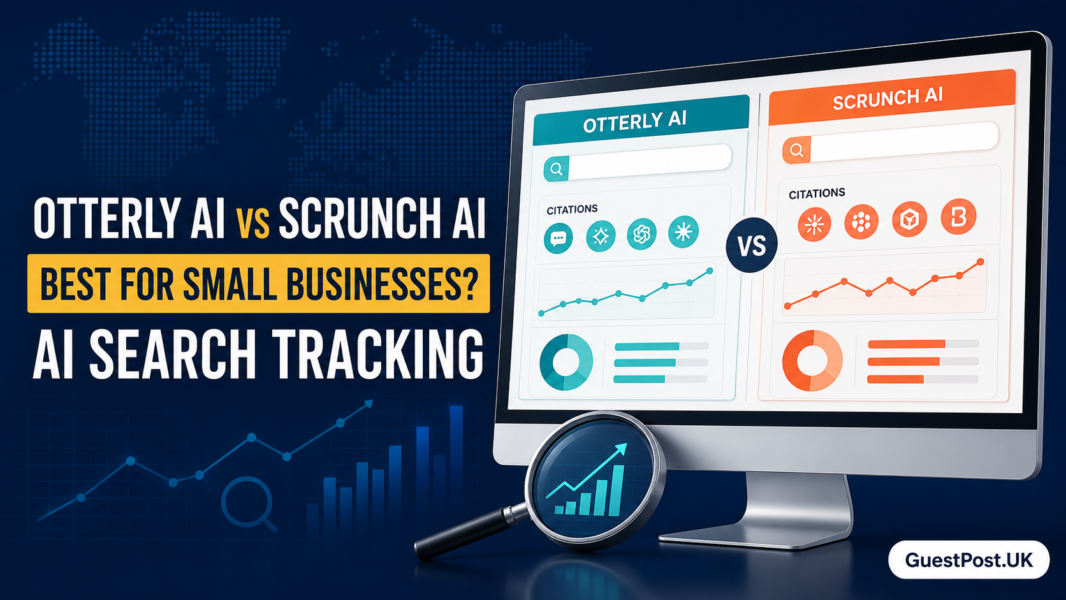
Tools such as:
- Profound
- Peec AI
- Otterly AI
- AthenaHQ
- Goodie AI Search Analytics
- Ahrefs Brand Radar
help measure these signals.
The New SEO Formula
For years, the formula looked like this:
Content + Links = Rankings
The emerging formula looks more like:
Content + Links + Authority + Recognition + Citations = AI Recommendations
This doesn’t replace SEO.
It expands it.
Frequently Asked Questions
Can you rank number one in ChatGPT?
Not in the traditional sense. ChatGPT generates recommendations rather than fixed rankings.
Does ChatGPT use backlinks?
Backlinks appear to contribute indirectly through authority and trust signals.
How long does GEO take?
Like SEO, GEO is generally a long-term strategy rather than a quick win.
What is the most important factor?
Topical authority combined with strong brand recognition.
Does guest posting help ChatGPT’s visibility?
Yes. Guest posting can increase authority, mentions, citations, and industry recognition.
Final Verdict
The businesses that dominate ChatGPT Search in the coming years will not necessarily be those with the biggest advertising budgets.
They will be the brands that become trusted sources within their industries.
Traditional SEO still matters.
Backlinks still matter.
Content still matters.
However, AI-generated recommendations are introducing a new layer of visibility that businesses can no longer afford to ignore.
The goal is no longer just ranking.
The goal is to become the answer.