
A potential customer can now ask ChatGPT, Gemini or Perplexity a question such as “Who is the best SEO agency for small businesses?” and receive a shortlist before they visit Google’s usual results.
If competitors appear consistently while your business is missing, the issue is rarely due to a single ranking factor. AI platforms generate answers from a mix of accessible website content, cited pages, brand information, reviews, topical relevance, and third-party authority.
An AI competitor audit helps you identify where that gap comes from. It shows which rivals are being recommended, what answer engines say about them, which pages they cite and what your own website may need to improve.
This process is particularly valuable for service businesses, ecommerce brands, SaaS companies and agencies where recommendations can strongly influence shortlists. It also complements a conventional SEO audit, because AI visibility depends on many of the same foundations: useful content, crawlability, authority and clear commercial positioning.
Start with commercially valuable AI prompts
Do not begin by asking generic questions about your industry. Start with questions that indicate a user may be close to choosing a provider, product or solution.
Build a spreadsheet of 30–50 prompts across these groups:
- Core service or product searches
- “Best” recommendation questions
- Comparison and alternatives searches
- Pricing and budget questions
- Problem-led customer questions
- Local searches
- Branded searches
For example, an outreach agency could track:
- “Best guest posting service for UK businesses”
- “How to earn high-authority backlinks”
- “Guest posting agency alternatives”
- “Affordable blogger outreach service”
- “How can I improve brand visibility in AI search?”
A local business should add location and audience variations. A B2B SaaS company should include prompts on use cases, integrations, team size, and alternatives.
Keep the same core prompt list for each monthly check. If you alter every prompt, you cannot tell whether visibility has improved or whether you are simply measuring different questions.
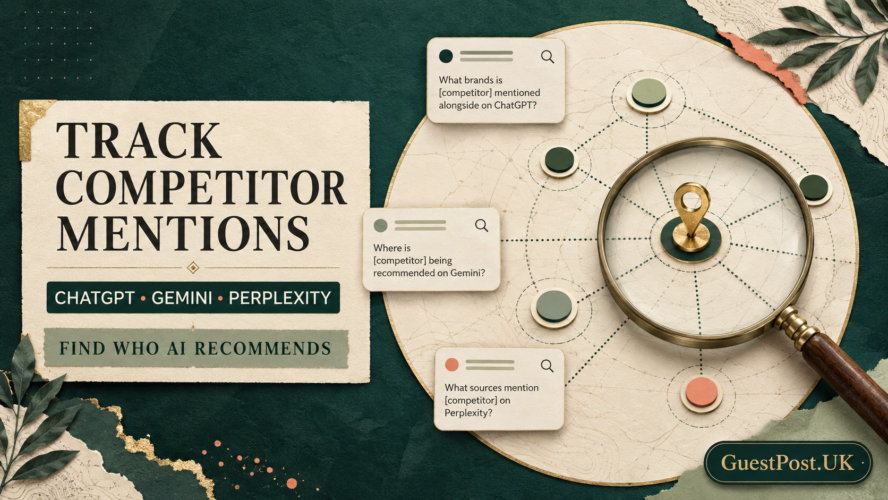
Test ChatGPT, Gemini and Perplexity separately
Each AI platform can produce different results.
Perplexity is often more explicit about the sources it uses. Gemini may reflect Google’s wider understanding of web entities and content. ChatGPT results can vary by model, browsing behaviour, prompt wording and available sources.
Run each prompt in a fresh session where possible, then record:
| Audit field | What to record |
|---|---|
| AI platform | ChatGPT, Gemini, Perplexity or another relevant engine |
| Prompt | Exact wording used |
| Your brand | Mentioned, cited, recommended or absent |
| Competitors | Brands included in the answer |
| Position | First recommendation, list mention or passing reference |
| Description | Positive, neutral or negative wording |
| Sources | Cited pages and domains |
| Date and market | When and where the result was checked |
Do not overreact to a single response. AI results change. Look for repeated patterns across several prompts and multiple check dates.
Identify which competitors are genuinely winning
Not every mentioned business is a meaningful competitor. Focus on the brands that repeatedly appear in high-intent answers.
Ask these questions:
- Which competitors are recommended most often?
- For which prompt groups do they appear?
- Are they the first recommendations, or simply listed?
- Does the answer describe them more clearly or more positively than your brand does?
- Are they visible across more than one AI platform?
- Are they associated with a specific use case, location or audience?
- Which sources support their inclusion?
A competitor that appears only for broad educational questions may be less urgent than one repeatedly recommended for “best [service] for [audience]” searches.
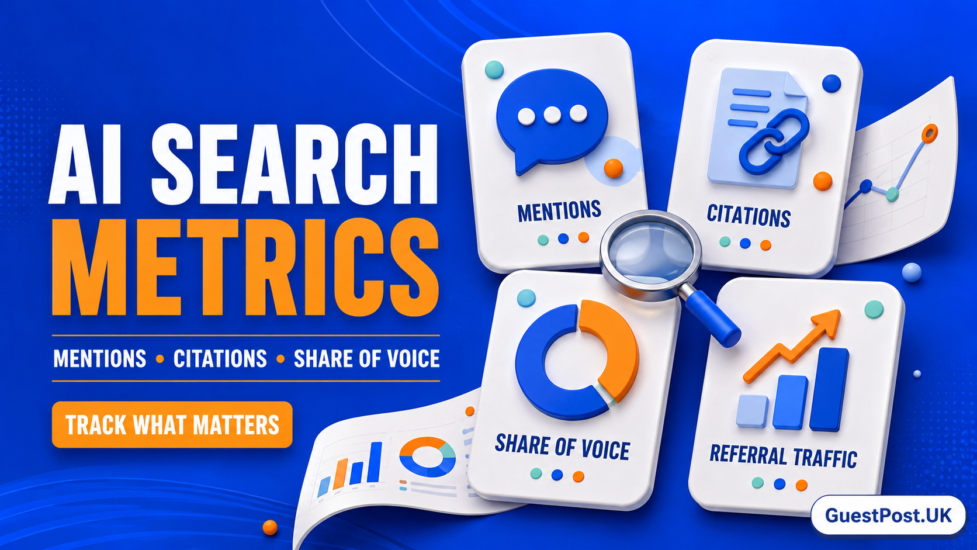
This is where share of voice becomes useful. Count how often each brand appears across the tracked set. The goal is not to create a vanity league table, but to see where recommendation ownership sits.
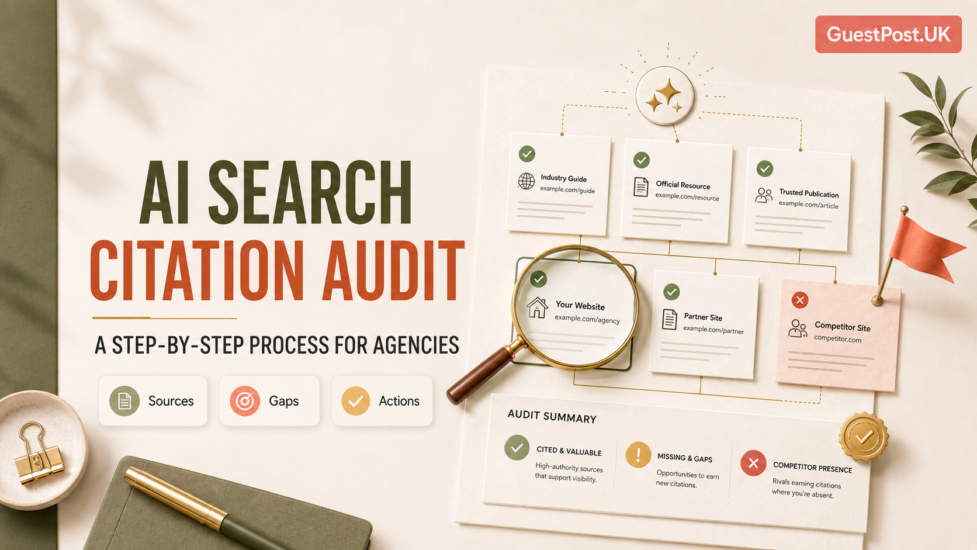
Inspect the cited sources behind each recommendation
The cited-source analysis is usually the most revealing part of the audit.
When a competitor is recommended, inspect the websites and pages supporting that answer. You may find a combination of:
- Detailed service pages
- Helpful comparison content
- Trusted media coverage
- Specialist directories
- Customer reviews
- Case studies
- Product documentation
- Industry research
- Digital PR features
- Guest articles on relevant publications
Then compare these sources with your own footprint.
If competitors are cited for having clear pricing pages and yours does not, that is a website content gap. If they are supported by respected industry publications, that may be an authority and digital PR gap. If local competitors are consistently referenced through directories and reviews, your local entity signals may need attention.
The aim is not to copy every page or chase every listed website. It is to understand the evidence AI systems can find when they explain why a competitor is credible.
Audit your own key pages
Once you know which prompts and competitors matter, review the pages that should represent your brand.
For each important service, product or category page, check whether it clearly answers:
- What do you offer?
- Who is it for?
- Which problem does it solve?
- What makes it different?
- Where do you operate?
- What proof supports your claims?
- What does the process involve?
- What should a customer do next?
AI systems work better with clear, factual, well-structured information. Thin sales copy, vague claims, and buried details make it harder for a platform to determine whether your business is relevant.
Review the following areas:
Content clarity
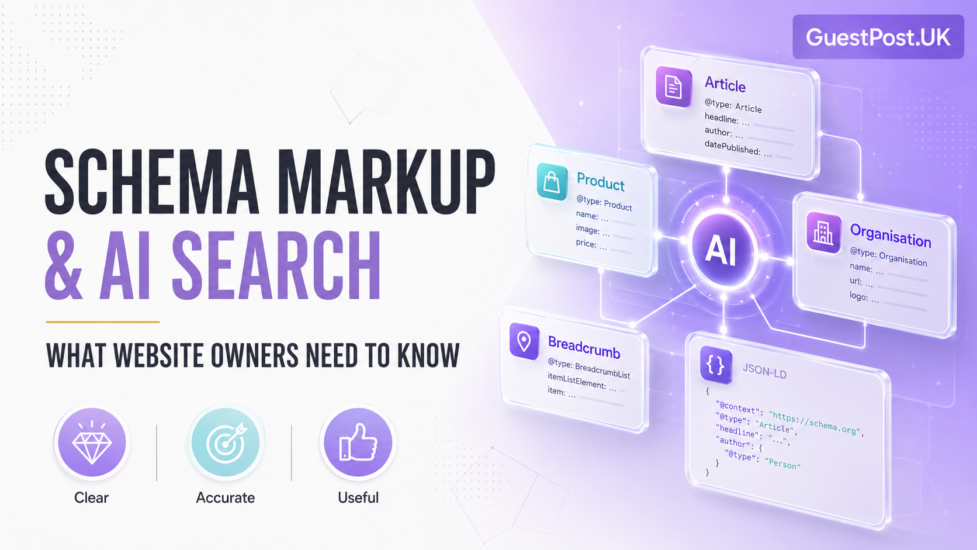
Use descriptive headings, concise explanations, relevant FAQs and clear service distinctions. Make important information available in normal, crawlable page content, rather than only in graphics, sliders, or downloadable files.
Evidence and trust
Add authentic case studies, reviews, specialist credentials, real examples, pricing guidance where appropriate and clear business information. Unsupported superlatives rarely create durable trust.
Internal linking
Connect important service pages with related guides, category pages and supporting resources. Contextual internal links help visitors and search systems understand which pages are central to a topic.
For example, a guide about AI visibility should naturally link to a GEO service, relevant audit pages and supporting tool content. Avoid adding links solely because a keyword appears.
Technical accessibility
Check indexation, canonical tags, broken pages, robots directives, JavaScript rendering and page speed. A page cannot become a useful source if search systems or AI crawlers cannot access and interpret it reliably.
Compare the competitor content gap
Now compare your priority pages with the sources supporting competitors.
Create a simple table:
| Prompt or topic | Competitor evidence | Your current coverage | Gap to address |
|---|---|---|---|
| “Best [service] for SMEs” | Detailed comparison page and editorial reviews | General service page only | Create buyer guide and add proof |
| Pricing question | Transparent pricing FAQ cited | No pricing information | Publish clear pricing expectations |
| Local recommendation | Strong reviews and directory coverage | Few current reviews | Improve review and citation strategy |
| Technical question | Helpful expert guide cited | Thin blog post | Expand or replace with practical guide |
This turns abstract AI visibility data into a prioritised worklist.
A competitor may have more content, but quantity is not automatically the issue. Often, the strongest gap is a single missing page that answers a high-intent question better than anything currently on your website.
Look for inaccurate or outdated AI answers
Your audit should not focus only on missing mentions. Check whether AI systems describe your business incorrectly.
Common issues include:
- Outdated services or pricing
- Incorrect location information
- Old business names
- Confusing descriptions
- Missing product categories
- Incorrect competitor comparisons
- Negative statements based on old reviews or weak sources
When inaccurate information appears repeatedly, update the authoritative pages on your own site first. Then improve the supporting signals around the web where appropriate, such as business profiles, directories, reviews and credible editorial coverage.
Do not attempt to manipulate answer engines with repetitive low-quality mentions. Durable visibility comes from accurate information that customers and reliable websites can verify.
Prioritise the gaps that affect enquiries
A long audit can produce dozens of possible actions. Prioritise them using commercial relevance and feasibility.
Start with gaps that involve:
- High-intent “best”, comparison and pricing prompts
- Core revenue-driving services or products
- Major competitors appearing repeatedly
- Incorrect brand information
- Important pages with weak or unclear content
- Technical issues blocking access
- Missing proof, reviews or authority signals
Then assign each action to one of four areas:
- Website content
- Technical SEO
- Reputation and trust
- Authority-building and external coverage
This makes it easier to connect the audit with a real monthly campaign rather than treating it as a one-off report.
Turn the audit into a visibility improvement plan
The next step is to make measured improvements, then repeat the same checks.
Improve priority pages first. Add clear commercial information, useful FAQs, evidence and better internal connections. Publish supporting comparison or problem-solving content where the audit reveals a genuine need. Resolve crawl and indexation problems before investing heavily in promotion.
For authority gaps, focus on relevant, editorial-quality coverage. A considered guest posting service can help create useful topical references, but placements should support a wider content and brand strategy rather than exist only for a backlink.
Recheck the same prompt set after meaningful work has been published. Record movement, inspect new citations, and compare to determine whether your brand is being described more accurately.
The strongest AI search strategy is not about forcing your name into every answer. It is about making your business the clearest, most credible and most useful recommendation for the questions your ideal customers already ask.