
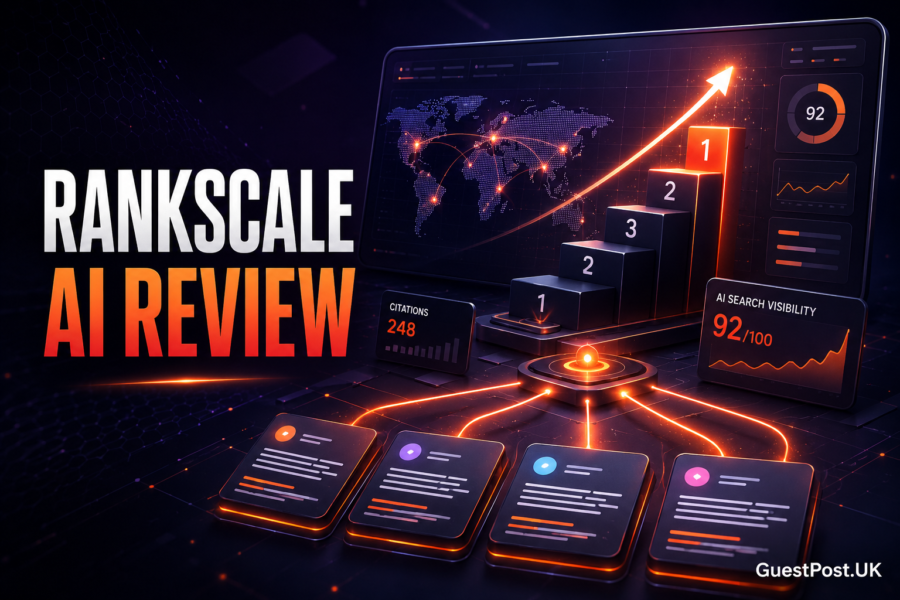
Rankscale is an AI visibility platform built to answer a question that traditional SEO tools cannot answer well: when people ask ChatGPT, Google AI Mode, Perplexity or Claude about your market, does your brand appear — and why?
The platform tracks brands, products, prompts, citations and competitors across more than 17 AI search engines. It combines AI rank tracking with citation analysis, sentiment signals, prompt research and AI-readiness audits.
That makes Rankscale more than a simple ChatGPT mention checker. It is designed for SEO teams and agencies that want to measure AI search visibility across multiple markets, build reports for clients and identify the sources shaping AI-generated recommendations.
Its low entry price makes it accessible, but it uses a credit model. This is the central trade-off: Rankscale can be excellent value for focused monitoring, yet costs can rise if you track many brands, prompts, countries and models at a high frequency.
What is Rankscale?
Rankscale is a Generative Engine Optimisation and AI-search tracking platform. It monitors how a brand appears in AI-generated answers, including its answer position, mentions, citations, sentiment and competitive share of voice.
The platform covers a broad range of engines, including ChatGPT, Perplexity, Gemini, Claude, Google AI Overviews, Google AI Mode, Copilot, DeepSeek, Grok and Mistral. It supports tracking across more than 240 countries and all languages, making it useful for international brands and agencies.
Unlike a normal rank tracker, Rankscale works with prompts rather than only keywords. A user may ask an AI system:
- “Which are the best link building agencies for SaaS?”
- “What is the best CRM for a small sales team?”
- “Which project management tools work for construction companies?”
- “What are the best UK guest posting services?”
Rankscale checks how a brand, a competitor, and cited sources appear in those answers. The result is a more useful view of modern buyer research, where customers may receive a recommendation before they ever click through to Google.
Rankscale features
AI rank tracking across multiple engines
Rankscale’s core product is prompt-level AI visibility tracking. Users can create search terms, select the AI engines and regions they want to monitor, then see whether the brand is mentioned, cited or recommended.
The dashboard can show:
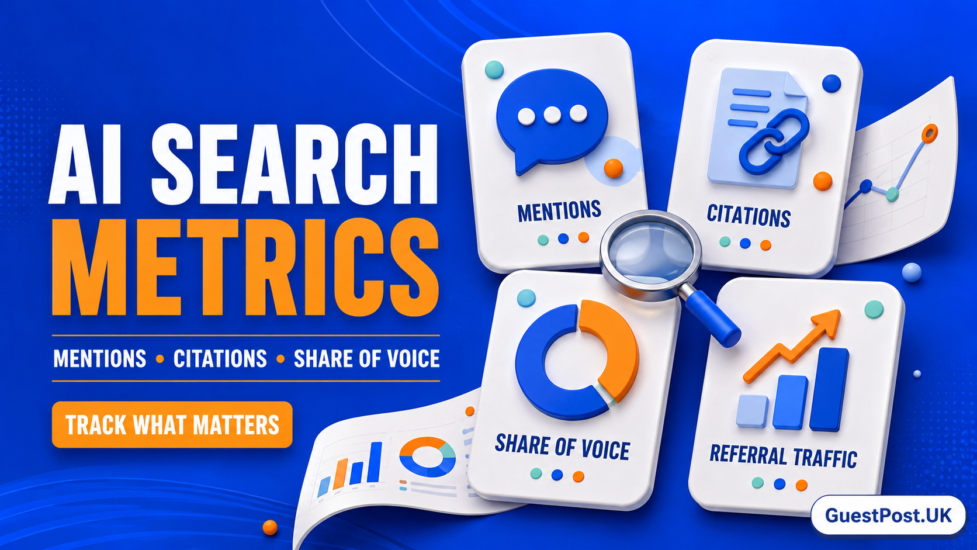
- Brand mentions and answer position
- Share of voice against competitors
- Citation data
- Sentiment around brand mentions
- Platform, region and language differences
- Visibility trends over time
This matters because performance can vary widely by engine. A brand may appear consistently in Google AI Overviews but be absent from ChatGPT or Perplexity. It may also rank strongly for broad awareness prompts yet lose out when users ask commercial comparison questions.
For a business providing SEO services, that difference is important. Visibility has to be connected with the services, audiences and buying questions most likely to produce valuable enquiries.
Citation tracking and source analysis
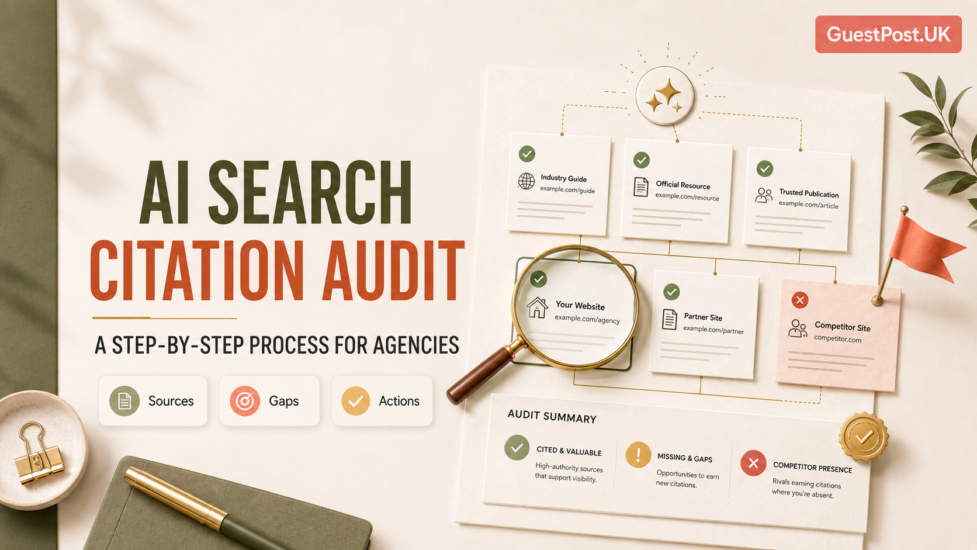
Citation analysis is one of Rankscale’s strongest features. The platform tracks citation volume, cited domains, cited URLs, source categories and a brand’s share of citations.
It can compare a brand’s citation share in several ways:
- Citation mentions
- Unique cited URLs
- Unique cited domains
- Competitor citation patterns
- Citation context and sentiment
- Top domains influencing a topic
This is useful for content strategy, digital PR and outreach. If AI engines repeatedly cite a competitor’s detailed comparison, an industry publication and an original research page, that is a practical clue about the evidence influencing the answer.
The response should not be to publish a thin imitation. Instead, assess what the current sources do well, identify the information they fail to cover and produce something stronger.
That might mean improving product details, creating an expert comparison, adding a case study, publishing original data or earning coverage on relevant authority sites. High-quality blogger outreach can help build those third-party signals when it is tied to a real story or useful expertise.
AI readiness and page audits
Rankscale includes page-level AI visibility checks and web audits. These are intended to identify whether a URL is easy for AI systems to retrieve, understand and cite.
The audits can support technical and content decisions around:
- Page accessibility and crawlability
- Entity clarity
- Content gaps
- Relevant facts and structured information
- Citation readiness
- Potential issues affecting AI visibility
This feature is useful because a brand can have strong authority but still make its key information hard to interpret. Long JavaScript-heavy pages, vague service descriptions, missing facts, poorly structured FAQs, and unclear product information can all create barriers.
An AI-readiness audit should be part of a wider review, not a replacement for conventional SEO. It is still necessary to check indexability, technical errors, internal linking, page intent, search performance and conversions. Our SEO audit service covers that broader foundation.
Prompt research and query fan-out tracking
Rankscale offers prompt research and query fan-out tracking. This helps users move beyond their own assumptions about the prompts that buyers may use.
Query fan-out matters because AI systems can expand a broad question into multiple related sub-questions or sources. A business may think it needs to rank for one main category phrase, while AI may rely on comparisons, reviews, use cases, pricing, location signals or product documentation to form an answer.
For example, a buyer asking for “best digital PR agency” may also need answers about:
- Industry experience
- Client results
- Pricing model
- Service scope
- Relevant publications
- Alternatives and comparisons
- Reputation and specialist knowledge
Tracking those related questions can help teams plan a better content cluster rather than relying on a single generic landing page.
Agency reporting and integrations
Rankscale includes features that become more useful at the Pro, Growth, and Enterprise levels, such as team workspaces, raw data exports, custom dashboards, white-label reporting links, REST API access, and agency resources.
This makes it a realistic option for agencies that want to turn AI visibility into a client-reporting service. A report can show where a client appears, which competitors lead, which sources are cited and what actions are planned for the next period.
The important point is to report carefully. AI results can fluctuate, so avoid telling a client that a single mention proves major commercial success. Use balanced language, compare trends over time and connect visibility movement with the work delivered.
“AI search data becomes valuable when it leads to a clear action: improve the page, correct the information, earn a stronger source or target a more meaningful buyer question.”
Rankscale pricing
Rankscale uses credit-based pricing. Credits are consumed when the platform queries AI engines, meaning the amount of monitoring available depends on the number of prompts, engines, regions and frequency selected.
Current plans include:
| Plan | Monthly price | Included credits | Best for |
|---|---|---|---|
| Essential | $20 | 120 credits | Individuals and small focused projects |
| Pro | $99 | 1,200 credits | SEO teams and consultants |
| Growth | $385 | 5,500 credits | Agencies and multi-brand work |
| Enterprise | $780 | 12,000 credits | Large programmes needing scale and support |
The Essential plan includes up to 480 AI responses, 10-page audits, and brand dashboards. Pro adds larger capacity, team workspace features, exports and more audits. Growth and Enterprise add expanded brand limits, agency support, white-label options and API access.
The entry price is attractive, but do not choose a plan based only on its monthly cost. Map out the actual tracking requirement first. Monitoring 10 prompts across many models and countries will consume credits very differently than monitoring 1 brand in 1 market.
Rankscale pros and cons
Pros
- Broad coverage across 17+ AI search engines
- Affordable entry-level plan
- Strong citation and source analysis
- Tracks mentions, answer position, citations and sentiment
- Supports 240+ countries and all languages
- Useful page audits and AI-readiness checks
- Good agency features at higher plans
- White-label reporting and API options available
Cons
- Credit model requires careful usage planning
- Costs can increase quickly for broad multi-market monitoring
- Audit recommendations still need expert review and implementation
- May feel detailed for businesses only needing a simple AI mention snapshot
- Does not replace traditional SEO, analytics or content strategy
Rankscale alternatives
Waikay is a useful alternative for teams interested in AI brand understanding, fact tracking, source intelligence and topic-level gaps. Read our Waikay review for a closer look.
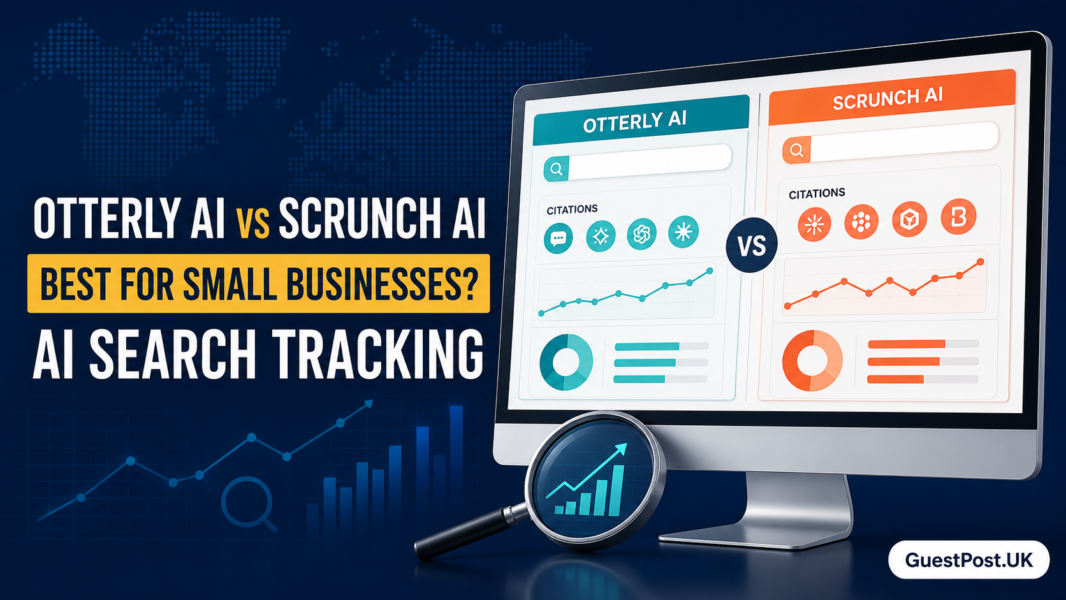
Scrunch AI is stronger for businesses that want AI visibility monitoring alongside technical diagnostics, AI bot traffic information, and agent-focused content delivery.
Peec AI is a good choice for agencies that prioritise clean prompt-level reporting, multi-client projects and a simpler workflow.
Ahrefs Brand Radar is suited to SEO teams that want AI visibility alongside established competitor research, backlink data and keyword insights.
For the wider market, read our comparison of the best AI search visibility tools.
Is Rankscale worth using?
Rankscale is one of the more compelling AI visibility platforms for SEO teams and agencies because it combines broad engine coverage, source-level citation intelligence, and a relatively affordable starting plan.
It is particularly strong for teams that need to monitor multiple AI engines, countries or brands without being locked into a single search ecosystem. The platform’s audit, prompt research and agency-reporting features also make it practical beyond a basic dashboard.
The credit model is the key consideration. Rankscale offers good value when monitoring is planned carefully, but businesses should calculate likely usage before committing to a long-term workflow.
If your business is ready to consistently measure AI visibility and act on the findings through content improvements, technical fixes, and credible authority-building, Rankscale is well worth testing.