
Google AI Mode and ChatGPT Search both change how people discover information online, but they are not the same product and should not be treated as one SEO channel.
Google AI Mode sits inside Google Search. It can expand a complex request into related searches, use Google’s understanding of the web and present an AI-led response with links to supporting sources. ChatGPT Search is a conversational search experience that can search the web while answering a question, often letting the user refine the request through follow-up prompts.
For a website owner, the practical question is not which platform will “replace” the other. It is how to make content useful enough to be discovered, understood and cited across both environments.
Google continues to position AI Mode as part of the wider Search experience, while ChatGPT combines web search with a conversational interface. Both reward content that is clear, reliable and capable of answering a real user question.
Google AI Mode: strongest for Google search journeys
Google AI Mode matters most when users start with Google and want help with a broader or more complex task. This can include researching services, comparing products, planning a purchase or understanding a subject with several related questions.
For SEO, its main strengths include:
- Access to Google’s existing search ecosystem and indexing signals.
- The ability to explore several related sub-queries through query fan-out.
- Visibility alongside traditional organic search, image results, local results and shopping features.
- Strong relevance for people who are already using Google to research a commercial decision.
A user researching link building may begin with a broad request such as “how should a UK SaaS company assess guest-post opportunities?” Google AI Mode can then explore related issues such as publisher relevance, link attributes, pricing, authority, organic traffic and content quality.
This is why a single sales page is rarely enough. A site needs the supporting pages that answer those individual questions properly.
GuestPost.uk already has useful supporting resources around this journey, including the Guest Post Pricing Guide, Guest Post Site Finder and Publisher Quality Checker.
ChatGPT Search: strongest for conversational research
ChatGPT Search is especially useful when a person wants to research a topic through an ongoing conversation. Rather than opening multiple tabs and deciding what to search next, the user can ask follow-up questions such as:
- Which option is better for a small business?
- What risks should I check first?
- Can you compare these two SEO tools?
- What should I do after finding a content gap?
- Which sources support that recommendation?
This makes ChatGPT Search relevant for comparison content, detailed explainers and practical checklists. It can be a strong discovery channel for articles that are genuinely helpful, well-structured, and supported by clear source material.
For example, a focused guide on how to check publisher quality can support a user who is considering guest posting. A broad, shallow article repeating “best guest posting services” without useful criteria is less likely to satisfy the question.
Our guide on how to rank in ChatGPT Search explains the core visibility principles in more detail.
The key difference for SEO teams
Google AI Mode is closer to an expanded Google research experience. ChatGPT Search is closer to an AI research conversation that can use web information.
Both can send users to helpful websites, but the user journey is different. Google AI Mode may begin with a keyword-style query and expand it. ChatGPT Search may begin with a broad question, then narrow through follow-ups.
That means your content should be strong at both entry points: answer the immediate question clearly, then provide enough depth and internal links for the reader to continue their research.
Features that matter most for visibility
Neither platform offers a shortcut that makes weak pages visible. The core requirement is still useful content that a search system can understand, and a reader can trust.
| SEO factor | Google AI Mode | ChatGPT Search |
|---|---|---|
| Main user journey | Starts in Google Search and expands a query | Starts with a conversation and follow-up questions |
| Strongest content types | Search-led guides, commercial pages, local and product content | Detailed explainers, comparisons, practical workflows and source-led guides |
| Discovery signals | Google’s indexing, page relevance, technical SEO and search ecosystem | Clear answers, trustworthy sources, useful structure and topical depth |
| Best use for GuestPost.uk | Capturing broader Google research and commercial search demand | Reaching users researching SEO, tools, outreach and link-building decisions |
| Measurement | Google Search Console remains the core first-party source | Direct referral tracking and visibility-monitoring tools help identify impact |
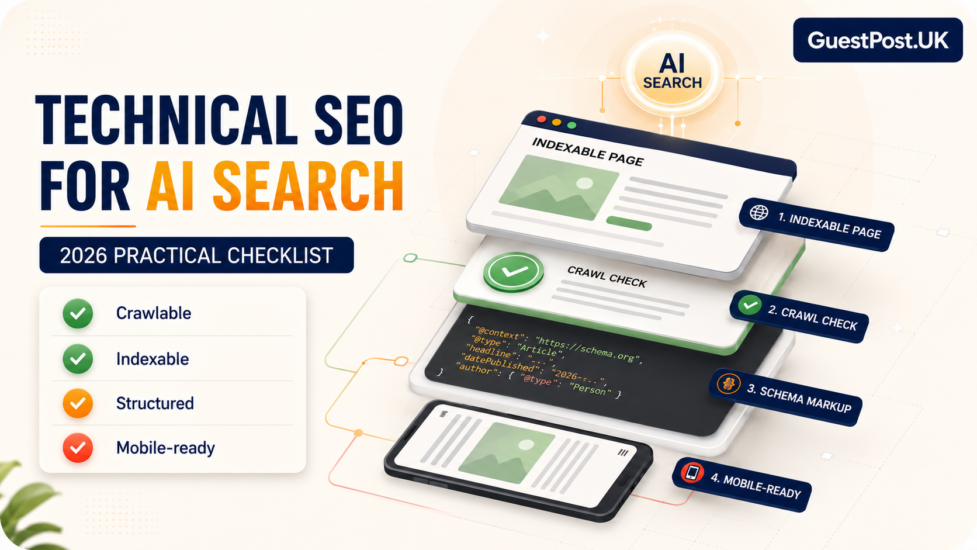
For Google AI Mode, traditional SEO foundations remain particularly important. Your pages need to be indexed, internally linked, mobile-friendly, and aligned with search intent. A technically weak page is less likely to perform well in normal Google search, so don’t expect it to perform strongly in AI Mode either.
For ChatGPT Search, the emphasis is more visible in how well the page answers a question. Clear definitions, logical sections, supporting evidence and practical examples make it easier for a user to trust the answer and follow through to the source.
Content formats that work for both platforms
The strongest overlap is content with a specific job.
A useful article should not try to answer every possible SEO question. It should answer its main question properly, then guide the reader to related pages where appropriate.
These formats are especially valuable:
- Commercial comparison pages that explain who each tool, service or approach suits.
- Pricing guides that explain the factors behind cost instead of promising unrealistic fixed prices.
- Practical checklists for tasks such as evaluating a publisher or refreshing an underperforming page.
- Topic-led service guides that explain the process behind a service.
- Original research or curated resource pages with clear criteria and regular updates.
- Tool pages that give the user a useful first action, then link to a guide or service.
For example, your Google Keyword Tool can help a visitor find search ideas. They can then use the Keyword Cluster Generator to group related terms, and move on to a content brief or SEO service when they need professional help.
That is a logical content journey for a person, and it gives search systems a clearer understanding of how your resources connect.
How to measure results without guessing
Don’t assume an increase in branded searches or direct traffic automatically came from AI search. Track what you can verify.
For Google, use Search Console to review clicks, impressions, page trends and the queries driving visibility. The new Google Search Console multimodal reporting guide is also useful as search journeys increasingly involve more than text-only queries.
For ChatGPT Search and other AI platforms, watch for referral traffic in analytics, changes in branded demand, cited URLs, lead quality and the questions prospects mention before contacting you. The goal isn’t to chase a single vanity metric. It is to see whether your content is bringing relevant visitors who take useful next steps.
So: which matters more for SEO?
Google AI Mode matters more for core SEO visibility because it sits inside Google’s search ecosystem and is closely connected to the search journeys where people already discover websites, services and products.
ChatGPT Search matters more for conversational discovery and is especially valuable for detailed guides, tool comparisons and research-led content that helps a user make a decision.
The best approach is not to choose one platform. Build pages that can serve both: technically sound, clearly written, evidence-led and linked into a useful topic cluster. That gives GuestPost.uk the best chance of being discovered when someone searches traditionally, asks an AI assistant for guidance or compares their options before buying.