
Most agencies do not struggle to sell SEO.
They struggle to fulfil it.
A small agency can usually manage five or ten SEO clients without major operational issues. Technical audits can be completed. Content calendars can be planned. Reports can be produced. Client communication remains manageable.
Then growth happens.
The agency signs fifteen more clients.
Suddenly, the part of SEO that once seemed straightforward becomes the most difficult service to deliver consistently.
Not because link building is technically complicated.
Because it is operationally demanding.
Finding relevant websites, negotiating placements, managing publishers, reviewing content, tracking live links, handling client expectations, and maintaining quality standards requires a completely different system than most agencies initially anticipate.
This is why link building often becomes the bottleneck that limits agency growth.
Why Agencies Underestimate Link Building
Most agency owners begin their SEO journey from one of three backgrounds.
They come from:
- Technical SEO
- Content marketing
- Web development
Very few start as outreach specialists.
As a result, many agencies develop strong capabilities in areas such as audits, keyword research, site architecture, content production, and analytics.
Link acquisition is often treated as something that can be added later.
The reality is quite different.
A well-structured outreach operation resembles a sales organisation more than a traditional SEO department.
It requires prospecting, relationship management, negotiations, follow-ups, quality control, and performance tracking.
The skills involved are fundamentally different from those required to optimise a website.
The Agency Scaling Curve
There is a predictable pattern visible across hundreds of SEO agencies.
Stage One: Founder Fulfilment
The agency owner handles everything.
Outreach.
Content.
Reporting.
Client communication.
This works temporarily.
Stage Two: Delegation
The agency hires writers and junior SEO staff.
Technical tasks become easier to distribute.
Link building often remains dependent on the founder.
Stage Three: Capacity Pressure
Client growth outpaces fulfilment capacity.
Campaign quality becomes inconsistent.
Response times increase.
Results become harder to maintain.
Stage Four: Operational Decision
The agency reaches a crossroads.
Build an internal outreach department.
Or partner with external fulfilment providers.
Many agencies discover this decision later than they should.
The Hidden Cost of In-House Link Building
When agency owners calculate the cost of link building, they often focus on placement costs.
The bigger expense is usually labour.
Consider a typical campaign.
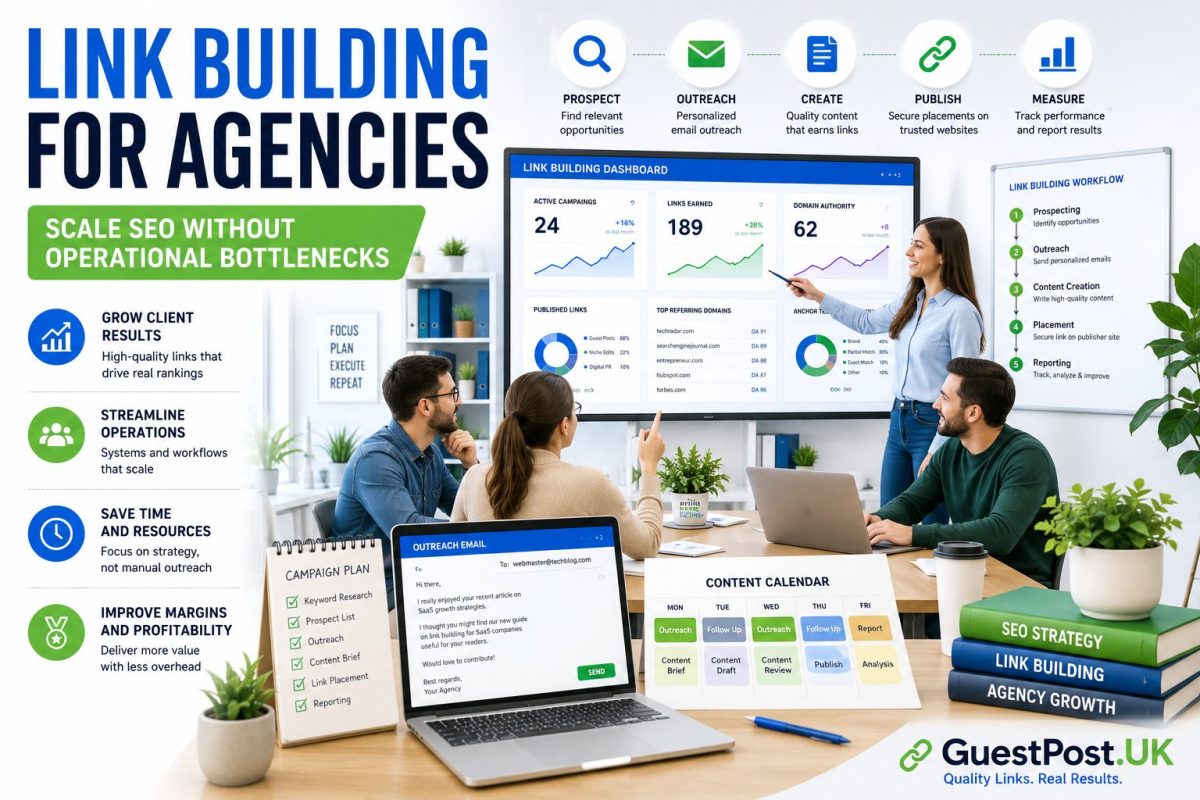
Before a single backlink is secured, someone must:
- Research opportunities
- Review website quality
- Find contact details
- Send outreach emails
- Negotiate terms
- Brief writers
- Review content
- Track placements
- Update reports
The backlink itself is only one small component of the process.
The operational workload surrounding it is where most resources are consumed.
This is why agencies frequently underestimate profitability when launching link building services.
Why Some Agencies Produce Better Results With Fewer Links
A surprising pattern emerges when comparing agency campaigns.
The agencies delivering the strongest client outcomes are not always acquiring the highest volume of backlinks.
Instead, they tend to focus on three areas:
Relevance
Links appear within the right industry ecosystem.
Consistency
Campaigns operate month after month rather than in bursts.
Strategic Placement
Every link supports a broader objective.
The difference between twenty strategic placements and twenty random placements can be substantial.
Clients rarely notice the distinction immediately.
Search engines often do.
The Quality Illusion
Many agencies continue evaluating opportunities primarily through authority metrics.
Questions such as:
- What is the DR?
- What is the DA?
- How much traffic does the site receive?
remain common.
These metrics are useful.
They are not sufficient.
A growing number of agencies are discovering that strong rankings often stem from highly relevant industry placements rather than from the highest-authority opportunities available.
This becomes particularly important in B2B industries where niche authority can outperform general authority.
Link Building Has Become a Brand Activity
Historically, link building was viewed as a ranking tactic.
That perspective is becoming outdated.
Today, every placement influences:
- Brand visibility
- Industry recognition
- Topic associations
- AI search visibility
- Entity development
A backlink from a respected publication does more than pass authority.
It places the brand inside an industry conversation.
The cumulative effect of these conversations is becoming increasingly valuable.
The Rise of Recommendation Search
Agency owners often monitor rankings carefully.
A growing number are beginning to track something else.
Recommendations.
When users ask AI systems:
- Which SEO agencies are trustworthy?
- Which outreach tools are popular?
- Which guest posting services are widely used?
the answer generation process relies on signals extending beyond traditional rankings.
This creates a new challenge.
Agencies must think about visibility across the broader information ecosystem rather than focusing solely on search engine positions.
Link building contributes to that visibility when executed strategically.
The Outreach Advantage
One of the least appreciated assets within successful agencies is not technical expertise.
It is distribution capability.
The ability to place content, secure mentions, build relationships, and generate industry visibility often separates high-growth agencies from stagnant competitors.
Many businesses can produce good content.
Far fewer can distribute it effectively.
This is one reason outreach remains valuable despite constant predictions that link building is becoming obsolete.
The internet does not reward content simply because it exists.
Visibility still matters.
Why White Label Fulfilment Continues Growing
The rise of white label link building is often misunderstood.
It is not primarily about saving money.
It is about reducing operational complexity.
Building an internal outreach department requires:
- Recruitment
- Training
- Systems
- Publisher relationships
- Management oversight
White label fulfilment provides immediate access to those capabilities.
For many agencies, this creates a faster path to scalability.
The decision becomes less about outsourcing and more about resource allocation.
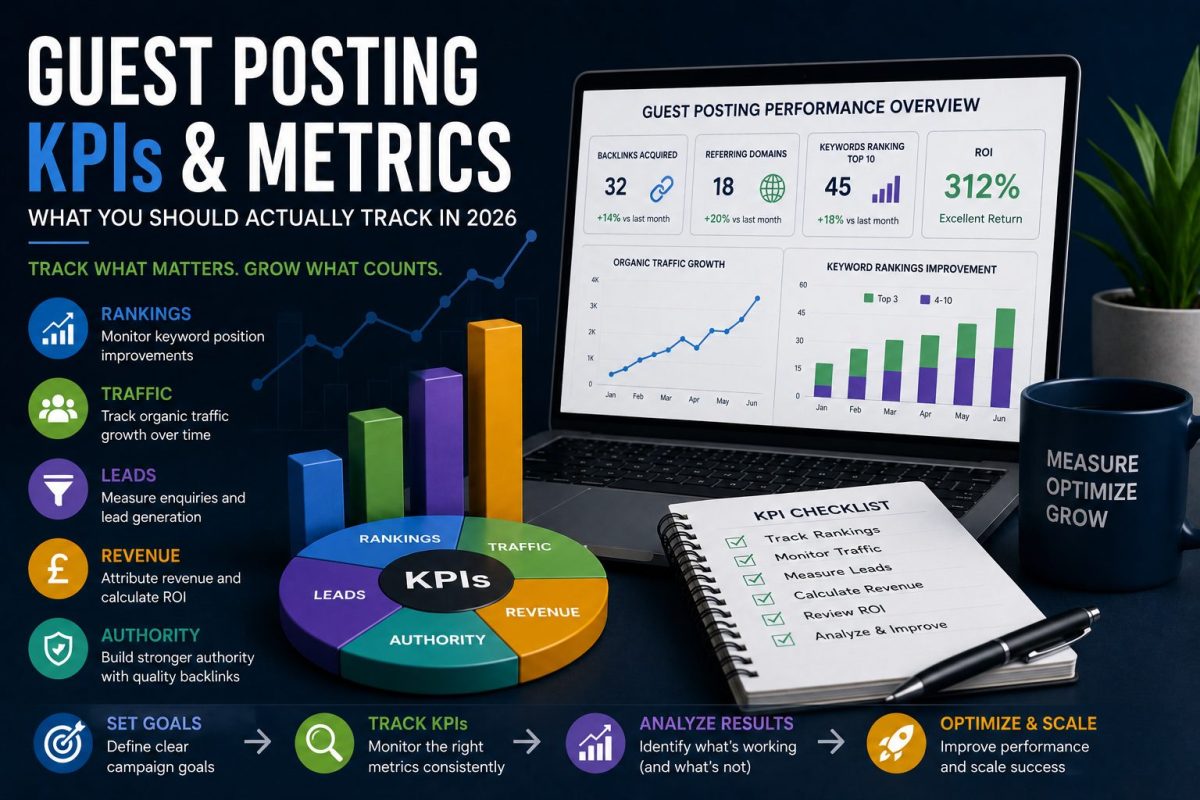
The New Agency KPI: Authority Growth
Rankings remain important.
Traffic remains important.
Leads remain important.
However, many sophisticated agencies are beginning to monitor authority growth as a standalone objective.
Questions include:
- Are we appearing in more industry publications?
- Are brand mentions increasing?
- Are we strengthening topical authority?
- Are clients becoming more visible across trusted sources?
These indicators often predict future ranking improvements before they appear in analytics platforms.
The Agencies Most Likely to Win
The next generation of successful SEO agencies will probably look different from today’s market leaders.
They will not simply be the agencies building the most links.
They will be the agencies best at creating visibility.
Visibility through:
- Guest posting
- Digital PR
- Industry partnerships
- Research
- Thought leadership
- Content distribution
The underlying objective shifts from acquiring backlinks to building presence.
Backlinks become one output of that process rather than the sole objective.
A Better Way to Think About Link Building
Many agency owners still ask:
How many links should we build this month?
A more useful question is:
How many opportunities did we create for our client to become visible within their industry?
The second question produces very different campaigns.
It encourages quality over volume.
Authority over metrics.
Recognition over short-term gains.
And increasingly, those are the campaigns producing the strongest long-term results.
FAQ
Why is link building difficult for agencies?
Because link building combines outreach, relationship management, content production, quality control, and reporting into a single service. Each component requires specialist skills and processes.
Should agencies build links in-house?
It depends on resources and growth objectives. Some agencies benefit from internal teams, while others scale more efficiently through white label partnerships.
What is the biggest mistake agencies make with link building?
Treating link building as a simple procurement exercise rather than a strategic visibility campaign.
How many links should agencies build each month?
There is no universal number. Relevance, consistency, and placement quality generally matter more than raw volume.
Is link building still important in AI search?
Yes, but its role is expanding. Links now contribute to broader authority, visibility, and entity recognition signals that influence AI-generated recommendations.
All in All!
The agencies creating the greatest long-term value are rarely obsessed with backlink counts.
Instead, they focus on becoming visible where their clients’ audiences already pay attention.
That distinction may seem small.
Operationally, strategically, and commercially, it changes everything.
The future of agency link building is unlikely to be defined by who acquires the most links.
It will be defined by who builds the strongest industry presence.
This is much closer to the direction we should continue with: fewer definitions, fewer generic SEO explanations, longer analytical paragraphs, more agency observations, and a genuine point of view rather than textbook SEO content.