
Google dominates the global search market, processing billions of searches every day. For many people, it is the default gateway to the internet, offering fast results, powerful algorithms and an extensive ecosystem of services.
However, Google is far from the only search engine available. Millions of users actively choose alternative search engines for better privacy, AI-powered answers, regional content, reduced advertising or a completely different search experience. Businesses, SEO professionals and digital marketers also rely on multiple search engines to understand how websites perform across different platforms rather than optimising exclusively for Google.
Whether you are concerned about online privacy, researching international markets or simply looking for a fresh way to search the web, understanding the leading search engines beyond Google can help you make a more informed choice.
In this guide, you’ll discover:
- Why people use Google alternatives
- The best search engines available today
- Privacy-focused search engines
- AI-powered search engines changing search behaviour
- Russian and regional search engines
- Which search engine suits different users
- What these platforms mean for modern SEO strategies
If you manage websites, publish content or invest in SEO, diversifying your understanding beyond Google has become increasingly important. As AI search, conversational search and personalised results continue evolving, visibility across multiple platforms is becoming a competitive advantage rather than an optional extra.
Why People Look Beyond Google
Google remains the largest search engine globally, but that doesn’t necessarily mean it is the perfect solution for every user.
Several trends have encouraged people to explore alternative search engines over the past few years.
Privacy Concerns
One of the biggest reasons is privacy.
Many users prefer search engines that do not collect browsing history, build advertising profiles or track every search they perform. Privacy-first search engines have seen significant growth as awareness around online data collection has increased.
AI-Powered Search Experiences
Artificial intelligence is changing how people search.
Instead of displaying ten blue links, newer search engines generate direct answers, summaries and conversational responses that save users time.
This has fundamentally changed search behaviour, especially for research-based queries.
Less Advertising
Google’s search results often contain multiple advertisements, shopping listings and sponsored placements before organic results appear.
Alternative search engines frequently present cleaner interfaces with fewer distractions.
Regional Search Quality
Google is dominant in many countries, but not everywhere.
Some regions rely heavily on local search engines that better understand local language, culture and user behaviour.
For example:
- Russia has Yandex.
- China primarily uses Baidu.
- South Korea relies heavily on Naver.
These platforms often outperform Google for local searches within their respective markets.
Independent Search Results
Some users simply prefer different ranking algorithms.
Alternative search engines often display websites that Google may not prioritise, making them valuable for discovering independent publishers, niche resources and specialist websites.
Why Google Alternatives Matter for SEO
Many website owners make the mistake of optimising solely for Google.
While Google should remain a primary focus, relying on one traffic source creates unnecessary risk.
Algorithm updates, AI Overviews and changes to search behaviour can significantly affect organic visibility.
Modern SEO increasingly involves creating content that performs well across multiple discovery platforms.
Benefits include:
- Diversified organic traffic
- Improved brand visibility
- Better resilience against algorithm changes
- Greater international reach
- Increased opportunities within AI search platforms
For example, if your business publishes educational resources, detailed comparisons or comprehensive buying guides, these pages may appear not only in Google Search but also in AI-powered search assistants and privacy-focused search engines.
This broader approach aligns closely with modern SEO strategies, where high-quality, authoritative content serves users regardless of where they begin their search journey.
What Makes a Good Search Engine?
Choosing a search engine involves far more than simply comparing the number of indexed pages.
Several factors influence search quality.
Search Accuracy
The most useful search engines understand user intent rather than matching keywords alone.
High-quality algorithms return relevant information even when searches are vague or conversational.
Freshness
Search engines should quickly index new websites and update changing information.
Fresh indexing becomes especially important for news, technology and rapidly evolving industries.
Privacy Protection
Privacy-focused search engines minimise tracking, avoid personalised advertising and often avoid storing search histories altogether.
Speed
Fast response times improve user experience and make searching more efficient.
AI Capabilities
Modern search increasingly incorporates:
- AI-generated summaries
- Conversational answers
- Source citations
- Context-aware recommendations
These features reduce the need to visit multiple websites for straightforward informational queries.
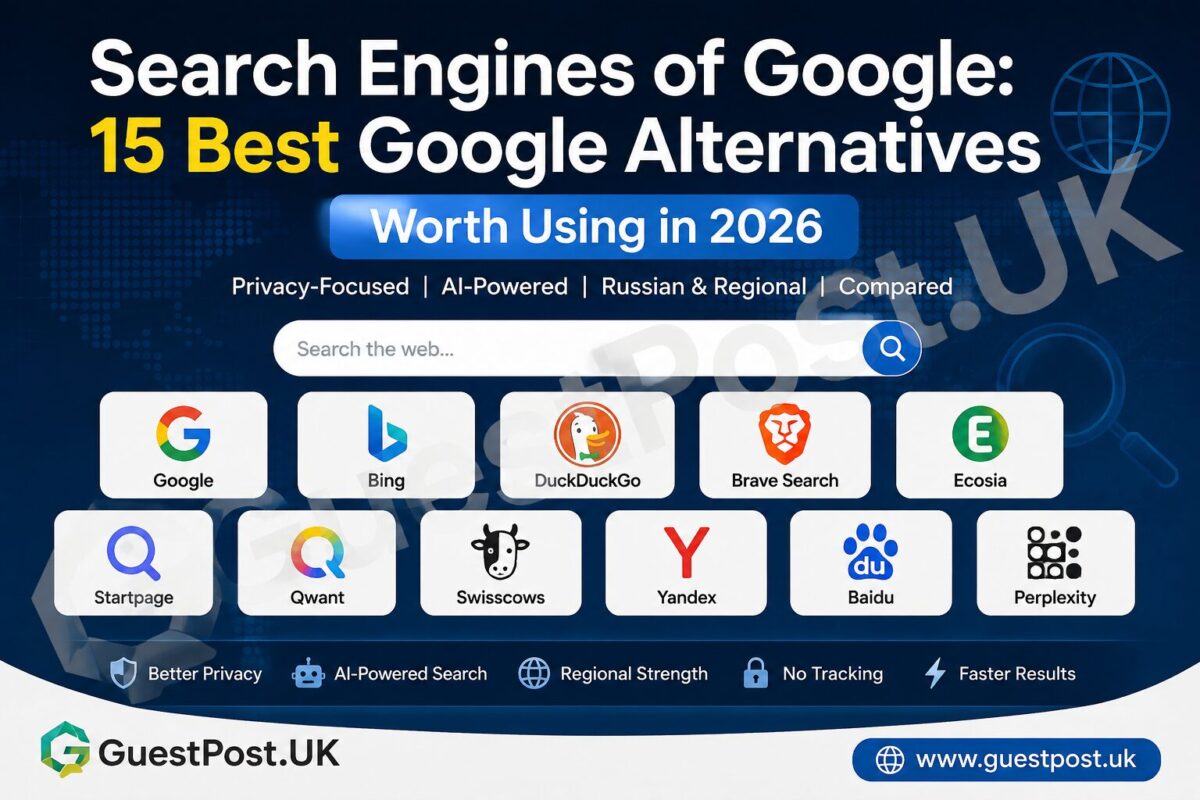
The Best Search Engines of Google
Below are some of the strongest alternatives currently available.
Each offers distinct advantages depending on your priorities.
1. Bing
Although Google dominates globally, Bing remains the second-largest traditional search engine in many markets.
Owned by Microsoft, Bing has evolved considerably over the last few years, particularly through its integration of artificial intelligence.
Key Features
- Microsoft AI integration
- Visual Search
- Image recognition
- Rewards programme
- Strong shopping results
- Excellent image search
Advantages
- Excellent AI-powered search experience
- High-quality image search
- Strong desktop integration with Windows
- Competitive video search
- Good local business results
Limitations
- Smaller search index than Google
- Some niche searches produce fewer results
- Less comprehensive local coverage outside major markets
Best For
- Windows users
- AI-assisted searching
- Visual searches
- General everyday browsing
SEO Perspective
Many SEO professionals underestimate Bing traffic.
Depending on industry, Bing can contribute meaningful organic visitors, particularly from desktop users, business environments and older demographics.
Optimising websites according to technical SEO best practices generally benefits both Google and Bing, although Bing places slightly greater emphasis on exact keyword relevance and traditional on-page optimisation.
2. DuckDuckGo
DuckDuckGo has become one of the world’s best-known privacy-focused search engines.
Rather than building advertising profiles around individual users, it prioritises anonymous searching while still delivering high-quality search results.
Its popularity has grown significantly among users who want a cleaner, less intrusive browsing experience.
Key Features
- No personal search tracking
- No personalised search history
- Simple interface
- Privacy-first browsing
- Built-in tracker blocking via browser extensions
Advantages
- Strong privacy protection
- Minimal advertising
- Clean search interface
- Easy transition from Google
- No behavioural profiling
Limitations
- Some highly localised searches may be less accurate
- Limited personalised recommendations
- Smaller ecosystem than Google
Best For
- Privacy-conscious users
- Journalists
- Researchers
- Cybersecurity professionals
- Everyday browsing without tracking
SEO Perspective
DuckDuckGo sources information from multiple providers rather than relying solely on its own index.
This means websites with strong technical SEO, authoritative backlinks, and high-quality content often perform well across both Google and DuckDuckGo.
As privacy continues becoming more important globally, visibility beyond Google is likely to become increasingly valuable for publishers and businesses alike.
3. Yahoo Search
Yahoo Search may no longer dominate the internet as it once did, but it still attracts millions of users every month. It remains a familiar choice for long-time internet users and integrates news, finance, email and search into a single ecosystem.
Today, Yahoo Search relies heavily on Microsoft’s Bing search technology while adding its own interface and content integrations.
Key Features
- Powered largely by Bing’s search index
- Integrated Yahoo News, Finance and Mail
- Personalised homepage
- Image and video search
- Trending stories and current events
Advantages
- Familiar interface
- Strong news aggregation
- Useful for finance-related searches
- Good multimedia search results
Limitations
- Search results closely resemble Bing
- Fewer unique features
- Less innovation than newer AI-powered search engines
Best For
- Existing Yahoo users
- Finance professionals
- News readers
- General web searches
SEO Perspective
Because Yahoo relies significantly on Bing’s technology, websites that perform well on Bing often rank similarly on Yahoo. Optimising for technical SEO, quality backlinks and relevant content benefits visibility on both platforms.
4. Brave Search
Brave Search has quickly become one of the most interesting search engines available today. Unlike many competitors that rely on Google or Bing, Brave has built its own independent search index.
Developed by the team behind the Brave Browser, it focuses on privacy while delivering increasingly competitive search results.
Key Features
- Independent search index
- Privacy-first searching
- AI-powered answer assistant
- No user profiling
- Anonymous search experience
Advantages
- Independent ranking algorithm
- No behavioural tracking
- Fast search performance
- Transparent indexing approach
- Growing AI capabilities
Limitations
- Smaller index than Google
- Occasionally weaker results for niche local searches
- Some newer features are still evolving
Best For
- Privacy-conscious users
- SEO professionals comparing search results
- Technology enthusiasts
- Independent web discovery
SEO Perspective
Brave Search demonstrates why websites should focus on genuine quality rather than trying to optimise solely for Google’s ranking factors. Sites with strong authority, helpful content and logical site architecture tend to perform well across independent search engines.
5. Ecosia
Ecosia offers something unique: every search contributes towards environmental projects.
Instead of focusing solely on profits, Ecosia uses a large portion of its advertising revenue to fund tree planting initiatives worldwide.
Millions of trees have reportedly been planted through user searches, making it an attractive option for environmentally conscious users.
Key Features
- Tree planting initiative
- Carbon-negative operations
- Privacy-friendly search
- Transparent financial reporting
- Mobile and desktop search
Advantages
- Supports environmental causes
- Familiar search experience
- Easy replacement for Google
- Good privacy policies
- Simple interface
Limitations
- Results largely powered by Bing
- Fewer advanced search features
- Limited unique ranking signals
Best For
- Environmentally conscious users
- Everyday browsing
- Students
- General internet searches
SEO Perspective
Since Ecosia largely uses Bing’s search index, websites optimised for Bing generally perform well here too. For businesses targeting environmentally aware audiences, appearing in Ecosia can also strengthen brand perception.
6. Startpage
Startpage combines Google’s search quality with enhanced privacy.
Rather than tracking users directly, Startpage acts as an intermediary, allowing people to access Google-style results without exposing personal information.
For users who appreciate Google’s relevance but dislike its tracking, Startpage offers an appealing compromise.
Key Features
- Google-quality search results
- Anonymous searching
- Private browsing mode
- No personal profiles
- Proxy browsing option
Advantages
- Excellent relevance
- Strong privacy protection
- Familiar search experience
- Minimal advertising
- Easy to use
Limitations
- Limited AI functionality
- Smaller ecosystem
- Fewer additional services compared with Google
Best For
- Google users seeking greater privacy
- Researchers
- Journalists
- Everyday web searches
SEO Perspective
Because Startpage draws heavily from Google’s index, websites that rank well in Google are often visible here too. However, user behaviour differs because personalisation is removed, creating a more neutral search experience.
7. Qwant
Qwant is a European search engine developed with privacy and data protection at its core.
Operating under strict European privacy standards, it has become a popular choice among users who prefer GDPR-focused digital services.
Key Features
- European-based search engine
- Privacy-first design
- No personalised tracking
- News integration
- Maps and multimedia search
Advantages
- GDPR-focused privacy
- Clean interface
- Fast search speeds
- Strong data protection
Limitations
- Smaller user base
- Less comprehensive local search outside Europe
- Limited AI-powered features
Best For
- European users
- Privacy-conscious businesses
- Education
- Research
SEO Perspective
Businesses targeting European audiences should recognise that platforms like Qwant continue growing among privacy-focused users. High-quality multilingual content and solid technical SEO remain important ranking factors.
8. Swisscows
Swisscows is another privacy-centred search engine that operates from Switzerland.
It avoids storing personal information while also emphasising family-friendly search results through automatic filtering of explicit content.
Key Features
- Swiss-based infrastructure
- No tracking
- Family-friendly filtering
- Semantic search technology
- Secure browsing
Advantages
- Excellent privacy
- Safe search environment
- Fast performance
- Strong European data protection
Limitations
- Smaller search index
- Limited regional coverage
- Fewer advanced search tools
Best For
- Families
- Schools
- Privacy-conscious users
- Educational environments
SEO Perspective
Swisscows rewards well-structured, authoritative websites with clear topical relevance. Semantic optimisation and comprehensive content can improve visibility.
9. Yandex
Yandex remains the dominant search engine in Russia and serves users across several neighbouring countries.
Its ranking algorithms have been developed specifically for Russian language processing and regional search behaviour, making it particularly effective within its target markets.
Key Features
- Strong Russian language support
- Maps
- Cloud storage
- AI-powered services
- Local business search
Advantages
- Excellent Russian search quality
- Strong local results
- Comprehensive ecosystem
- High-quality image search
Limitations
- Limited usefulness outside its primary markets
- Smaller international index
- Less relevant for English-language users
Best For
- Russian-speaking audiences
- Businesses targeting Eastern Europe
- Local SEO within Russia
SEO Perspective
If your business operates internationally, especially in Russian-speaking regions, optimising only for Google is insufficient. Local language content, regional backlinks and market-specific keyword research become essential for visibility within Yandex.
10. Baidu
Baidu dominates the Chinese search market and plays a similar role to Google within mainland China.
Due to regulatory requirements, language differences and user behaviour, Baidu requires a completely different SEO strategy.
Key Features
- Chinese-language search
- Maps
- AI services
- Video search
- Knowledge panels
- Local business ecosystem
Advantages
- Largest search engine in China
- Excellent local search
- Deep integration with Chinese online services
- Strong AI investment
Limitations
- Primarily designed for Chinese-language users
- Complex regulations
- Difficult market entry for international businesses
Best For
- Companies targeting China
- Chinese-language websites
- International brands expanding into Asia
SEO Perspective
Baidu SEO differs significantly from Google SEO. Factors such as local hosting, simplified Chinese content, regional backlinks and compliance with local regulations all play a much larger role in achieving strong rankings.
AI-Powered Search Engines Are Changing How People Search
Traditional search engines return a list of web pages based on relevance, authority and hundreds of ranking signals. AI-powered search engines take a different approach. Instead of asking users to click through multiple results, they analyse information from various sources and generate a direct answer.
This shift is changing user expectations. People increasingly want complete, conversational responses rather than a page of links, especially for informational and research-based queries.
For businesses and publishers, this means creating content that is not only optimised for rankings but also structured so AI systems can understand, summarise and cite it accurately.
11. Perplexity AI
Perplexity AI has rapidly become one of the most popular AI search platforms. Rather than acting as a traditional search engine, it combines large language models with live web search to produce concise, source-backed answers.
Every response includes citations, allowing users to verify information and explore the original sources.
Key Features
- AI-generated answers with source citations
- Real-time web search
- Follow-up conversational questions
- Research-focused interface
- Multiple AI model options for subscribers
Advantages
- Excellent for research
- Transparent source attribution
- Fast summaries of complex topics
- Supports conversational exploration
- Reduces time spent opening multiple pages
Limitations
- Can occasionally oversimplify complex subjects
- Still depends on the quality of indexed sources
- Less suited to shopping or highly local searches
Best For
- Researchers
- Students
- Journalists
- SEO professionals
- Content marketers
SEO Perspective
Perplexity AI is a strong reminder that ranking alone is no longer the only objective. Websites that publish original research, expert commentary, statistics and well-structured content are more likely to be referenced in AI-generated responses.
This makes topical authority increasingly valuable alongside traditional SEO metrics.
12. ChatGPT Search
ChatGPT has evolved beyond a conversational AI assistant by incorporating live web search capabilities for many queries. Instead of returning a standard search results page, it generates natural language answers supported by web sources where available.
Users often ask complex questions that would previously require multiple Google searches.
Key Features
- Conversational search
- Context-aware responses
- Follow-up questioning
- Source references
- Multi-step reasoning
Advantages
- Excellent for complex questions
- Saves significant research time
- Understands conversational language
- Strong contextual memory within a session
Limitations
- Not every response requires live web search
- Some niche topics may still benefit from traditional search
- Generated summaries should always be verified for critical decisions
Best For
- Research
- Technical explanations
- Content planning
- Brainstorming
- SEO strategy
SEO Perspective
As conversational search becomes more common, content should answer complete questions rather than simply target isolated keywords. Clear headings, concise explanations and strong topical coverage improve the chances of being surfaced within AI-assisted search experiences.
13. You.com
You.com combines AI chat with traditional search, productivity tools and writing assistance in one platform.
Rather than presenting only web pages, it offers a personalised search environment where users can switch between AI-generated answers and conventional results.
Key Features
- AI search assistant
- Traditional web results
- Writing tools
- Coding assistance
- Productivity integrations
Advantages
- Flexible search experience
- AI and standard search combined
- Helpful for professionals
- Fast interface
Limitations
- Smaller user base
- Less comprehensive search index than Google
- AI responses vary depending on query complexity
Best For
- Developers
- Writers
- Digital marketers
- Productivity-focused users
SEO Perspective
You.com reflects the growing trend towards hybrid search experiences. Content that is clearly organised, factually accurate and easy for AI systems to interpret is likely to perform better across these platforms.
Traditional Search vs AI Search
The evolution of search is not about AI replacing traditional search overnight. Instead, both approaches now coexist, each serving different user needs.
| Feature | Traditional Search Engines | AI Search Engines |
|---|---|---|
| Primary Output | List of web pages | Direct conversational answers |
| User Journey | Multiple website visits | Immediate summary with optional sources |
| Best For | Shopping, local search, navigation | Research, explanations, comparisons |
| Information Depth | Depends on pages visited | Condensed overview |
| Interaction | One query at a time | Continuous conversation |
| Learning Curve | Very familiar | More conversational |
For many users, the ideal workflow combines both methods. Someone researching “best CRM software” might begin with an AI-generated overview before reading detailed reviews from trusted websites.
Which Search Engine Is Best for Different Users?
Different search engines excel in different situations.
Everyday Browsing
- Bing
- Brave Search
These platforms offer comprehensive indexing, reliable results and excellent local search capabilities.
Maximum Privacy
- DuckDuckGo
- Startpage
- Swisscows
- Qwant
These search engines minimise user tracking while delivering quality search experiences.
AI Research
- Perplexity AI
- ChatGPT Search
- You.com
Ideal for understanding complicated topics, summarising information and exploring follow-up questions.
International Markets
- Yandex
- Baidu
Businesses targeting Russia, China or nearby regions should understand these platforms because user behaviour differs significantly from Google.
Search Engine Comparison at a Glance
| Search Engine | Privacy | AI Features | Independent Index | Best Use Case |
|---|---|---|---|---|
| Moderate | Excellent | Yes | General search | |
| Bing | Moderate | Excellent | Yes | AI search & Windows users |
| DuckDuckGo | Excellent | Limited | No | Privacy |
| Brave Search | Excellent | Good | Yes | Independent search |
| Ecosia | Good | Limited | No | Environmentally conscious users |
| Startpage | Excellent | Limited | No | Google-quality results with privacy |
| Qwant | Excellent | Limited | Partial | European users |
| Swisscows | Excellent | Limited | Partial | Family-friendly search |
| Yandex | Moderate | Good | Yes | Russian market |
| Baidu | Moderate | Good | Yes | Chinese market |
| Perplexity AI | Good | Excellent | AI-powered | Research |
| ChatGPT Search | Good | Excellent | AI-powered | Complex questions |
| You.com | Good | Excellent | Hybrid | Productivity |
How Search Behaviour Has Changed
Search habits have evolved dramatically over the past decade.
Traditional Search Journey

Question
      ↓
Google Search
      ↓
10 Organic Results
      ↓
Open Several Websites
      ↓
Find the Answer
Today, the process increasingly looks like this:
Modern AI Search Journey

Question
      ↓
AI Search Engine
      ↓
Generated Summary
      ↓
Cited Sources
      ↓
Read Only the Most Relevant Websites
For publishers, this means visibility depends on more than ranking first in Google. Content must also be authoritative enough to earn citations within AI-generated answers. High-quality original research, expert insights and well-structured articles are becoming even more valuable as search continues to evolve.
What These Search Engines Mean for Modern SEO
Ranking well in Google is still a primary objective for most websites, but it should no longer be the only one.
Users now discover content through traditional search engines, AI assistants, privacy-focused platforms, social search and regional search engines. This shift means SEO has evolved from simply “ranking on Google” to building visibility across multiple discovery channels.
For businesses, publishers and marketers, the goal should be to create content that performs well regardless of where users begin their search journey.
Focus on Topical Authority
Search engines increasingly reward websites that demonstrate genuine expertise rather than isolated keyword optimisation. Instead of publishing dozens of loosely connected articles, build comprehensive topic clusters.
For example, if you run an SEO website, you might cover:
- Keyword research
- Technical SEO
- Link building
- Local SEO
- AI SEO
- Website migration
- SEO audits
- Content optimisation
Each article should support the others through relevant internal linking, helping both users and search engines understand your site’s expertise.
Prioritise Helpful, Original Content
Whether someone searches using Google, Bing, Brave Search or an AI-powered assistant, the underlying objective remains the same: provide the most useful answer.
Content should include:
- First-hand experience where possible
- Practical examples
- Step-by-step guidance
- Original research or opinions
- Accurate and up-to-date information
Simply rewriting what already exists is becoming less effective as AI systems improve at identifying genuinely valuable resources.
Structure Content for AI and Traditional Search
AI search engines favour content that is easy to interpret and summarise.
Some best practices include:
- Clear H2, H3 and H4 headings
- Short, focused paragraphs
- Bullet-point summaries
- Tables for comparisons
- Direct answers to common questions
- Logical page structure
These improvements also enhance readability for human visitors, creating a better overall user experience.
Don’t Ignore Technical SEO
Regardless of which search engine people use, technical SEO remains essential.
Regularly review your website for:
- Crawl errors
- Broken links
- Slow page speeds
- Mobile usability
- Structured data
- Internal linking
- Canonical issues
Strong technical foundations make it easier for search engines to discover, understand and index your content.
If you’re improving an existing website, carrying out a comprehensive SEO audit is one of the most effective ways to identify technical issues before they affect rankings.
Pros and Cons of Using Google Alternatives
Every search engine has strengths and weaknesses. The right choice depends on your priorities.
Advantages
- Better privacy on many platforms
- Reduced tracking and personal profiling
- Alternative perspectives in search results
- AI-powered research tools
- Strong regional search capabilities
- Less reliance on a single provider
Disadvantages
- Smaller search indexes in some cases
- Less accurate local search outside key markets
- Fewer integrated services
- AI summaries can occasionally contain inaccuracies
- Some niche topics have weaker coverage
For most users, using multiple search engines rather than relying exclusively on one provides the best overall experience.
Recommended SEO Tools for Analysing Search Visibility
No single tool tracks every search engine perfectly, but several platforms provide valuable insights into website performance and optimisation opportunities.
Google Search Console
Best for monitoring how your website performs in Google Search.
Useful for:
- Search queries
- Click-through rates
- Index coverage
- Core Web Vitals
- Technical issues
Bing Webmaster Tools
Essential if you want to improve visibility in Bing and Yahoo.
It provides:
- Crawl reports
- Keyword data
- Indexing diagnostics
- SEO recommendations
Ahrefs
One of the most comprehensive SEO platforms available for analysing backlinks, keyword opportunities and competitor performance.
Particularly useful for:
- Link building
- Competitor research
- Content gap analysis
- Keyword tracking
Semrush
Excellent for agencies and marketing teams managing multiple websites.
Key features include:
- Keyword research
- Position tracking
- Site audits
- Content optimisation
- Competitor analysis
Screaming Frog SEO Spider
Ideal for technical SEO audits.
It quickly identifies:
- Broken links
- Redirect chains
- Duplicate content
- Missing metadata
- Crawl issues
Using a combination of these tools provides a much clearer picture of your website’s performance than relying on any single platform.
Frequently Asked Questions
What is the best alternative to Google Search?
The best alternative depends on your needs. Brave Search offers an independent search index, DuckDuckGo focuses on privacy, Perplexity AI excels at research, and Bing provides an AI-enhanced traditional search experience.
Which search engine protects privacy the most?
DuckDuckGo, Startpage, Swisscows and Qwant are among the leading privacy-focused search engines because they minimise user tracking and behavioural profiling.
Is Bing better than Google?
For most users, Google still offers the largest search index and strongest overall relevance. However, Bing performs exceptionally well for image searches, AI integration and Microsoft ecosystem users.
Are AI search engines replacing Google?
Not entirely.
AI search engines complement traditional search rather than replacing it. Many users begin with AI-generated summaries before visiting trusted websites for more detailed information.
Which search engine is best for SEO professionals?
SEO professionals should use multiple platforms, including Google, Bing and AI-powered search engines such as Perplexity AI and ChatGPT Search. Monitoring visibility across different ecosystems provides a broader understanding of how content is discovered.
Why should businesses optimise for more than Google?
Relying solely on Google creates unnecessary risk. Optimising for multiple search platforms increases visibility, diversifies traffic sources and helps future-proof your digital marketing strategy as search behaviour continues to evolve.
Which Search Engine Should You Choose?
Google remains the world’s leading search engine, but it is no longer the only platform that matters.
Privacy-focused search engines such as DuckDuckGo, Brave Search and Startpage appeal to users who value data protection. Regional platforms including Yandex and Baidu dominate specific international markets, while AI-powered tools such as Perplexity AI, ChatGPT Search and You.com are redefining how people research and consume information.
For website owners and SEO professionals, the key takeaway is clear: build content for users first, not for a single search engine.
Focus on publishing authoritative, well-structured and genuinely helpful content supported by strong technical SEO and logical internal linking. This approach not only improves your chances of ranking in Google but also increases your visibility across Bing, AI search platforms and emerging search technologies.
As search continues to evolve, the websites that succeed will be those that answer questions clearly, demonstrate expertise and adapt to how people discover information—not just where they search.
Key Takeaways
- Google remains the market leader, but alternative search engines continue to grow.
- AI-powered search is changing user expectations and search behaviour.
- Privacy-focused search engines are becoming increasingly popular.
- Regional search engines are essential for international SEO.
- High-quality, authoritative content performs best across all search platforms.
- Diversifying your SEO strategy reduces reliance on any single traffic source.
- Future-proof your website by optimising for both traditional and AI-driven search experiences.