

Google completed its August 2026 spam update on 21 August after a rollout lasting around two days and 16 hours. The update applies globally and across all languages, but Google has not confirmed any new specific target or ranking signal behind it. Google’s Search Status Dashboard simply describes it as a normal spam update.
That does not mean website owners should ignore it. Spam updates are a sensible time to review the quality of your content, your backlink activity and the websites you use for guest posting. If rankings or organic clicks shifted around 18–21 August, do not rush into making major changes based on a single day of data. First, check whether there is a real pattern.
What does a Google spam update do?
Google uses automated systems, including SpamBrain, to identify practices intended to manipulate search results. Its spam policies apply to pages and websites that use deceptive, low-quality or manipulative tactics.
For most legitimate businesses, an update is not a reason to panic. A site does not need to be perfect to perform well. The risk increases when a website relies on tactics such as:
- Large volumes of thin or copied content
- Automatically generated pages with little original value
- Irrelevant paid links created purely to influence rankings
- Low-quality guest posts published without editorial standards
- Expired domains repurposed solely for their historical authority
- Third-party pages added to a reputable site mainly to exploit its rankings
Google’s aim is not to punish normal marketing. It is to reduce the visibility or value of tactics that create a poor search experience.
Check your Search Console data before changing anything
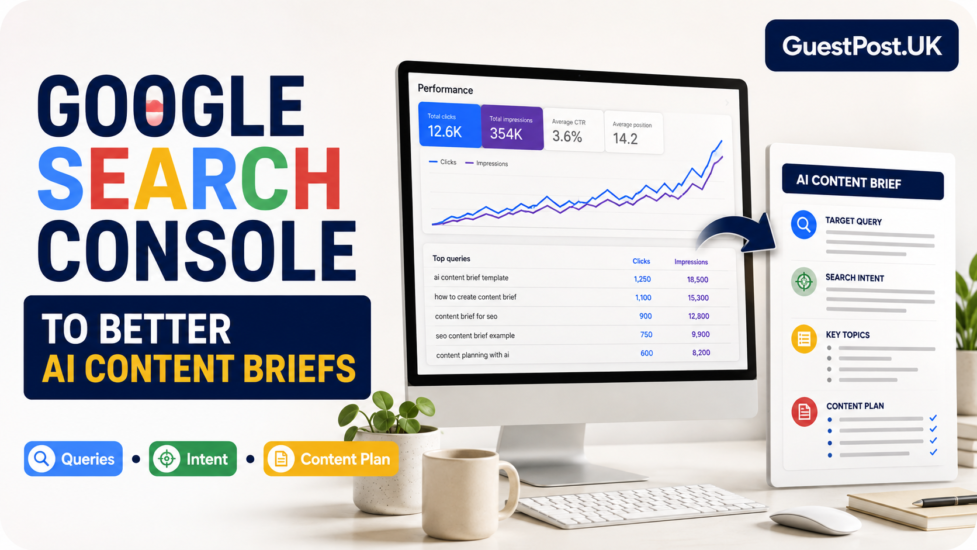
The first place to look is Google Search Console. Compare the period after 18 August with the previous period, but avoid judging the update by a single keyword or a single fluctuating day.
Look for changes in:
Clicks and impressions
A fall in clicks with stable impressions may be a click-through-rate issue rather than a ranking problem. A significant drop in both impressions and clicks across many important pages deserves closer attention.
Average position by page type
Separate your service pages, blog posts, product pages and guest-posting landing pages. If only one content group moved, the issue may be relevance, quality or competition rather than a site-wide problem.
Queries that lost visibility
Review the search terms that dropped. Ask whether the affected page genuinely answers the query better than competing pages. If the page is broad, outdated or written mainly around keywords, it may need a meaningful refresh.
Manual Actions and Security reports
A spam update is algorithmic. It is not the same as receiving a manual action. Still, check the Manual Actions and Security Issues sections in Search Console to rule out any direct warnings.
Audit your content with a quality-first mindset
Google’s guidance remains clear: content should be useful, reliable and created primarily for people. It should provide something beyond a rewritten version of what already ranks.
For each important page, consider:
- Does it include first-hand experience, original examples, data or a useful point of view?
- Is the author or business behind the content clear?
- Does the article fully help the reader complete their task?
- Are the title and headings accurate rather than exaggerated?
- Does the page contain outdated claims, broken links or generic filler?
- Would you confidently recommend this page to a client or colleague?
Do not rewrite dozens of pages merely because an update happened. Prioritise pages that lost meaningful impressions or commercial rankings, then improve them with real depth, clearer structure and stronger evidence.
What link builders should review?
The August update is especially relevant for anyone buying links, selling placements or running a guest-posting campaign. A guest post is not inherently against Google’s rules, but the way it is produced and placed matters.
A safer guest-posting campaign focuses on relevance, editorial value and natural placement. The goal should be to earn exposure, credibility and referral opportunities alongside SEO value.
Review your recent placements for these warning signs:
- The host site publishes unrelated topics every day
- Articles are thin, repetitive or obviously produced at scale
- Exact-match anchors are used too frequently
- The website exists mainly to sell links
- Links are inserted into old, irrelevant articles with no editorial reason
- The article adds no useful information beyond placing the backlink
A strong placement should make sense even if search engines did not exist. For example, a local business appearing in a trusted regional publication, or a SaaS company contributing a practical guide to a relevant business site, can offer readers genuine value.
Avoid overreacting to temporary movement
Search results naturally fluctuate, particularly around confirmed updates. Do not remove legitimate backlinks, disavow links without evidence, or delete useful content because a ranking dipped for a few days.
Instead, document the dates, affected URLs, queries and traffic changes. Then monitor performance over the next two to four weeks. If the decline persists, compare the affected pages with the current search results and improve what is genuinely weaker.
The websites most likely to perform well over time are not those chasing every loophole. They are the ones with useful content, clear expertise, sensible site structure and link-building activity that supports their reputation rather than trying to manufacture it.
For businesses that are unsure where to start, a focused SEO audit can identify whether the main issue is content quality, technical SEO, indexing, site structure or backlink risk. For ongoing authority-building, see our link building services and guest posting services.