
SEO professionals have always treated third-party traffic estimates carefully. They help spot competitors, prioritise outreach prospects, and find content opportunities, but they are not the same as a site’s real Google Search Console data.
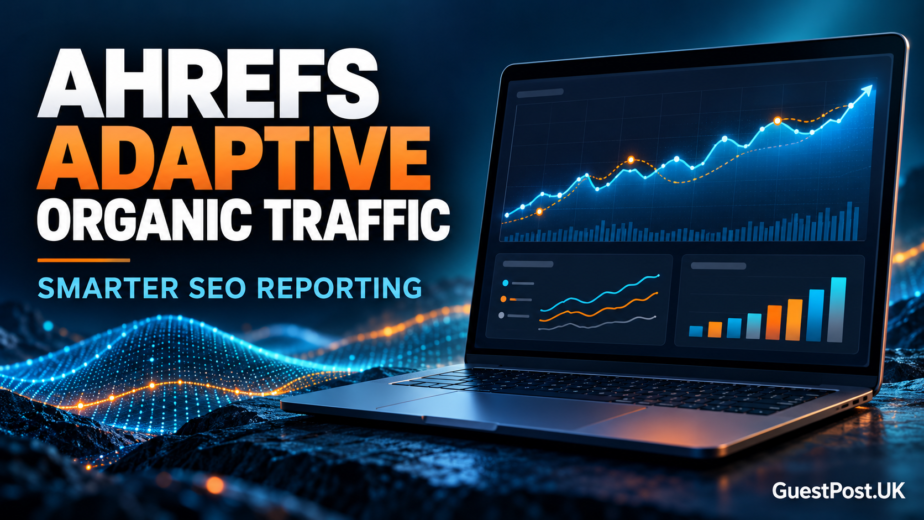
Ahrefs’ newer adaptive organic traffic model is designed to make those estimates more responsive to changes in search behaviour and ranking patterns. For agencies, publishers and link-building teams, that matters because estimated traffic is often one of the first signals used to judge a website, a keyword opportunity or a competitor’s growth.
It should not replace verified performance data from Google Search Console. It can, however, make competitor research and publisher evaluation more practical when direct access to a site’s analytics is impossible.
If you use Ahrefs for prospecting, this update is especially relevant alongside our Ahrefs Brand Radar review, which covers the growing need to track visibility beyond traditional blue-link rankings.
Why estimated organic traffic needs context
A traffic estimate is calculated from available ranking data, expected click-through behaviour and keyword demand. The challenge is that search behaviour doesn’t stay fixed.
A page ranking in position three may receive very different levels of traffic depending on:
- Search features such as snippets, shopping results and video packs.
- The intent behind the query.
- Whether users receive an answer immediately on the results page.
- Changes in desktop and mobile click behaviour.
- The type of website and the pages appearing around it.
A static approach can overstate or understate potential traffic when those conditions change. That is why an adaptive model is useful: it accounts more carefully for the changing relationship between rankings and likely clicks.
For a GuestPost.uk user, the benefit is not simply a different number in Ahrefs. It is better context when deciding whether a competitor deserves closer analysis, whether a publisher is still attracting a real search audience, or whether a content topic is worth researching further.
What the adaptive organic traffic model changes
The model does not give you a competitor’s exact Google Analytics or Search Console traffic. Only the site owner can verify that. Instead, it improves the way Ahrefs estimates likely organic visits from ranking data.
That makes it more useful for three practical SEO tasks.
First, it can make competitor comparison more realistic. If two websites rank for a similar number of keywords, the one appearing for terms with stronger click potential may be more valuable than a simple keyword count suggests.
Second, it can improve publisher research. When reviewing a potential guest-post placement, estimated organic traffic should be one part of the assessment alongside topical relevance, country audience, recent content quality, indexing and outbound-link standards. A large traffic figure without niche relevance is not automatically a good placement.
Third, it helps with content prioritisation. A page may have modest rankings but still represent a worthwhile opportunity if the search intent is commercial and the available clicks are meaningful. Combine this with our Google Keyword Tool and Keyword Cluster Generator to move from broad ideas to a focused content plan.
Do not confuse estimates with verified performance
The most important rule is simple: use Ahrefs estimates for research, not proof.
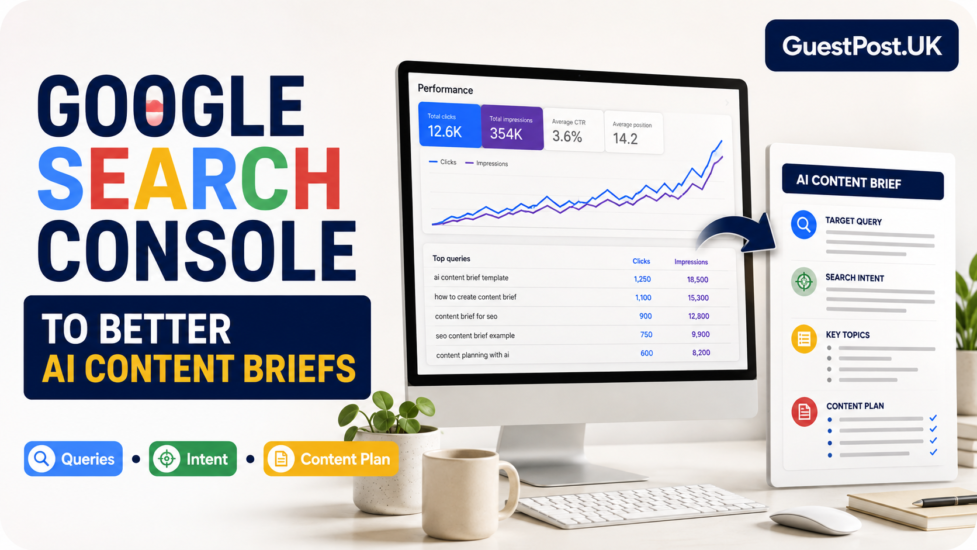
For your own website, Google Search Console remains the strongest source for clicks, impressions, CTR and average position. A sensible workflow is to use Ahrefs to identify competitor patterns and potential opportunities, then validate your own decisions through Google Search Console and a proper SEO audit.
For third-party publisher evaluation, use the estimate as a screening signal. Then check whether the site is indexed, publishes relevant content, has visible quality standards and can genuinely support the page you want to promote.
How to use it in competitor research
Start with a focused competitor set rather than a huge list of websites. Choose businesses competing for the same audience, service category or commercial keywords. Review their estimated organic traffic alongside their ranking keywords, top pages, and referring domains.
Look for patterns such as:
- A competitor gaining visibility through a small number of strong commercial pages.
- Informational articles bringing traffic that could support a service page through internal links.
- A gap between a competitor’s estimated traffic and their visible backlink profile.
- Pages that rank consistently for a topic you have covered only lightly or not at all.
- Older pages that still attract traffic because they answer a specific question better than newer content.
The useful outcome is not “this competitor gets more traffic”. It is a shortlist of pages, topics and linking opportunities worth investigating.
For example, a link-building agency may find that a competitor receives steady organic traffic from a detailed guest-post pricing page, a publisher-quality checklist and several niche-specific outreach guides. That is a much clearer content direction than copying broad “link building services” pages.
Use your own content gap analysis process to compare those themes against what GuestPost.uk already ranks for. Then build the missing page, refresh an existing page or create a supporting article where there is a genuine gap.
A better way to assess guest-post publishers
Estimated organic traffic is regularly used when choosing a placement, but it should never be the only filter.
A publisher can show a strong estimated traffic number but still be unsuitable because their audience is irrelevant, their pages are weakly indexed, their site is overloaded with sponsored posts, or their traffic comes from an unrelated topic. On the other hand, a smaller niche publication can be a stronger choice if its readers match the client’s service, product or country.
Use this practical order when reviewing sites:
- Check topical relevance. Would the site’s normal readers care about the client’s topic?
- Check real page quality. Review recent articles, author information, internal linking and editorial consistency.
- Review estimated organic visibility. Look for a believable pattern, not one unusually high page or a single viral query.
- Check authority and link profile carefully. Strong metrics are useful only when they support a genuine, relevant website.
- Consider the page and anchor in context. The planned article needs a natural reason to exist on that publisher.
This approach supports better outreach decisions than buying a placement based on DA or estimated traffic alone. Our Guest Post Site Finder can help shortlist relevant publishers, while the Publisher Quality Checker gives you a structured way to review the opportunity.
Use adaptive estimates alongside your own data
Ahrefs is most useful when it answers a question you cannot answer directly: what competitors appear to be doing, which websites may be worth reviewing and where topic demand could be emerging.
For your own pages, use verified Google Search Console data to decide what to improve. A page with high impressions and a weak CTR may need a stronger title and meta description. A page ranking between positions 8 and 20 may need better internal links, fresher content or clearer search-intent alignment.
For external research, the adaptive traffic model gives you a more useful starting point than treating every ranking as if it delivers the same amount of traffic. Use it to form a hypothesis, then validate it with page-level review and your wider SEO strategy.
The best SEO decisions come from combining tools rather than trusting one score. Ahrefs can identify the opportunity; Search Console can validate your own performance; and a planned content and internal-linking process turns the information into growth.