

Competitor research is changing. Traditional SEO tells you who ranks in Google, which keywords they target and where they earn links. AI search raises another important question: when users ask ChatGPT, Gemini, or Perplexity for recommendations, which businesses do these platforms choose to mention?
A competitor may not outrank you organically for every important keyword, yet still appear frequently in AI answers because its brand is well known, its content is clearer, its reviews are stronger or trusted third-party websites cite it more often.
Tracking competitor mentions helps you spot those gaps before they become harder to close. It shows which brands AI systems associate with your category, which pages and publications influence answers, and where your website needs stronger evidence.
For wider context, begin with our guide on how to rank in ChatGPT, Gemini and Perplexity. The goal is not to chase every answer. It is to become more visible for the questions most likely to influence enquiries and sales.
What counts as a competitor mention?
A competitor mention occurs when an AI platform includes another business in its answer. This may appear as:
- A direct recommendation
- A “best companies” list
- A comparison answer
- A suggested alternative
- A cited source or product page
- A brand referenced in positive or negative terms
- A recommendation tailored to a specific location, budget or use case
The context matters more than the count.
A competitor mentioned in a broad informational answer may not be a serious threat. A competitor repeatedly recommended for “best [service] in [location]” or “[product] alternatives for small businesses” is much more commercially relevant.
Look at whether the AI system positions them as a market leader, a budget option, a specialist, a local provider or the best fit for a particular audience. Those descriptions reveal the positioning of your own content and brand signals that may need strengthening.
Build a focused prompt set
Do not begin by testing random questions. Build a stable list of 30–50 prompts that reflect how customers actually research your category.
Group them into six types.
Awareness prompts
These are broad category searches, such as:
- “What is guest posting?”
- “How does a local SEO agency help a business?”
- “What is the best AI visibility tool?”
They reveal which brands have broad topical association.
Service and commercial prompts
These indicate a customer is closer to buying:
- “Best guest posting service for UK businesses”
- “SEO agency for ecommerce brands”
- “Affordable link building service for small businesses”
These are often the most valuable prompts to monitor, as recommendations may influence the shortlist.
Comparison prompts
Comparison searches show which competitors AI systems treat as credible alternatives:
- “[Your brand] vs [competitor]”
- “Best alternatives to [competitor]”
- “[Service A] or [Service B] for small businesses”
These prompts also create excellent content opportunities. If customers compare providers, publish useful comparison pages that explain genuine differences rather than generic sales copy.
Problem-led prompts
Customers often ask AI tools for a solution, not a supplier:
- “Why is my website not getting leads?”
- “How can a local business get more Google visibility?”
- “How do I earn high-quality editorial backlinks?”
Problem-led prompts can reveal competitors with useful educational content, strong guides or credible external coverage.
Local prompts
For local businesses, add location variations:
- “Best accountant in Birmingham”
- “Reliable SIA training course in London”
- “Personal trainer in Epsom”
Local AI answers can be influenced by reviews, business listings, location pages, news coverage and entity consistency.
Branded prompts
Track your name alongside competitors:
- “Is [brand] reliable?”
- “[Brand] reviews”
- “[Brand] alternatives”
- “[Brand] vs [competitor]”
This reveals how answer engines describe the business and whether they recognise your core services accurately.
Check ChatGPT, Gemini and Perplexity separately
Do not assume the same answer will appear everywhere.
ChatGPT, Gemini and Perplexity use different systems, retrieval methods and source behaviours. Perplexity commonly displays prominent source links. Gemini may reflect Google’s wider understanding of entities and web content. ChatGPT answers can vary depending on the model, browsing capabilities, and prompt wording.
Record each check in a spreadsheet or AI visibility platform using these columns:
| Date | AI platform | Prompt | Your brand mentioned? | Competitors mentioned | Position/context | Citations | Notes |
|---|
Also record:
- Country or market used
- Whether the prompt was run in a fresh chat
- Which pages or external domains were cited
- The wording used to describe each competitor
- Whether the response changed meaningfully from the previous check
One screenshot is not competitor intelligence. A repeatable monthly baseline is.
Use an AI visibility tool where scale matters
Manual checks are useful for qualitative research, especially at the start. However, they become time-consuming when you need to monitor dozens of prompts, several competitors, multiple regions and more than one platform.
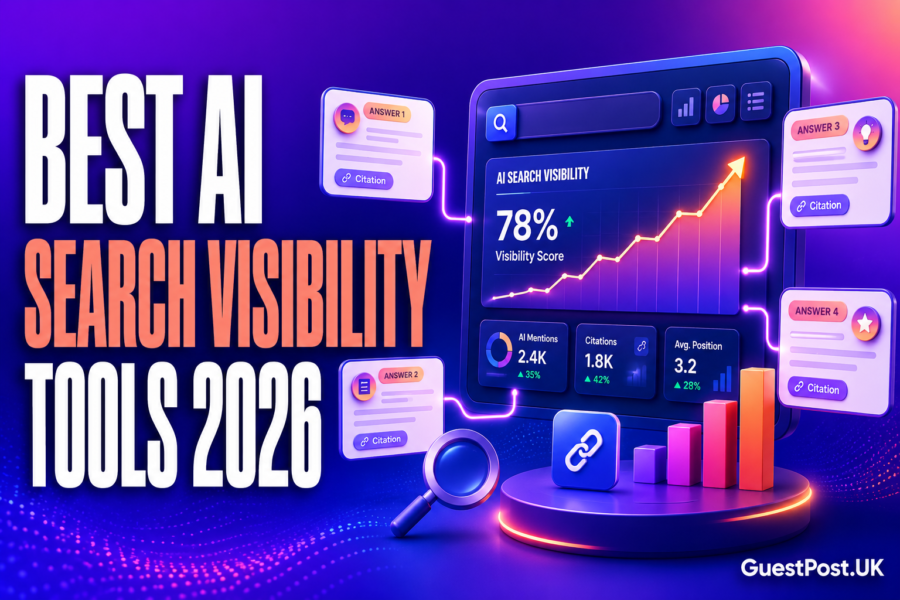
AI visibility tools can help automate prompt testing, track share of voice, capture citations and show trend data. The right choice depends on budget and depth of analysis. Our AI search visibility tools comparison can help you compare the main options.
Whatever tool you choose, manually inspect important results. A dashboard may say a competitor was “mentioned”, but only the underlying answer reveals whether it was a positive recommendation, a neutral reference or an outdated claim.
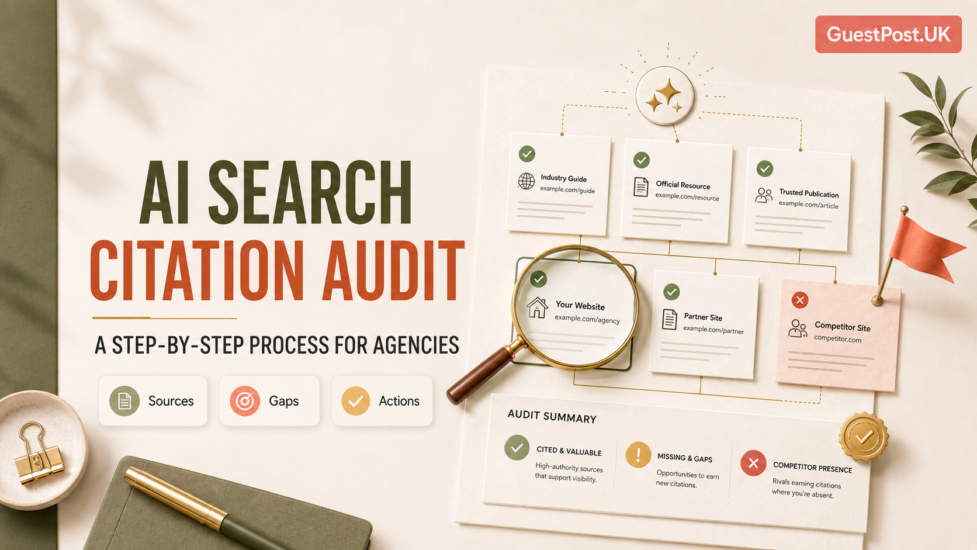
Analyse the cited sources behind competitor mentions
This is the most valuable part of the process.
When a competitor appears frequently, inspect the sources AI platforms cite. You may find that their visibility is supported by:
- Detailed service or product pages
- Independent reviews
- Industry publications
- Comparison articles
- Digital PR coverage
- Well-maintained directories
- Original research or data
- Customer reviews and case studies
- Clear pricing and FAQ content
Do not simply copy what competitors publish. Identify the evidence that makes their positioning credible.
For example, if an AI tool cites competitor comparison pages, create a more useful guide that genuinely helps buyers evaluate their options. If it repeatedly cites independent editorial coverage, consider an authority-building campaign through relevant blogger outreach services.
Measure competitor share of voice
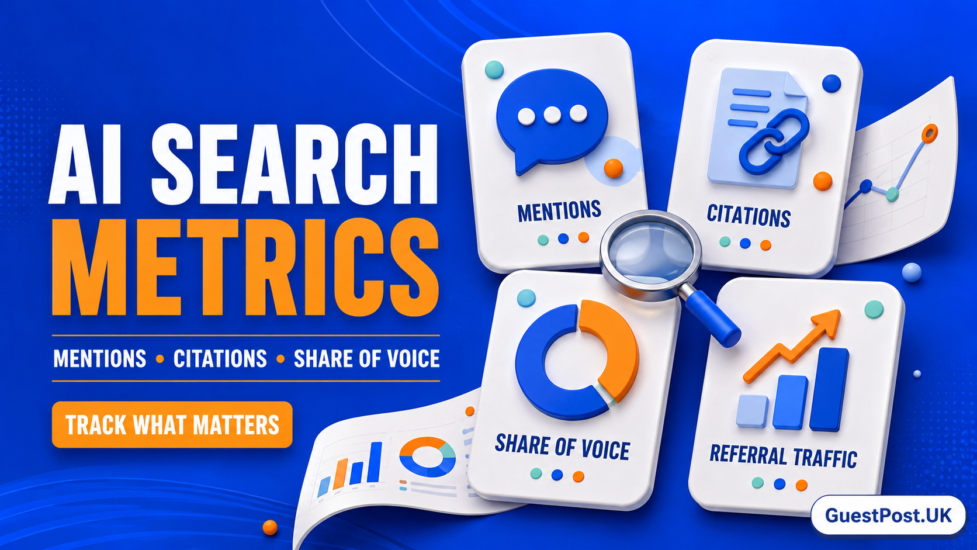
Share of voice shows how often a brand appears relative to competitors across your selected prompt set.
A simple monthly scorecard can include:
| Brand | Prompts tracked | Mentions | Share of voice | Citations | Recommendation-led mentions |
|---|---|---|---|---|---|
| Your brand | 40 | 12 | 30% | 8 | 5 |
| Competitor A | 40 | 22 | 55% | 17 | 12 |
| Competitor B | 40 | 15 | 37.5% | 10 | 7 |
This should not be treated as a conventional ranking table. It is a way to identify patterns. If Competitor A dominates, check which topics, platforms and sources are responsible.
A competitor may lead in ChatGPT but not Perplexity. Another may dominate local prompts but disappear from comparison queries. These differences create a more targeted strategy than simply trying to “beat” every competitor everywhere.
Turn competitor data into SEO actions
Competitor mentions should create a clear next step.
If competitors are recommended for a service you offer, review whether your page clearly explains its audience, outcome, process, pricing expectations and proof. If they are cited for a topic where your site has thin content, improve the existing page or create a more useful supporting resource.
Practical actions may include:
- Rewriting priority service pages with clearer answer-first sections
- Adding expert-led FAQs and original proof
- Publishing comparison, alternatives and pricing content
- Improving internal links between related service and guide pages
- Updating business information across key platforms
- Earning relevant editorial mentions and industry links
- Strengthening reviews, case studies and client evidence
- Resolving crawlability, rendering or indexation problems
A thorough SEO audit can help identify whether the issue is content, technical accessibility, authority or conversion clarity.
Keep the report focused on business value
Competitor tracking can become noisy if you measure every mention. Keep the report focused on valuable prompts, meaningful competitors and actions that support commercial goals.
Review the data monthly, then use it to decide what your business should publish, improve or promote next. Over time, you should see whether stronger pages, clearer entities, better internal linking and independent coverage are improving your inclusion in AI-generated answers.
That is the real purpose of competitor mention tracking: not to collect screenshots, but to understand what AI systems trust and create a better reason for them to recommend your brand.