
Backlinks still matter for SEO, but they are not the whole story in AI search.
When someone asks ChatGPT for the best provider, tool, local business or solution to a problem, the answer may depend on far more than which website has the strongest link profile. The platform needs to understand what your business does, whether it is relevant to the question and whether credible information about your brand exists across the web.
That is why visibility in ChatGPT should be treated as both a brand-building project and an SEO task. Our ChatGPT for SEO guide covers the wider opportunity; this article focuses on the signals that can help a brand become easier to recognise and recommend.
First, make sure ChatGPT can access your website
Before working on content, PR or brand mentions, confirm that your site is available to ChatGPT Search.
OpenAI says that any public website can appear in ChatGPT Search, but site owners should allow OAI-SearchBot to crawl their content and ensure their host or CDN permits traffic from OpenAI’s published searchbot IP addresses. OpenAI’s publisher guidance explains the eligibility requirements.
Check the basics:
- Your important pages are publicly accessible
- Your robots.txt file does not block OAI-SearchBot
- Service, product and location pages are indexable
- Your site is not hidden behind unnecessary login walls
- Important information is available in crawlable text, not only inside images or scripts
This does not guarantee a mention. OpenAI is clear that ranking is based on multiple factors designed to surface relevant, reliable information. It simply makes your content eligible for discovery.
Make your brand easy to understand
AI systems need clear context. If your website uses vague language, inconsistent business details or thin service pages, it becomes harder for anyone to understand why your company should be recommended.
Start with the pages people expect to find:
A clear About page
Explain who you are, where you operate, what experience you have and what makes the business different. Avoid generic claims such as “the leading agency” unless you can support them.
Specific service pages
Each important service should have its own focused page. A visitor and a search system should be able to see exactly what you offer, who it is for, how the process works and what outcome the client can expect.
Consistent brand details
Use the same business name, website, logo, contact information and service descriptions across your website, social profiles, directories and trusted listings. Consistency reduces confusion, particularly for local and service-based businesses.
Real proof
Case studies, client outcomes, expert bylines, testimonials, original research and useful examples give your content more substance than broad sales copy.
Earn relevant mentions, not just links
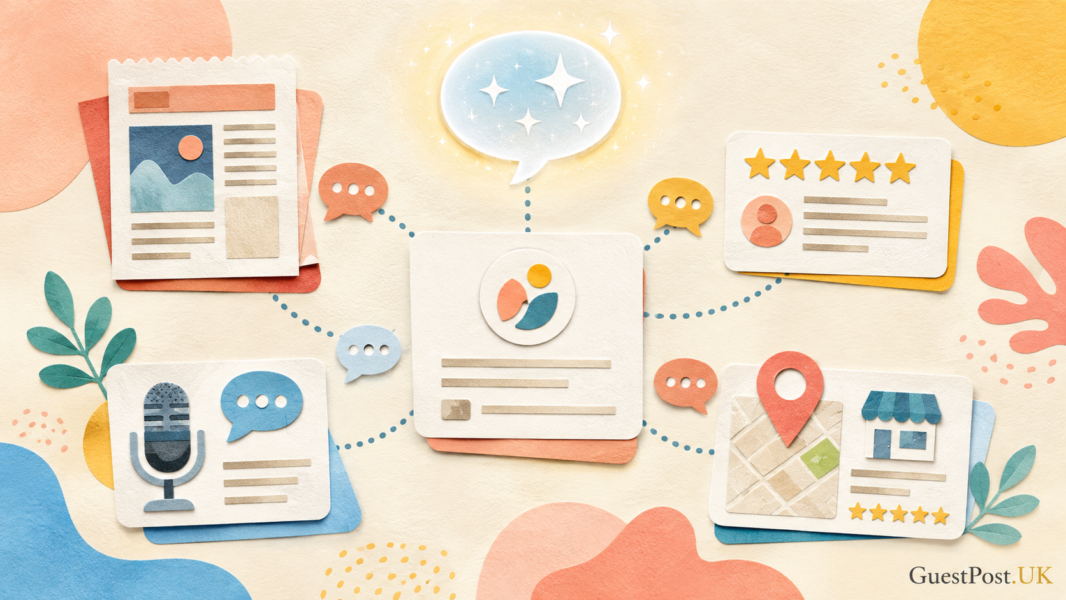
A branded mention is any time your company is named on another website, whether the mention includes a hyperlink or not.
No one can promise that an unlinked mention will directly create a ChatGPT recommendation. However, relevant third-party discussion makes your business easier to find, verify and associate with a topic. Research from Ahrefs found a strong correlation between branded web mentions and ChatGPT visibility, though correlation should never be mistaken for causation.
The best mentions usually come from activity that would be worthwhile even without AI search:
- A genuine guest article on a relevant publication
- A useful expert quote in an industry story
- Inclusion in an independent tools, services or resource guide
- A podcast interview, webinar or newsletter feature
- A credible business directory or local citation
- A customer review on a recognised platform
- A partnership announcement with a relevant organisation
The quality and context matter more than simply collecting brand-name references. A company mentioned in a respected industry article for practical expertise is more valuable than dozens of irrelevant, automated directory listings.
Publish content that gives AI a reason to mention you
ChatGPT is more likely to be useful to searchers when it can draw on pages that clearly answer specific questions.
Instead of creating generic articles about broad industry terms, create content that demonstrates a useful point of view. For example, a guest-posting business could publish:
- A transparent quality checklist for evaluating publisher sites
- A comparison of manual outreach, marketplaces and digital PR
- A guide to measuring guest-posting ROI
- A practical framework for safe anchor-text planning
- A case study showing the decision process behind a campaign
These pages help explain what the business knows and what it offers. They can also earn citations and mentions naturally when other writers, clients and communities discuss the topic.
Link supporting resources together. A reader exploring guest posting for AI-search visibility should be able to reach related content about quality, reporting, outreach and GEO without having to search again.
Improve the third-party sources people trust
For many recommendation-style prompts, ChatGPT may look beyond a brand’s own website. This is especially important for “best”, “alternative”, “near me” and product-comparison queries.
Review what appears when you search for your service category on Google and Bing. Which trusted websites discuss your competitors? Are there relevant publications, directories, review sites, YouTube channels, podcasts, trade bodies or community discussions where your brand has no presence?
Build a realistic outreach plan around those gaps. Digital PR, guest posting and expert commentary can help when the placement is relevant and genuinely adds value. Our guest posting services and SEO reputation management pages explain how authority-building work can support wider brand trust.
For local businesses, pay particular attention to accurate business listings, reviews, location pages and local editorial coverage. Recommendation systems need reliable location and service information before they can confidently suggest a nearby provider.
Watch for inaccurate or weak brand information
If ChatGPT describes your business incorrectly, the solution is rarely to publish more promotional copy. First identify the source of the confusion.
It may come from:
- An old service page
- An outdated directory listing
- Conflicting prices or contact details
- Negative reviews that have not been addressed properly
- A similar business with a confusingly close name
- Thin third-party summaries with incomplete information
Correct the source where possible, then publish a clearer, up-to-date version on your own website. Keep monitoring the prompts that matter to your buyers.
Avoid manipulative shortcuts
Do not try to manufacture visibility with fake reviews, paid community comments, copied “best provider” lists or large batches of low-quality AI content. These methods can damage trust and may increase the risk of spam.
You also do not need a separate page for every imagined ChatGPT prompt. Build a smaller set of genuinely useful, well-connected resources that demonstrate real experience with your topic.
The strongest strategy is simple: make your business understandable, credible and visible in relevant places where real people would expect to find it.
Measure the result over time
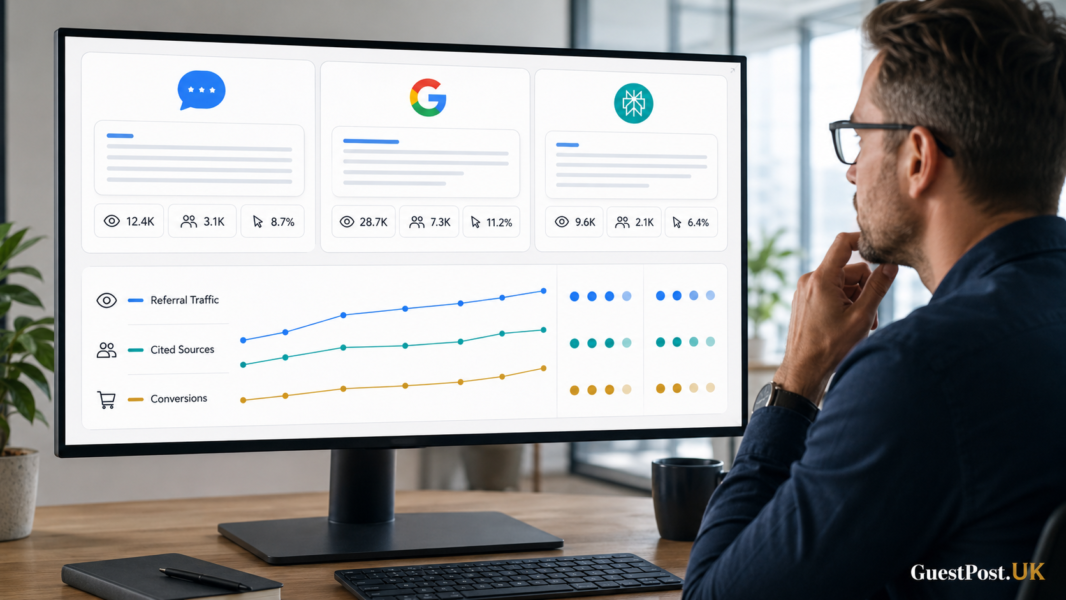
ChatGPT answers can vary from one run to another, so check a set of high-value prompts regularly rather than relying on a single answer.
Track:
- Whether your brand is mentioned
- Whether your site or a third-party source is cited
- Which competitors appear
- The reason given for a recommendation
- Referral traffic and leads from ChatGPT
- Changes in brand searches and relevant third-party mentions
For help monitoring the results, see our guide on tracking brand mentions in ChatGPT and our AI visibility tools comparison.
Backlinks remain useful, but brands that earn attention, credibility, and clear topical associations across the web are better placed to be discovered in ChatGPT and other AI search experiences.