
Why Are People Searching for “RCH Engine”?
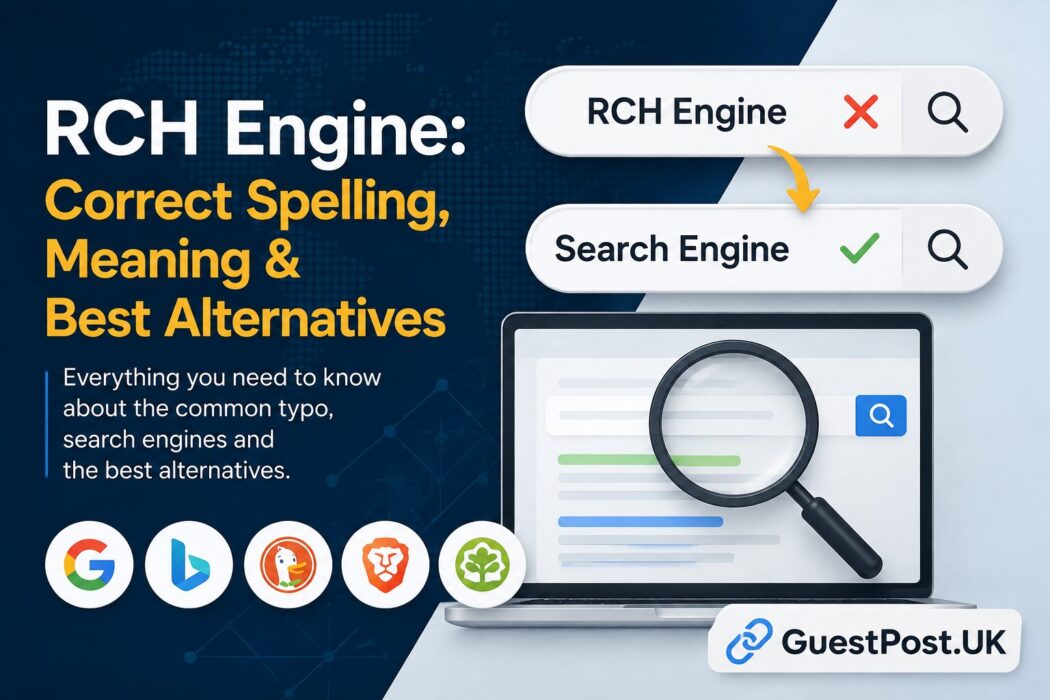
If you’ve searched for RCH Engine, you may have noticed that there isn’t an official website, software platform, or search tool using this exact name. Despite receiving thousands of searches every month, RCH Engine is not a recognised product or brand.
In almost every case, RCH Engine is a typographical error for “search engine.” Whether it’s caused by typing quickly, using a mobile keyboard, or simple human error, many users accidentally omit the first few letters when entering their search query.
Google has become remarkably good at understanding search intent, so even when users type incorrect keywords, it often returns results related to what they actually meant. This is why searching for RCH Engine typically leads to pages discussing search engines, SEO, or search technology rather than a product called “RCH Engine.”
This guide explains:
- What RCH Engine actually means.
- Why this search query appears so frequently.
- How search engines work.
- The most popular search engines available today.
- Alternative search engines worth considering.
- Why understanding search engines matters for SEO professionals, website owners, and marketers.
Whether you’re simply trying to find the correct term or you’re researching search technology for SEO purposes, this guide provides everything you need to know.
Is RCH Engine a Real Search Engine?
The short answer is no.
There is currently no widely recognised search engine, SEO platform, or software application officially called RCH Engine.
Instead, the phrase is commonly interpreted as a misspelling of search engine, particularly because removing the first few letters leaves the remaining part of the word:
- Search Engine
- RCH Engine
This type of search typo is incredibly common. Similar examples include:
- Gooogle
- Googel
- Chorme
- Yotube
- Facebok
Modern search engines analyse user behaviour, historical searches, spelling patterns, and contextual signals to understand what people intended to search for rather than focusing solely on the exact words entered.
That means someone searching for RCH Engine will usually receive results about search engines instead of being shown an error message.
What Is a Search Engine?
A search engine is an online platform that helps users find information across the internet. It continuously discovers, analyses, indexes, and ranks billions of web pages before presenting the most relevant results for a user’s search query.
Every time you type a question into Google, Bing, DuckDuckGo, or another search platform, an incredibly complex ranking system evaluates countless factors before displaying the results.
These systems are designed to provide:
- Relevant answers
- Trustworthy information
- Fast loading websites
- High-quality content
- Helpful user experiences
For website owners, appearing prominently in search engine results is one of the most effective ways to generate long-term organic traffic.
How Search Engines Work
Although each search engine has its own ranking algorithms, they generally follow the same four-stage process.
1. Crawling
Search engines use automated software known as crawlers, spiders, or bots to discover new and updated web pages.
These bots follow links across the web, continually finding fresh content to evaluate.
2. Indexing
Once a page has been crawled, the search engine analyses its content before deciding whether to add it to its index.
Indexed pages become eligible to appear in search results.
If a page isn’t indexed, users generally won’t find it through organic search.
3. Ranking
When someone performs a search, the search engine compares billions of indexed pages to determine which ones best satisfy the user’s intent.
Ranking decisions consider hundreds of signals, including:
- Content quality
- Topical relevance
- Backlink authority
- Page speed
- Mobile usability
- User experience
- Freshness of information
- Website trustworthiness
4. Serving Results
Finally, the search engine displays the pages it believes provide the best answer to the user’s query.
The exact order varies depending on numerous ranking factors, user location, search history, language settings, and search intent.
Why Understanding Search Engines Matters for SEO
If you’re involved in digital marketing, content creation, or website management, understanding how search engines operate is essential.
Search engines determine:
- Which pages receive organic traffic.
- Which businesses appear above competitors.
- Which content earns featured snippets.
- Which websites attract backlinks naturally.
- Which brands become trusted online resources.
Successful SEO isn’t about manipulating algorithms—it’s about creating genuinely helpful content that search engines can easily understand and recommend.
For example, publishing comprehensive, well-structured guides, improving technical SEO, earning authoritative backlinks, and satisfying user intent all contribute to stronger search visibility over time.
Understanding these principles helps businesses build sustainable organic growth rather than relying solely on paid advertising.
The Most Popular Search Engines Today
Although Google dominates the global search market, it is far from the only option. Different search engines prioritise different ranking signals, privacy standards, AI capabilities, and user experiences.
Understanding these differences helps both everyday users and SEO professionals decide where to focus their efforts.
Google is the world’s most widely used search engine, processing billions of searches every day. Its ranking algorithms consider hundreds of signals, including content quality, backlinks, page experience, search intent, and website authority.
For businesses and publishers, Google remains the primary source of organic traffic, making it the main focus of most SEO campaigns.
Best for:
- Everyday web searches
- Business websites
- Local SEO
- Content marketing
- Ecommerce stores
- Authority building
Advantages
- Largest search index
- Highly accurate results
- Excellent local search capabilities
- Advanced AI-powered search features
- Rich snippets and knowledge panels
Limitations
- Highly competitive rankings
- Frequent algorithm updates
- Greater emphasis on authority and trust signals
Microsoft Bing
Microsoft Bing has evolved considerably over recent years, particularly through its integration of AI-powered search experiences.
While its market share remains smaller than Google’s, Bing still delivers millions of visitors every day and is especially valuable for businesses targeting Windows users and Microsoft’s ecosystem.
Best for:
- Diversifying organic traffic
- Business users
- AI-assisted searches
- Microsoft ecosystem
Advantages
- Less competitive than Google
- Strong visual search
- AI-enhanced search results
- Often easier for smaller websites to gain visibility
Limitations
- Smaller user base
- Lower overall search volume
DuckDuckGo
DuckDuckGo focuses on user privacy by avoiding personalised tracking and extensive data collection.
Instead of building detailed user profiles, it aims to provide unbiased search results while protecting personal information.
Best for:
- Privacy-conscious users
- Anonymous browsing
- Minimal tracking
Advantages
- Strong privacy protection
- No personalised search history
- Clean, distraction-free interface
Limitations
- Smaller search index
- Fewer advanced search features
- Limited local search capabilities
Yahoo Search
Although no longer the dominant force it once was, Yahoo Search continues to attract a loyal audience and remains a recognised search platform.
Its results are largely powered by Microsoft Bing.
Best for:
- Existing Yahoo users
- News and finance searches
Advantages
- Familiar interface
- Integrated news and finance content
- Reliable search results
Limitations
- Smaller market share
- Limited innovation compared with competitors
Brave Search
Brave Search has gained popularity by operating its own independent search index rather than relying entirely on another provider.
Its emphasis on transparency and privacy has made it an attractive choice for users seeking an alternative to mainstream search engines.
Best for:
- Independent search
- Privacy-focused browsing
- Technology enthusiasts
Advantages
- Independent indexing
- Strong privacy features
- Clean interface
Limitations
- Smaller index than Google
- Occasionally less comprehensive results
Search Engine Comparison
| Search Engine | Privacy | Search Quality | AI Features | Best For |
|---|---|---|---|---|
| Moderate | Excellent | Excellent | General users, businesses, SEO | |
| Bing | Moderate | Very Good | Excellent | AI search and Microsoft users |
| DuckDuckGo | Excellent | Good | Limited | Privacy-conscious users |
| Yahoo | Moderate | Good | Limited | General browsing |
| Brave Search | Excellent | Very Good | Growing | Independent, privacy-first searches |
No single search engine is perfect for everyone. The right choice depends on your priorities, whether that’s comprehensive search results, privacy, AI assistance, or reduced tracking.
What This Means for SEO Professionals
For SEO consultants, publishers, and website owners, understanding different search engines provides a broader perspective on organic visibility.
While Google should remain the primary focus due to its market dominance, relying exclusively on one platform can limit potential traffic opportunities.
A well-optimised website should aim to perform across multiple search engines by following SEO best practices such as:
- Publishing original, authoritative content.
- Improving website speed and Core Web Vitals.
- Maintaining a logical site structure.
- Building high-quality backlinks.
- Optimising titles, headings, and metadata.
- Ensuring mobile-friendly performance.
- Creating content that genuinely satisfies user intent.
These practices benefit almost every major search engine, not just Google.
For businesses investing in long-term digital growth, diversifying organic traffic sources can improve resilience against algorithm updates and changes in search behaviour.
Text-Based Trend: The Evolution of Search Engines
The development of search engines has changed dramatically over the past three decades.
1990s
│
├── Basic keyword matching
│
2000s
│
├── Link-based ranking algorithms
│
2010s
│
├── User intent
├── Mobile-first indexing
├── Semantic search
│
2020s
│
├── AI-assisted search
├── Natural language understanding
├── Entity recognition
├── Helpful content systems
└── Generative AI experiences
The overall direction is clear: search engines have evolved from matching keywords to understanding people.
Modern search algorithms increasingly evaluate context, expertise, trustworthiness, topical relevance, and user satisfaction rather than simply counting how often a keyword appears on a page. This shift reinforces why creating genuinely useful content remains one of the most effective long-term SEO strategies.
Why “RCH Engine” Appears So Often in Search Results
At first glance, it might seem unusual that a misspelt query such as RCH Engine receives thousands of monthly searches. However, this is a common pattern across many popular websites, software products, and technology terms.
People search quickly, especially on mobile devices, and small typing mistakes happen all the time. Search engines have become increasingly effective at recognising these errors and understanding the user’s actual intent.
Some of the most common reasons include:
- Typing too quickly and omitting the first few letters.
- Mobile keyboard mistakes.
- Autocorrect changing the intended query.
- Voice search transcription errors.
- Users remembering only part of a phrase.
Rather than displaying no results, modern search engines attempt to interpret what the user most likely meant. This is why searching for RCH Engine usually returns results related to search engines instead of an unrelated topic.
Common Search Engine Typos
RCH Engine is just one example of a high-volume search typo. Many well-known websites and technologies receive thousands of typo-based searches every month.
Examples include:
| Misspelling | Intended Search |
|---|---|
| Gooogle | |
| Googel | |
| Gogle | |
| Chorme | Google Chrome |
| Yotube | YouTube |
| Facebok | |
| Instgram | |
| Linkdin | |
| Chat GPT | ChatGPT |
| RCH Engine | Search Engine |
For website owners, these searches can represent an opportunity to create helpful content that answers the user’s question while correcting the spelling naturally.
Can Websites Rank for Typo Keywords?
Yes, they can.
Many publishers intentionally create high-quality content targeting common misspellings, particularly when those typos generate meaningful search volume.
The key is not to manipulate search engines by stuffing incorrect spellings throughout the page. Instead, the article should:
- Explain the typo.
- Clarify the correct spelling.
- Answer the user’s underlying question.
- Provide useful, accurate information.
This approach aligns with modern SEO best practices because it satisfies user intent rather than attempting to exploit spelling mistakes.
SEO Best Practices When Targeting Typo Keywords
If you’re considering creating typo-based content for your own website, follow these principles.
Use the Typo Naturally
Mention the misspelt keyword where appropriate, particularly in the title, opening paragraphs, headings, and meta information.
Avoid excessive repetition, as it creates a poor reading experience and offers little SEO value.
Focus on User Intent
Ask yourself what the searcher actually wants to find.
Someone searching for RCH Engine isn’t looking for the typo itself—they’re usually looking for information about search engines.
Your content should answer that underlying question comprehensively.
Optimise Around Related Keywords
Instead of repeating one phrase dozens of times, naturally include related terms such as:
- search engine
- web search
- search technology
- search algorithms
- organic search
- search engine optimisation
- AI search
- search results
- indexing
- crawling
This helps search engines understand the broader topic while improving topical authority.
Build Supporting Content
Typo articles work best when they form part of a larger content cluster.
For example, this article can naturally connect with related resources covering:
- How search engines work.
- AI search engines.
- Search engine optimisation.
- Organic search strategies.
- Technical SEO.
- Website indexing.
- Search engine comparisons.
Interlinking these guides helps users explore related topics while strengthening your site’s topical relevance.
Best Alternatives if You Were Looking for a Search Engine
If your original search for RCH Engine was intended to find a search platform, these are among the best options available today.
The most comprehensive choice for everyday searching, business research, shopping, local information, and SEO.
Ideal for users who want the widest range of indexed content and advanced search capabilities.
Microsoft Bing
A strong alternative that combines traditional web search with AI-powered experiences and excellent image search functionality.
Suitable for users already invested in Microsoft’s ecosystem.
DuckDuckGo
Designed for users who value privacy over personalisation.
It avoids extensive tracking while delivering reliable search results for most everyday queries.
Brave Search
An increasingly popular independent search engine with a strong emphasis on transparency and user privacy.
It continues to grow its own search index while offering a clean browsing experience.
Ecosia
A search engine that uses advertising revenue to support global tree-planting initiatives.
For users who want their searches to contribute to environmental projects, Ecosia offers an appealing alternative without sacrificing usability.
Choosing the Right Search Engine
The best option depends on your priorities.
- Maximum accuracy: Google
- AI-enhanced search: Bing
- Privacy-first browsing: DuckDuckGo
- Independent search results: Brave Search
- Environmentally conscious users: Ecosia
Fortunately, there’s no need to choose just one. Many professionals use multiple search engines depending on the task, comparing results to gain a broader perspective or reduce bias.
For SEO professionals, testing how websites perform across different search engines can also uncover opportunities that might be missed when focusing solely on Google.
Frequently Asked Questions About RCH Engine
What is RCH Engine?
RCH Engine is not an official search engine or software platform. In most cases, it is a common misspelling of search engine. People often type the phrase accidentally when searching for information about Google, Bing, or other web search platforms.
Is RCH Engine a real website?
There is currently no widely recognised website or search platform called RCH Engine. If you searched for this term, you most likely intended to search for a search engine or a related topic.
Why does Google understand the search “RCH Engine”?
Modern search engines use artificial intelligence, machine learning, and natural language processing to interpret user intent.
Instead of matching only the exact words entered, they analyse spelling patterns, previous searches, contextual clues, and popular queries to determine what users are most likely trying to find.
This allows Google and other search engines to return relevant results even when a search contains spelling mistakes.
Which search engine is the best?
The answer depends on your priorities.
- Google offers the largest index and is generally the best choice for most users.
- Microsoft Bing provides strong AI-powered search features and integrates well with Microsoft’s ecosystem.
- DuckDuckGo focuses on privacy and minimises user tracking.
- Brave Search delivers independent search results while maintaining strong privacy standards.
- Ecosia supports environmental projects through its advertising revenue.
Each platform has its strengths, so the best choice depends on how you use search.
Should SEO professionals optimise for multiple search engines?
Yes.
Although Google remains the dominant search engine, websites should follow SEO best practices that benefit all major search platforms.
Producing helpful content, improving page speed, earning authoritative backlinks, implementing structured data, and maintaining strong technical SEO can improve visibility across multiple search engines rather than relying on a single source of traffic.
Can typo keywords generate organic traffic?
Absolutely.
Many typo keywords receive thousands of monthly searches. When approached correctly, creating informative content around these searches can attract relevant visitors while helping users find the information they intended to search for.
The emphasis should always be on answering the user’s real question rather than overusing the misspelt keyword.
Making the Most of Search Engine Traffic
Whether someone arrives after searching for RCH Engine, search engine, or another related phrase, the underlying objective is usually the same—they want accurate information quickly.
For businesses, publishers, and digital marketers, this highlights an important SEO principle: optimise for user intent, not just keywords.
Successful websites earn long-term organic visibility by:
- Publishing authoritative, well-researched content.
- Organising pages into clear topical clusters.
- Improving technical SEO and website performance.
- Creating content that answers real questions.
- Updating articles as search behaviour evolves.
As search engines continue to become more intelligent, satisfying user intent consistently delivers better results than focusing on exact-match keywords alone.
Final Words on RCH Engine
Although RCH Engine may appear to be the name of a search platform, it is almost always a typographical error for search engine. Fortunately, today’s search engines are sophisticated enough to recognise these mistakes and guide users towards the information they actually need.
If your goal was to understand what RCH Engine means, the answer is straightforward: it is not an official search engine but rather a commonly searched typo. Behind that simple spelling mistake lies an opportunity to learn how modern search engines interpret intent, process queries, and deliver increasingly relevant results.
For website owners and SEO professionals, this also demonstrates why understanding search behaviour is essential. Analysing user intent, creating comprehensive content, and building topical authority remain the foundations of sustainable organic growth.
Whether you’re researching search technology, improving your website’s visibility, or simply trying to find the correct term, focusing on high-quality information will always provide better long-term results than chasing individual keywords.
If you’re looking to improve your own website’s performance in search results, investing in technical SEO, content optimisation, and a well-planned organic search strategy will have a far greater impact than targeting spelling variations alone.