
Updated: September 2026
Google Search Profiles and Preferred Sources are two separate features that can help publishers build a stronger direct audience through Google. They are easy to confuse, but they work differently and aren’t available to the same websites.
For GuestPost.UK, Preferred Sources is the feature that matters now. It gives readers a simple way to choose GuestPost.UK as a source they want to see more often in Google Search. Search Profiles are a newer feature that brings an eligible creator’s website and social channels together in one Google destination.
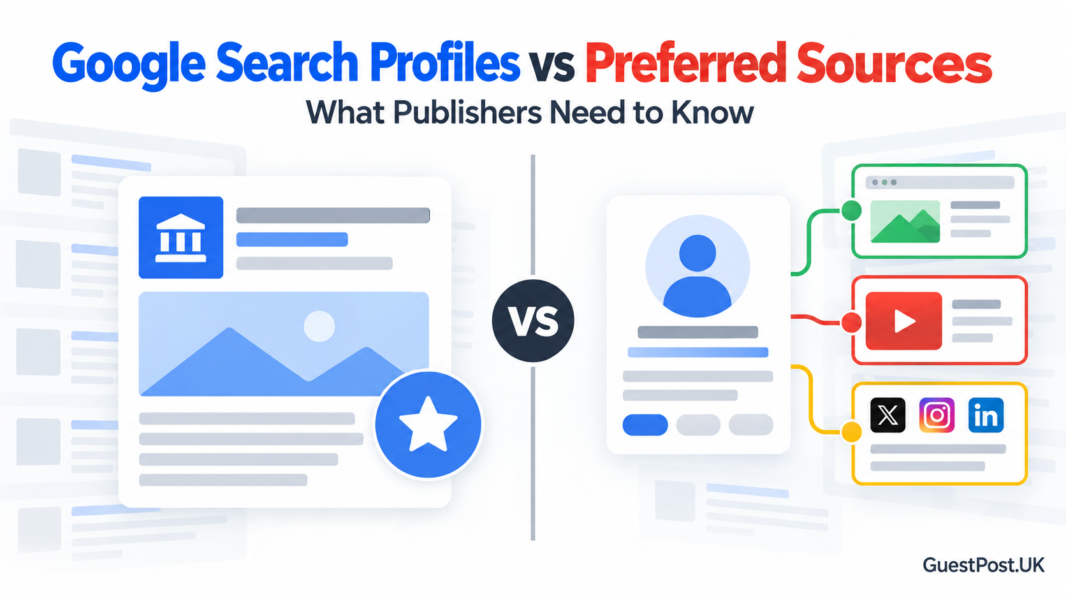
Google Search Profiles vs Preferred Sources: the simple difference
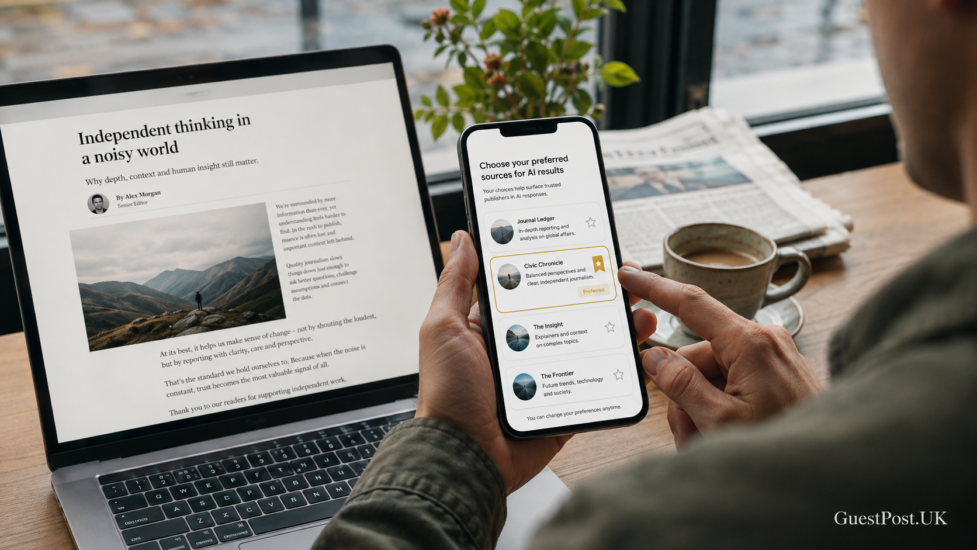
Preferred Sources lets a reader select a publication they trust. Once selected, that publication’s content may be highlighted with a “preferred” label when it appears in Google’s Top Stories, AI Overviews or AI Mode.
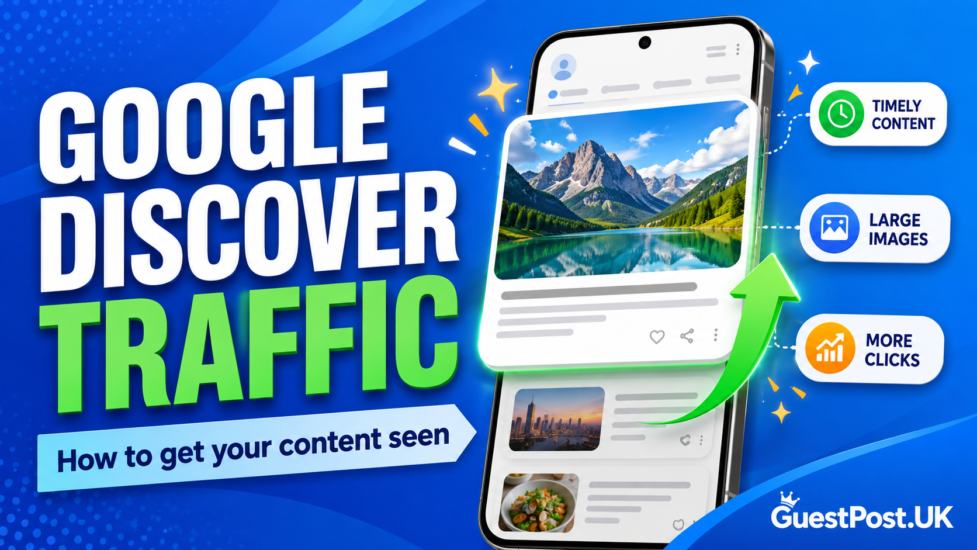
Google Search Profiles work differently. They combine a creator or publisher’s website with linked social profiles, such as YouTube, Instagram, TikTok, X and Facebook. When someone follows that Search Profile, Google says content linked from it is more likely to appear for that audience in Google Discover.
In short:
Preferred Sources helps readers follow a website or publication.
Search Profiles helps followers discover content from a connected website and social presence.
Neither feature is a direct Google ranking factor. Their purpose is to help publishers build a recognisable audience and make it easier for existing readers to find their content again.
Who is eligible for Google Search Profiles?
Google Search Profiles are currently intended for eligible creators, publishers and businesses in the United States. To create one, Google requires an eligible public social profile with at least 10,000 followers on YouTube, Instagram, TikTok or X.
A Search Profile can then bring together your verified website and the social accounts connected to your brand. Google provides a badge that eligible publishers can place on their website to encourage visitors to follow the profile.
This does not mean every website should rush to add the badge. A publisher must first be able to create and claim a Google Search Profile. If you do not meet Google’s current eligibility requirements, the badge cannot help.
For UK-focused publishers, the sensible approach is to monitor the feature rather than redesign pages around it. Google may expand availability over time, but there is no confirmed date for a broader rollout.
Can publishers use both features?
Yes. Google treats Search Profiles and Preferred Sources as separate audience features, so an eligible publisher can use both.
A visitor could add a publication as a Preferred Source to see more of its articles in Search, while also following its Search Profile to see more connected content in Discover.
However, they should not be presented as the same feature:
- Preferred Sources lets you follow a specific website or publication in Google Search.
- Search Profiles are about following a creator or brand across its connected web and social content.
- Neither feature guarantees rankings, traffic or inclusion in AI results.
Google’s eligibility information is available in its Search Profile Help guide.
Why this matters for publishers and SEO teams
Search traffic is no longer only about earning a position in the traditional organic results. Readers can now find content through Top Stories, Google Discover, AI Overviews and AI Mode. Building an audience that actively chooses to follow your publication can therefore become more valuable over time.
Preferred Sources gives publishers a practical, reader-led way to strengthen that relationship. It does not replace technical SEO, useful content or relevant backlinks. Instead, it supports the work already being done to publish credible, regularly updated content that readers want to return to.
For publishers using guest posting, digital PR or outreach, the important lesson is not to promise an AI citation or higher rankings. A better approach is to create genuinely useful articles, publish them on relevant websites, and build a recognisable brand across search, media, and social channels.
This is also closely connected to Generative Engine Optimisation services. Original research, clear expert explanations, verified comparisons and relevant editorial coverage give search engines and AI systems stronger reasons to reference your brand.
How publishers can use Preferred Sources now
If your website appears in Google’s Preferred Sources tool, you can add a direct link or Google’s official button to relevant pages on your website.
For GuestPost.UK, the simple sidebar link is enough. It takes visitors directly to Google, where they can select GuestPost.UK as a Preferred Source for their own account.
Publishers should place the call to action where it helps without distracting. Good locations include:
- A blog sidebar.
- Beneath an author bio.
- At the end of a newsletter.
- On a news, resources or insights page.
- In an occasional social-media post.
Avoid putting it prominently on a commercial landing page where the main goal is an enquiry or purchase. On a service page, the visitor should first see the relevant service and contact action.
Do Preferred Sources help AI Overviews and AI Mode?
A reader choosing a website as a Preferred Source does not guarantee that website will appear in an AI Overview or AI Mode response.
However, Google states that content from a selected Preferred Source can be highlighted with a “preferred” badge in AI Overviews and AI Mode where those features are available. The website must also remain included in Google Search’s generative AI features through Search Console.
This makes Preferred Sources a useful audience signal, but not a replacement for good SEO. To improve the chance of appearing in AI-led search experiences, publishers should still create accurate, original, well-structured content supported by trustworthy sources.
For businesses that need help making their website more useful for AI-driven search, explore GuestPost.UK’s Generative Engine Optimisation services.
Questions publishers often ask
Does a Google Search Profile improve rankings?
No. Google does not describe Search Profiles as a ranking factor. A Search Profile may help an eligible creator build an audience in Google Discover, but it does not guarantee higher organic rankings.
Does adding a website as a Preferred Source guarantee more traffic?
No. A reader must choose your publication themselves, and Google still decides when your content is relevant to show. It is best viewed as a way to encourage repeat discovery among people who already value your content.
Can any website add the Search Profile badge?
No. You must create and claim an eligible Google Search Profile first. Google’s current availability and follower requirements mean many UK publishers can’t use it yet.
Should we remove the Preferred Sources link if we cannot use Search Profiles?
No. The two features are separate. GuestPost.UK can continue using Preferred Sources even without a Search Profile.
Is this more important than backlinks and content quality?
No. Useful content, strong technical foundations, relevant editorial links and clear service pages remain the priority. Preferred Sources is an additional audience-building feature, not an alternative SEO strategy.
The practical takeaway for publishers
Preferred Sources is the action publishers can use today. It gives readers a straightforward way to follow a trusted publication in Google Search and can support visibility in Top Stories and eligible AI search features.
Google Search Profiles are worth watching, particularly for larger creators and publishers with established social audiences. But until eligibility expands, UK publishers should not spend time rebuilding their websites around the new badge.
Focus first on publishing information people genuinely want to return to, strengthening your brand across trusted websites and building clear paths between your guides and services. If you need support with content-led visibility, relevant publisher placements or outreach, see GuestPost.UK’s Link Building Services and Blogger Outreach Services.