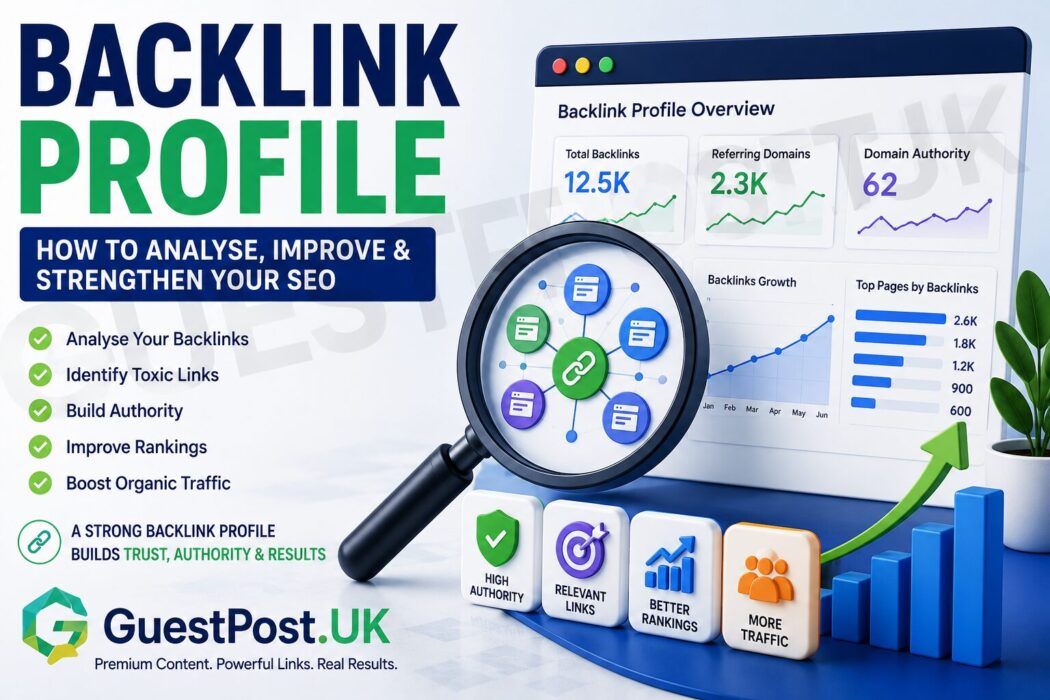

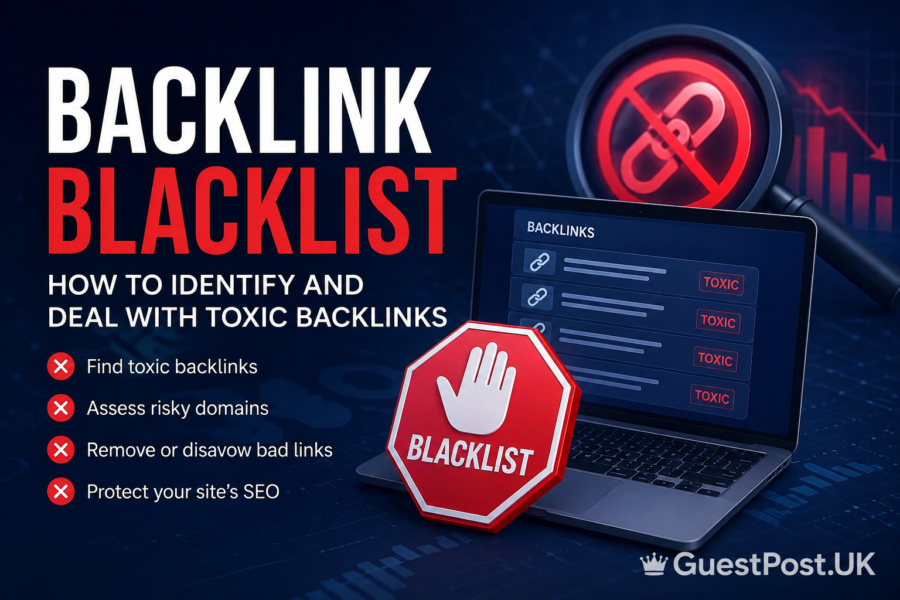
Backlinks remain an important part of SEO, but not every link pointing to your website is worth having. Spam domains, automated link networks, hacked websites and manipulative link schemes can leave a site with a backlink profile that looks far less natural than intended.
This is where the idea of a backlink blacklist becomes useful.
A backlink blacklist is essentially a list of domains or URLs that you have identified as unsuitable, suspicious or too risky for future link-building activity. SEO agencies, outreach teams and website owners can use such a list to prevent repeatedly acquiring links from websites they have already rejected.
However, there is an important distinction to make: a private backlink blacklist is not the same thing as Google’s disavow file, nor does appearing on an SEO tool’s toxic-link report automatically mean a website is penalised by Google.
Understanding those differences can prevent unnecessary backlink removals while helping you build a cleaner, more sustainable link profile.
What Is a Backlink Blacklist?
A backlink blacklist is a record of websites, domains or individual URLs that an SEO team has classified as undesirable backlink sources.
For example, an agency carrying out outreach across thousands of websites might blacklist domains associated with:
- Obvious link farms
- Automatically generated websites
- Malware or hacked pages
- Large-scale spam networks
- Completely irrelevant websites
- Manipulative private blog networks
- Websites created primarily to sell links
- Domains with suspicious outbound linking patterns
- Sites repeatedly sending unsolicited or low-quality backlinks
The blacklist can then be checked before approving future link placements.
There is no single universal backlink blacklist used across the SEO industry. One agency’s blacklist may look completely different from another’s because acceptable link quality depends on the website, niche, market and link-building strategy.
Is There an Official Google Backlink Blacklist?
Google does not provide SEOs with a downloadable public blacklist of websites that should never be used for backlinks.
This distinction matters.
Google’s systems are designed to evaluate links algorithmically. In many cases, spammy links can simply be ignored rather than producing a manual penalty against the website receiving them.
Therefore, finding a questionable backlink does not automatically mean you need to remove or disavow it.
Google Search Console can provide information about links pointing to your website, but it does not label each referring domain as “safe” or “blacklisted”.
Third-party SEO platforms may provide their own toxicity indicators, spam scores or authority metrics. These can be useful diagnostic signals, but they should not be treated as Google’s own judgement of a domain.
Backlink Blacklist vs Toxic Backlink List vs Disavow File
These terms are sometimes used interchangeably, but they serve different purposes.
| Term | Primary purpose | Typical use |
|---|---|---|
| Backlink blacklist | Prevent future links from undesirable websites | Outreach and link-building quality control |
| Toxic backlink list | Identify potentially problematic existing backlinks | Backlink audits |
| Google disavow file | Ask Google to disregard specified links/domains | Advanced remediation in specific circumstances |
| Outreach exclusion list | Stop teams contacting unsuitable domains | Guest posting and digital PR |
| Competitor backlink list | Identify sites linking to competitors | Link prospecting |
The most important difference is intent.
A backlink blacklist is preventative. It tells your team, “We don’t want links from this website.”
A toxic backlink report is diagnostic. It says, “This backlink may deserve further investigation.”
A disavow file goes further by asking Google not to take specified backlinks into account.
How to Identify Websites for a Backlink Blacklist
There is no single SEO metric capable of determining whether a domain belongs on a blacklist.
A better approach is to combine quantitative data with manual assessment.
1. Check the Website Manually
Open the referring website before making a decision.
Ask basic quality questions:
- Does the website appear to serve genuine visitors?
- Does it publish useful original content?
- Is there a clear editorial theme?
- Are articles written for humans?
- Does the website have excessive outbound commercial links?
- Are completely unrelated industries mixed together?
- Does every article appear to contain paid links?
Manual inspection often reveals problems that authority scores cannot.
A site with modest authority but strong topical relevance and genuine editorial standards can be more valuable than a high-metric domain built primarily for selling backlinks.
2. Examine Topical Relevance
Relevance is one of the most useful filters when evaluating backlink opportunities.
Imagine a UK accountancy company receiving a contextual link from an established finance publication. The relationship between the source, article and destination makes sense.
Now compare that with a link from an unrelated foreign-language gaming website buried inside an article covering loans, casinos, software and plumbing services.
Even if both domains display similar third-party authority metrics, they should not automatically receive the same evaluation.
3. Look at Organic Search Visibility
Organic traffic can help determine whether a website has genuine search visibility. Tools such as Ahrefs and Semrush can provide estimated organic traffic, ranking keywords and historical visibility.
Pay particular attention to the trend, not simply the current number.
A textual graph might look like this:
Healthy pattern:
1,500 visits → 1,800 → 2,100 → 2,350 → 2,600
Potential warning pattern:
20,000 visits → 15,000 → 6,000 → 1,200 → 150
A dramatic decline does not automatically prove that a domain is toxic. Websites lose traffic for many reasons, including migrations, algorithm updates, seasonality and business changes.
However, sharp traffic deterioration combined with poor content and suspicious outbound linking deserves closer examination.
4. Review Outbound Links
Many backlink evaluations focus almost entirely on inbound links.
For guest posting, the site’s outbound link behaviour can be equally revealing.
Check recent articles. If virtually every post contains commercial anchor text pointing to unrelated businesses, the website may exist primarily as a link-selling operation.
Also examine where links are going.
Repeated links to highly unrelated or obviously questionable destinations can indicate weak editorial control.
5. Analyse Anchor Text
Unnatural anchor-text patterns can expose manipulative link building.
Suppose a website has 500 referring links and an unusually large percentage use an exact commercial phrase such as:
“best cheap business loans UK”
That pattern deserves investigation.
A natural backlink profile generally contains a mixture of:
- Brand names
- Website URLs
- Generic anchors
- Article titles
- Partial-match keywords
- Contextual phrases
- Occasional exact-match anchors
Exact-match anchors are not inherently bad. The problem is excessive, systematic optimisation.
Which Backlinks Should You Blacklist?
A domain should normally be added to a backlink blacklist because several warning signs appear together, rather than because it fails one arbitrary metric.
Strong blacklist candidates can include websites with:
Automated Spam Content
Sites containing thousands of thin, machine-generated pages with little editorial oversight provide limited confidence as link sources.
Malware or Security Problems
Websites associated with malware, deceptive downloads or compromised pages should generally be excluded from outreach.
Obvious Link Networks
Groups of websites with almost identical designs, content structures, authors and linking behaviour may warrant additional scrutiny.
Extreme Topical Irrelevance
Not every backlink needs perfect niche alignment, particularly links from mainstream news or general publications.
However, repeatedly acquiring links from unrelated websites simply because they meet a DA or DR threshold is a poor long-term strategy.
Manipulated Metrics
Third-party authority metrics can sometimes look impressive while the underlying website has little meaningful organic presence.
This is why DA, DR or similar scores should never be your only link-quality filter.
Should Low-DA or Low-DR Websites Be Blacklisted?
No.
Low authority does not automatically mean low quality.
A new industry publication could have a low Domain Authority or Domain Rating simply because it has not existed long enough to attract many backlinks.
Consider two potential referring domains:
Site A
- DR 18
- Relevant niche
- 3,000 monthly organic visits
- Original editorial content
- Strong topical alignment
Site B
- DR 55
- Almost no organic traffic
- Hundreds of unrelated sponsored posts
- Weak editorial standards
- Aggressive commercial anchors
For many campaigns, Site A would be the more sensible backlink opportunity.
This illustrates why experienced link builders evaluate relevance, traffic, content, linking behaviour and authority together.
Backlink Blacklist and Google Disavow: When Should You Take Action?
Finding spam backlinks often causes unnecessary panic.
Most established websites eventually attract strange backlinks without intentionally building them. Scrapers, automated directories and spam bots can generate links at scale.
That does not mean every suspicious link needs to be disavowed.
When a Blacklist Is Enough
A private blacklist is useful when your main objective is preventing future placements.
For example, an outreach agency could maintain a central database containing:
Domain | Reason | Date Added | Reviewed By | Status
Before a new guest-post opportunity is purchased or approved, the system checks whether the domain already appears on the blacklist.
This prevents different team members from repeatedly evaluating or purchasing links from the same rejected websites.
When Link Removal May Be Appropriate
Link removal can make sense when you control or can reasonably contact the source, and there is a clear reason for wanting the link removed.
This may apply to links created through previous manipulative SEO campaigns.
However, spending weeks emailing every random scraper website on the internet is rarely productive.
When Disavow Requires Consideration
Google’s disavow functionality is an advanced SEO measure rather than routine backlink maintenance.
It may deserve consideration where there is a history of substantial manipulative link building, a link-related manual action or another strong reason to believe problematic backlinks require remediation.
For ordinary spam backlinks that appeared without your involvement, aggressive disavowing should not become an automatic monthly SEO task.
How to Create a Backlink Blacklist
A backlink blacklist does not need complicated software.
For smaller websites, a spreadsheet can work perfectly well.
Useful columns include:
| Field | Purpose |
|---|---|
| Domain | Blacklisted website |
| URL | Specific problematic page if required |
| Category | Spam, PBN, irrelevant, malware, etc. |
| Reason | Why the domain was rejected |
| DR/DA | Supporting metric |
| Organic traffic | Visibility reference |
| Date reviewed | Audit history |
| Reviewer | Useful for agency teams |
| Status | Blacklisted, review, approved |
Larger agencies can integrate exclusion lists into outreach platforms, CRM systems or internal link-building databases.
The key is consistency. Your team should understand why a website was blacklisted and what criteria must be met before that decision is reversed.
Best Tools for Backlink Blacklist Analysis
No single backlink tool can definitively tell you whether a link is good or bad.
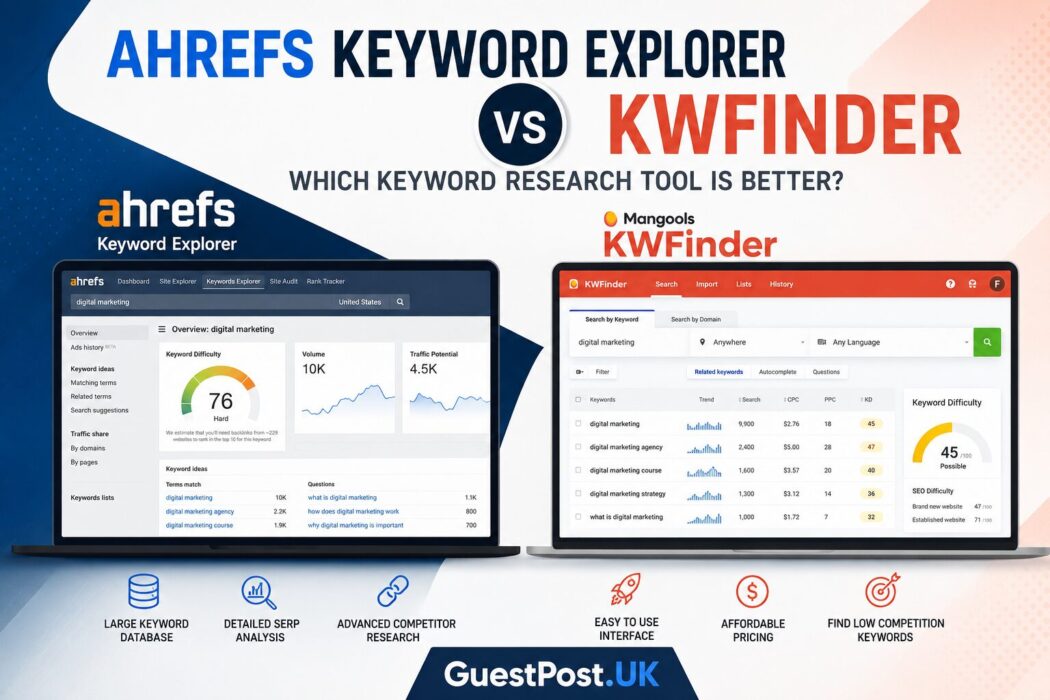
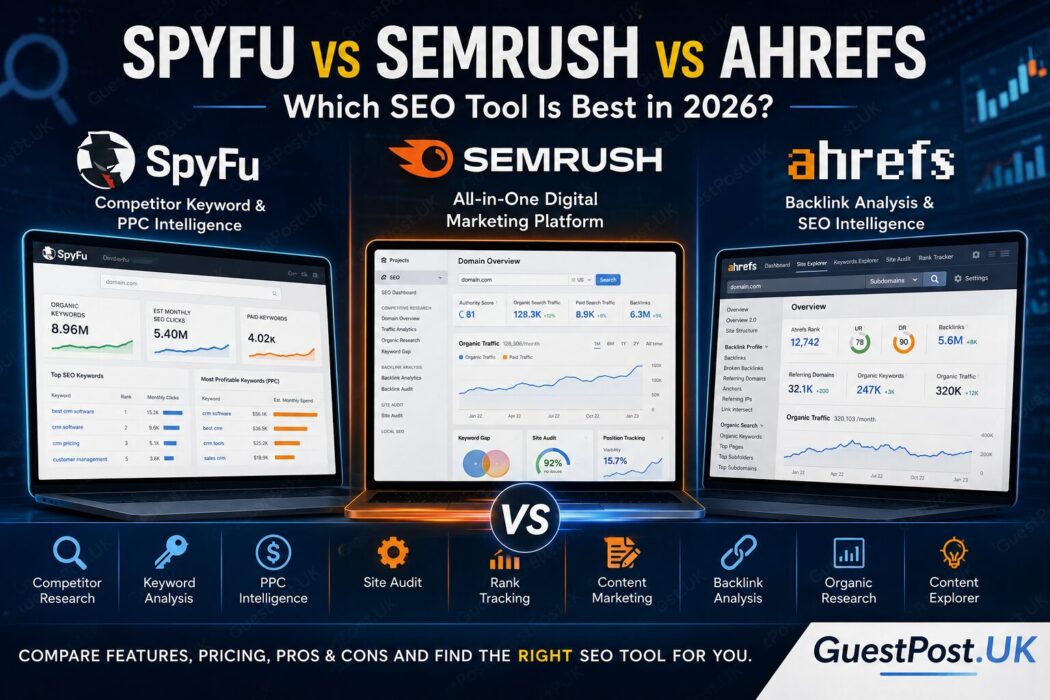
Ahrefs
Ahrefs is particularly useful for examining referring domains, anchor text, organic traffic estimates and backlink growth.
For link-building teams, it is valuable for checking both the strength of a prospect’s backlink profile and its wider search visibility.
Semrush
Semrush provides backlink auditing alongside broader keyword, competitor and organic visibility data.
Its toxicity-related indicators can help prioritise domains for investigation, but manual review should still form part of the decision.
Moz
Moz’s Domain Authority and Spam Score can provide additional context.
Again, Spam Score should be interpreted as a signal rather than a definitive blacklist instruction.
Google Search Console
Search Console should be part of your backlink review because it provides Google’s own reporting on links it has identified for your property.
It does not replace specialist backlink databases, but combining Search Console with third-party platforms gives you a broader view.
For websites undergoing a wider technical or authority review, backlink analysis can also sit alongside a full SEO audit rather than being treated as an isolated task.
Using a Backlink Blacklist for Guest Posting and Outreach
A blacklist becomes particularly valuable when guest posting is performed at scale.
Imagine an agency evaluates 1,000 publisher websites over six months. Without a shared exclusion system, another outreach specialist could encounter the same poor-quality domain three months later and repeat the entire evaluation.
A central blacklist prevents this.
It can also improve quality assurance when purchasing guest posting services or running a broader link building campaign, because potential publishers are checked against historical decisions before placements are approved.
However, avoid making your blacklist entirely metric-driven.
Rules such as:
“Blacklist everything below DR 30”
are too simplistic.
A stronger process might require manual review when a domain has low traffic, declining visibility, weak relevance or suspicious outbound linking. That produces a more defensible decision than relying on one third-party score.
Backlink Blacklist Pros and Cons
Advantages
A properly maintained blacklist can:
- Improve link-building quality control
- Prevent repeat purchases from rejected publishers
- Save outreach teams time
- Create consistent agency standards
- Help identify recurring spam networks
- Support backlink audit workflows
- Reduce dependence on individual team members’ memory
Limitations
There are also drawbacks.
A blacklist can become outdated. Websites change ownership, improve their content, recover search visibility or alter editorial policies.
There is also a danger of false positives. Automatically blacklisting domains because of low DA, declining traffic, or a single toxicity score can exclude legitimate backlink opportunities.
For that reason, important domains should remain eligible for manual reassessment.
A Practical Backlink Evaluation Framework
Rather than asking only, “Is this domain blacklisted?”, evaluate five areas:
- Relevance – Is the website contextually relevant to your niche or audience?
- Real visibility – Does it rank and attract genuine organic traffic?
- Editorial quality – Does the content demonstrate meaningful editorial standards?
- Link behaviour – Are outbound links natural or excessively commercial?
- Authority – Does the domain have a credible backlink profile?
Think of authority as one component of link quality rather than the final decision.
For professional SEO campaigns, this approach is considerably more useful than chasing DA or DR numbers in isolation.
Frequently Asked Questions About Backlink Blacklists
What is a backlink blacklist?
A backlink blacklist is a list of domains or URLs that an SEO team has classified as unsuitable backlink sources. It is commonly used to prevent future outreach or link placements from spammy, irrelevant or otherwise undesirable websites.
Does Google have a public backlink blacklist?
Google does not provide SEOs with a public downloadable blacklist showing every domain it considers problematic. Third-party toxic-link databases and spam scores should therefore not be confused with Google’s own assessment.
Can toxic backlinks hurt SEO?
Manipulative link schemes can create SEO risks, particularly when backlinks have been intentionally built to influence rankings. However, the existence of random spam links does not automatically mean a website will receive a penalty.
Should I disavow every toxic backlink?
No. A third-party tool labelling a backlink “toxic” is not sufficient reason on its own to disavow it. The wider backlink profile, history of link building and circumstances surrounding the links should be considered first.
Is a high-DA backlink always safe?
No. Domain Authority is a third-party comparative metric, not Google’s quality score. A high-DA website can still have poor editorial standards, irrelevant content or questionable outbound linking behaviour.
How often should a backlink blacklist be updated?
Active outreach teams should update their blacklist whenever new domains are rejected and periodically review existing entries. Large link-building operations may benefit from quarterly reviews to identify domains whose quality or ownership has changed.
What should I do if I find hundreds of spam backlinks?
First determine whether the links were intentionally built or simply appeared naturally through scrapers and automated websites. Analyse the overall backlink profile before taking removal or disavow action based purely on the number of suspicious links.
Building Better Links Starts With Better Filtering
A backlink blacklist is most valuable as a quality-control system, not as a list of domains to fear.
Use it to document poor-quality publishers, prevent repeated outreach mistakes and maintain consistent standards across SEO campaigns. At the same time, avoid judging backlinks purely by DA, DR, Spam Score or automated toxicity labels.
The strongest backlink evaluation combines topical relevance, organic visibility, editorial quality, outbound link behaviour and backlink authority.
For guest posting and link building in particular, the objective should not simply be to acquire links from websites with impressive metrics. Prioritise publishers that have genuine audiences, relevant content and a credible reason to link to your website.
That approach produces a backlink profile designed for long-term search visibility rather than short-term metric chasing.