
Private Blog Networks (PBNs): What They Are and Why SEOs Still Use Them
Private Blog Networks (PBNs) remain one of the most controversial tactics in modern SEO. Despite years of warnings from search engines, many marketers still rely on Private Blog Networks (PBNs) to manipulate rankings and accelerate link building.
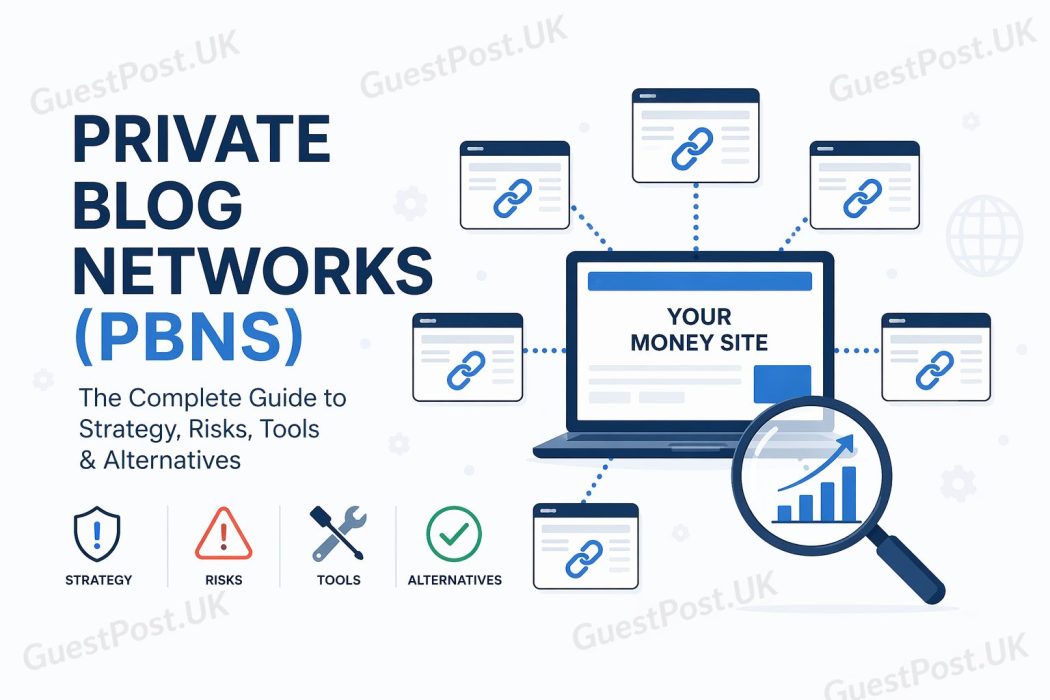
At their core, Private Blog Networks (PBNs) are networks of websites built specifically to pass link authority to a “money site.” These sites often use expired domains with existing backlinks to artificially boost rankings.
Think of a PBN like a staged crowd at a concert. It looks like real popularity, but it’s manufactured. To search engines, those links appear organic—until they don’t.
This guide breaks down how Private Blog Networks (PBNs) work, compares tools and services, evaluates risks, and shows smarter alternatives that actually scale.
How Private Blog Networks (PBNs) Work in SEO
Private Blog Networks (PBNs) function by exploiting one of Google’s core ranking factors: backlinks.
The Process Behind PBNs
- Acquire expired or auction domains with strong backlink profiles
- Rebuild those domains with content (often thin or repurposed)
- Insert backlinks pointing to the target website
- Control anchor text and link placement for ranking manipulation
Why They Can Work (Short-Term)
- Immediate link authority transfer
- Full control over anchor text
- No need for outreach or approval
- Faster ranking improvements in low-competition niches
Key Statistic
- According to industry surveys, over 65% of black-hat SEOs still use PBNs in some capacity for niche projects
- Google reports that over 40 billion spam pages are detected daily, many linked to manipulative tactics like PBNs
Types of Private Blog Networks (PBNs)
Public PBNs (Risky)
- Sold openly via marketplaces
- Often overused, and footprints are easy to detect
- Cheap but high risk
Private PBNs (Controlled)
- Built and maintained by a single SEO or agency
- Higher quality, harder to detect
- Expensive and resource-heavy
Hybrid Networks
- Mix of owned domains and rented links
- Balance between cost and scalability
PBNs vs White-Hat Link Building: Key Differences
| Feature | Private Blog Networks (PBNs) | White-Hat Link Building |
|---|---|---|
| Control | Full control | Limited |
| Risk | High (penalties possible) | Low |
| Cost | Medium to high | Medium |
| Scalability | High (if managed well) | Moderate |
| Sustainability | Low | High |
| Google Compliance | Violates guidelines | Fully compliant |
Tools & Platforms for Private Blog Networks (PBNs)
If you’re building or analysing Private Blog Networks (PBNs), tools play a critical role.
1. Ahrefs vs SEMrush vs Majestic (Backlink Analysis Tools)
| Feature | Ahrefs | SEMrush | Majestic |
|---|---|---|---|
| Backlink Database | Very large | Large | Specialised |
| Metrics | DR, UR | Authority Score | Trust Flow |
| Ease of Use | High | High | Moderate |
| Best For | Deep link analysis | All-in-one SEO | Link trust evaluation |
| Pricing | Premium | Premium | Moderate |
Best Use Cases
- Ahrefs: Ideal for analysing expired domains and backlink profiles
- SEMrush: Better for broader SEO strategy and competitor analysis
- Majestic: Best for evaluating link trust and PBN detection
Hosting & Footprint Management Tools
Avoiding detectable patterns is critical in Private Blog Networks (PBNs).
Common Tools
- Multiple hosting providers (shared vs cloud hosting)
- CDN services (Cloudflare masking)
- Unique WHOIS data
- Different CMS themes and structures
Hosting Strategy Tip
Never host all PBN sites on the same IP range. That’s the fastest way to get flagged.
Cost Breakdown of Private Blog Networks (PBNs)
Typical Investment
- Expired domains: £50 – £500+ per domain
- Hosting: £2 – £10 per site/month
- Content creation: £20 – £100 per article
- Tools (Ahrefs, SEMrush): £80 – £300/month
Total Estimate
A small Private Blog Network (PBN) of 10 sites can cost:
£1,000 – £5,000+ upfront
Pros and Cons of Private Blog Networks (PBNs)
Advantages
- Full control over links
- Fast ranking improvements
- No reliance on outreach
- Scalable in certain niches
Disadvantages
- High risk of Google penalties
- Expensive to maintain properly
- Requires technical expertise
- Long-term instability
Risk Analysis: Are PBNs Still Worth It?
Google’s algorithm updates have become increasingly effective at detecting Private Blog Networks (PBNs).
Common Footprints Google Detects
- Shared IP addresses
- Similar site structures
- Duplicate content patterns
- Unnatural linking behaviour
Reality Check
If detected, your site can face:
- Ranking drops
- De-indexing
- Manual penalties
Simple Visual: Risk vs Reward Curve
High Risk |           PBNs
          |         /
          |       /
          |     /
          |   /
          | /
          |/___________ Low Risk
             White Hat SEO
The more you rely on Private Blog Networks (PBNs), the higher your potential reward—but also the greater the downside.
Expert Strategies for Using PBNs Safely (If You Choose To)
While not recommended for most businesses, experienced SEOs mitigate risk with these tactics:
1. Build Real Websites
- Add genuine content
- Include traffic sources beyond SEO
- Avoid obvious linking patterns
2. Diversify Your Link Profile
Never rely solely on Private Blog Networks (PBNs). Mix with:
3. Limit Link Velocity
Sudden spikes in backlinks raise red flags.
4. Use Branded Anchors
Avoid over-optimised anchor text.
Better Alternatives to Private Blog Networks (PBNs)
For sustainable SEO growth, consider these options:
Guest Posting (Best Alternative)
- High-quality backlinks
- Brand authority building
- Google-safe strategy
Digital PR
- Earn links from authoritative publications
- Strong long-term value
Niche Edits
- Insert links into existing content
- Faster than guest posting
SaaS Link Building Tools Comparison
| Tool | Best For | Pricing | Key Feature |
|---|---|---|---|
| Pitchbox | Outreach automation | High | Scalable campaigns |
| BuzzStream | Relationship management | Medium | CRM-style outreach |
| Respona | All-in-one link building | Medium | AI-driven outreach |
When Private Blog Networks (PBNs) Might Make Sense
- Testing SEO strategies
- Affiliate sites in low-risk niches
- Short-term ranking experiments
When to Avoid PBNs Completely
- Brand-driven businesses
- Long-term SEO strategies
- Client projects where risk is unacceptable
Final Verdict: Private Blog Networks (PBNs) vs Safer SEO Strategies
Private Blog Networks (PBNs) still work—but they’re no longer a reliable long-term strategy.
If your goal is:
- Quick wins: PBNs can deliver (with risk)
- Sustainable growth: Avoid them
- Client SEO: Never rely on them
For most users, white-hat strategies like guest posting outperform PBNs over time in both ROI and stability.
Frequently Asked Questions About Private Blog Networks (PBNs)
Are Private Blog Networks (PBNs) illegal?
No, but they violate Google’s guidelines and can result in penalties.
Do PBN links still work in 2026?
Yes, but they are far less effective and much riskier than before.
How does Google detect PBNs?
Through footprint analysis, such as hosting patterns, link structures, and content similarities.
What is the safest alternative to PBNs?
Guest posting combined with digital PR is the safest and most scalable option.
Can beginners use Private Blog Networks (PBNs)?
It’s not advisable. The complexity and risk make it unsuitable for beginners.
How many sites are needed for a PBN?
Typically 5–50+, depending on competitiveness and strategy.
Actionable Takeaway
If you’re serious about ranking on Google in 2026 and beyond, treat Private Blog Networks (PBNs) as a tactical experiment—not a core strategy. Invest in scalable, white-hat link building that compounds over time and protects your rankings.