
A buyer comparing your software with two competitors may never start on your homepage. They might first encounter your product in a category listing, an alternatives search, or a customer review describing an experience your sales copy doesn’t mention.
That makes software directories part of the buying journey worth examining. Your listing needs to answer practical questions: Who is this product for? What does it cost? Does it support the required integrations? What happens when customers need help?
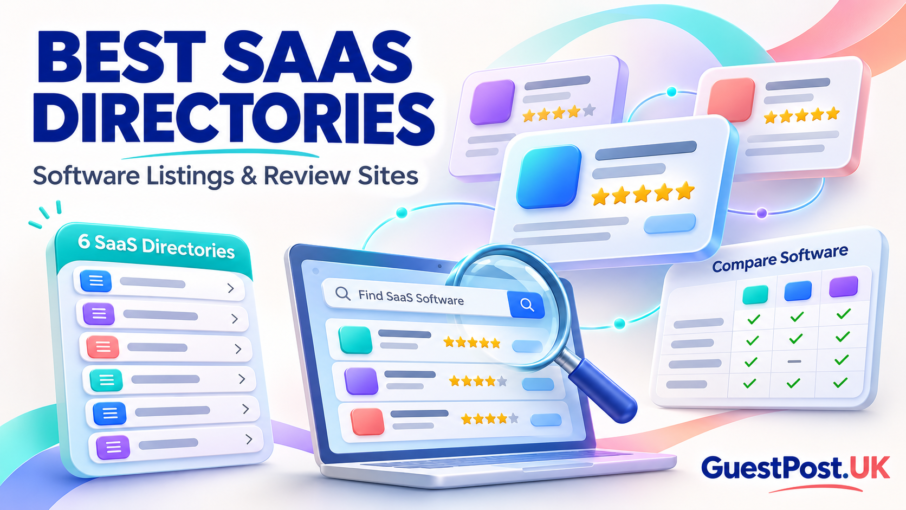
The best SaaS directories for your business match your audience and categories. This guide compares six options, explains their listing routes and highlights what to prepare before submitting.
SaaS Directories and Software Review Sites: The Full List
The six platforms below serve different discovery needs. Some centre on customer reviews; others help visitors explore categories and alternatives.
| Platform | Main discovery model | Best use case | Listing and payment considerations |
|---|---|---|---|
| G2 | B2B software categories and customer reviews | Building a review presence around a defined software category | Free basic profile; paid marketing packages available |
| Capterra | Software research, categories and reviews | Presenting a packaged software product to buyers | Free listing and review collection; optional paid lead generation |
| TrustRadius | Business technology reviews | Collecting customer evidence to support product evaluation | Product listing is free; assess additional vendor services separately |
| SaaSHub | Software discovery and alternatives | Helping users understand where a product fits among alternatives | Review the current product-listing and promotion options |
| AlternativeTo | Community-led software alternatives | Reaching people looking for replacements for existing applications | Account and verified email required; submissions undergo review |
| SourceForge Business Software | Software categories and comparisons | Establishing a business-software profile and assessing paid exposure | Basic listings and paid upgrades; placement benefits vary by plan |
Listing information was checked against official platform guidance in November 2026. Acceptance, available features and commercial terms remain subject to each platform’s current rules.
1. G2: A SaaS Review Site for Category-Based Evaluation
G2 lets vendors create or claim a product profile and collect customer reviews. Its free offering includes a basic profile and basic review collection, while paid packages add marketing capabilities.
Before creating anything, search for your product. An existing profile may need claiming and correcting rather than duplicating. G2’s published process includes research-team verification and approval of profile claims.
Category accuracy should come before promotional polish. An email outreach tool, CRM and newsletter platform may share features, but buyers approach them with different requirements. Select categories that reflect the product’s actual capabilities.
For an SEO outreach product, explain whether it handles prospect research, contact management, campaign sending or reporting. Screenshots should demonstrate those tasks rather than show an attractive dashboard with little context.
G2 is a sensible option to assess when you have customers able to describe real usage. A profile with clear positioning and informative reviews gives buyers more to evaluate than a logo and a broad promise.
Start with the free profile. Consider paid features only after you define what you need, such as different calls to action or access to buyer insights.
2. Capterra: Software Listings With Clear Eligibility Rules
Capterra allows providers to build profiles and collect reviews regardless of whether they purchase its lead-generation services. Its transparency guidance distinguishes sponsored profiles from the wider directory.
Check eligibility before preparing the listing. For software products, Capterra’s guidelines specify a packaged, pre-built solution; bespoke software is excluded under those criteria. The guidelines also prohibit calls to action and contact details inside product descriptions.
That distinction matters for agencies. A company selling custom development should not assume its service qualifies as a packaged SaaS product. A separately available subscription application may fit differently.
Write the description around the user’s job. For example:
A client-reporting platform that helps SEO agencies combine campaign updates, completed work and performance summaries in shareable reports.
Then provide accurate features, screenshots, and pricing information when requested. Avoid treating every available field as another place to repeat the same keyword.
Capterra is worth assessing when your product fits an established business-software category. Compare any paid campaign against customer acquisition costs and qualified enquiries, rather than listing visibility alone.
3. TrustRadius: Customer Evidence Beyond a Star Rating
TrustRadius states that vendors can list products without charge. Its content-integrity guidance encourages inviting reviews from all customers or representative customer samples, supporting a more balanced review programme.
The practical opportunity is to help buyers understand the conditions behind a recommendation. A review explaining team size, implementation effort and limitations can answer questions that a numerical score leaves open.
For example, an agency evaluating reporting software may want to know whether onboarding was straightforward and how well the product handled multiple clients. Those details help readers judge whether another customer’s experience applies to them.
Build a repeatable review request into an appropriate customer milestone, following the platform’s rules. Give customers room to explain both strengths and shortcomings.
Your wider SaaS link-building strategy can support discovery, while a well-maintained review profile gives interested buyers evidence to examine once they find you.
4. SaaSHub: A Software Directory for Alternatives Discovery
Someone searching for an alternative to a familiar tool already has a reference point. They know which features they use, what frustrates them and why they might switch.
SaaSHub organises software around categories and alternatives, making it worth assessing when your product competes with established applications. Its categories span marketing, CRM, developer tools, productivity and other software markets.
Describe the differences that matter to a prospective customer. An outreach platform might offer simpler campaign management for small agencies, while another serves larger teams with more complex workflows. Explain those distinctions accurately.
Before submitting, inspect comparable listings and review the current listing and promotion options. Prepare your official URL, product description, pricing model and relevant categories.
Best use case: helping people evaluating alternatives understand whether your software addresses their requirements.
5. AlternativeTo: For Users Looking to Replace an Application
AlternativeTo allows registered users with verified email addresses to suggest applications. Submissions include information such as supported platforms, licensing, descriptions and tags, and enter a review backlog before approval.
The platform also provides a separate process for suggesting an application as an alternative to an existing entry. Getting your software listed does not automatically make it an approved alternative to every competitor.
Choose comparisons carefully. A keyword research tool is not necessarily a replacement for a complete SEO suite. Suggesting that relationship without explaining the limitations could attract visitors whose expectations your product cannot meet.
Use the description to identify supported tasks, operating environments and meaningful restrictions. Clear information about a free tier, paid subscription or self-hosted option helps visitors assess suitability.
Best use case: products with a defensible relationship to applications that users already know and want to replace.
6. SourceForge Business Software: Listings With Optional Paid Exposure
SourceForge’s business-software section offers product listings and paid marketing upgrades. Its vendor page describes upgraded category placement, enhanced product pages and additional calls to action. It also states that paid category positioning depends on the plan price.
That makes commercial evaluation essential. Before upgrading, ask which categories your product will appear in, what traffic reporting is available and how the package directs visitors towards your website.
For an SEO reporting application, qualified trial registrations would be a more useful measure than profile impressions alone. Assess whether those trials become active accounts and paying customers.
Keep the business-software listing route distinct from SourceForge’s open-source project hosting when choosing where to submit.
Best use case: establishing a software discovery profile and testing paid exposure against a defined acquisition budget.
How to Prepare Your SaaS Directory Listings
Create a shared product-information document containing:
- A concise description of the intended user and problem solved.
- Current pricing, trial terms and important usage limits.
- Screenshots demonstrating real workflows.
- Supported integrations and platforms.
- The official website and relevant landing pages.
Adapt the emphasis to each directory while keeping the facts consistent. Review listings whenever your pricing or core functionality changes.
Use customer language to explain features. Our Google keyword tool can help explore relevant terminology, but avoid turning descriptions into lists of repeated search phrases.
Measuring Results From Software Review Sites
Record the listing URL, publication date, subscription or campaign cost, referral visits and completed conversions. Where tracking is available, follow visitors beyond signup to product activation and revenue.
A review site may also influence someone who later returns directly. Add a short “How did you hear about us?” question to onboarding or sales conversations to capture some of that context.
Treat SEO as one consideration within the wider channel assessment. Google identifies low-quality directory links and links created primarily to manipulate rankings as link-spam examples; paid links should be appropriately qualified. A vendor package should therefore justify its cost through relevant exposure and business outcomes.
For a separate route to editorial coverage, explore UK B2B SaaS publications accepting expert contributions once that scheduled article is live.
SO: Which SaaS Directory Should You Prioritise?
My recommendation is to assess G2, Capterra and TrustRadius first when customer reviews are central to your buying process. Consider SaaSHub and AlternativeTo when prospective customers actively compare replacements. Evaluate SourceForge when its categories match your product, and you can measure any paid campaign.
Begin with two suitable platforms. Complete the profiles, keep information accurate, and collect genuine customer feedback. Expand when the results give you a reason to invest more time or money.