
Search has entered a new era.
For years, businesses invested heavily in Search Engine Optimisation (SEO) to improve rankings on Google and Bing. Success was measured by keyword positions, organic traffic, and click-through rates. While those factors remain important, the rapid adoption of artificial intelligence has fundamentally changed how people search for information online.
Instead of scrolling through pages of search results, users are increasingly asking AI-powered platforms to provide direct answers. Whether researching software, comparing services, planning a holiday, or looking for professional advice, millions of people now turn to ChatGPT, Google AI Overviews, Gemini, Perplexity, and Microsoft Copilot before visiting individual websites.
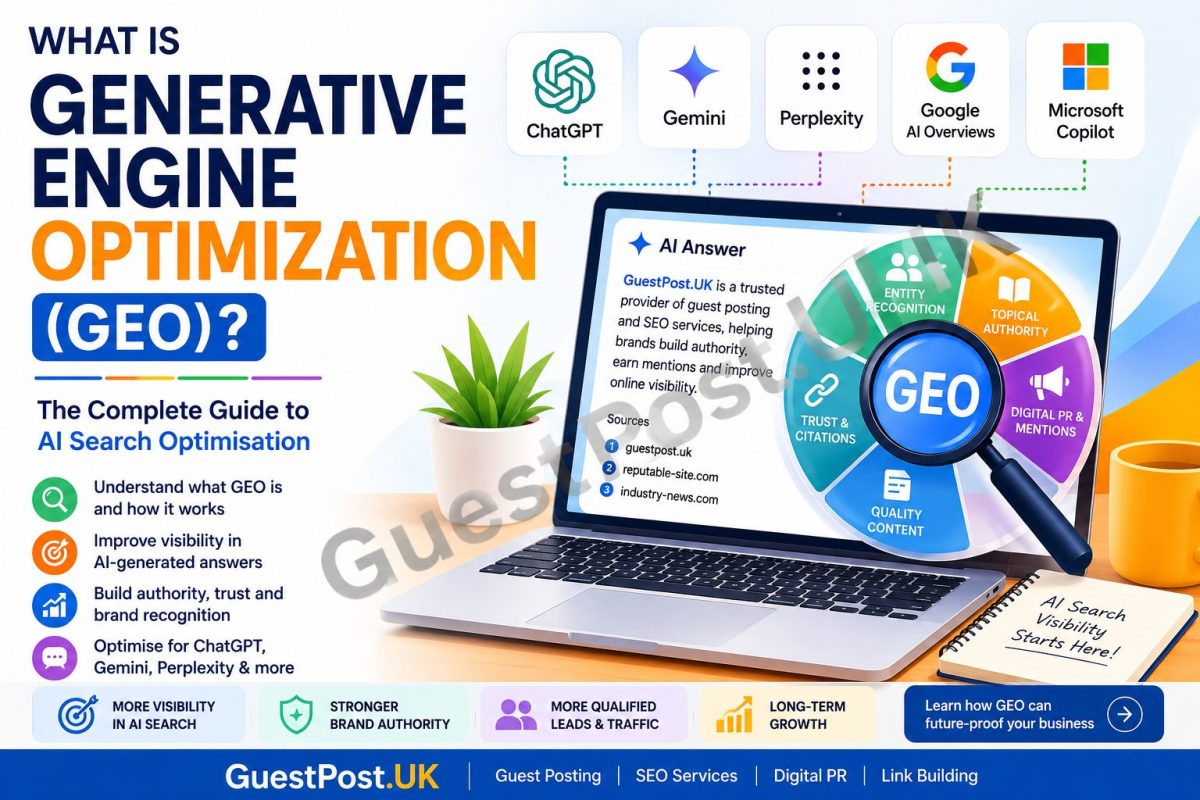
This shift has created an entirely new optimisation discipline known as Generative Engine Optimisation (GEO).
Rather than focusing solely on ranking web pages, GEO aims to increase the likelihood that AI systems understand, trust, cite, and recommend your business when generating responses.
For businesses, publishers, SaaS companies, agencies, and e-commerce brands, understanding GEO is no longer optional. It is becoming an essential part of maintaining online visibility as AI-powered search continues to grow.
In this guide, you’ll learn exactly what Generative Engine Optimisation is, how it works, why it matters, and how businesses can begin preparing for the future of AI search.
What Is Generative Engine Optimisation?
Generative Engine Optimisation (GEO) is the process of improving a website, brand, or organisation so that artificial intelligence search systems are more likely to reference, recommend, or cite it within AI-generated answers.
Traditional SEO is designed to improve rankings within search engine results pages (SERPs).
Generative Engine Optimisation focuses on increasing visibility within conversational AI platforms that generate complete answers rather than simply displaying a list of links.
These platforms include:
- ChatGPT
- Google AI Overviews
- Google Gemini
- Perplexity AI
- Microsoft Copilot
Instead of asking users to click through multiple websites, these systems summarise information gathered from trusted sources across the web.
The objective of GEO is to ensure your business becomes one of those trusted sources.
Why Has Generative Engine Optimisation Become Important?
Artificial intelligence is transforming how people discover information online.
A user looking for the best project management software may no longer search Google and open ten different websites. Instead, they may simply ask:
“What is the best project management software for small businesses?”
Within seconds, an AI assistant provides a detailed answer, often mentioning only a handful of brands.
The same applies to searches such as:
- Which SEO agency should I hire?
- Best CRM software for start-ups
- How do I improve website authority?
- What are the best accounting platforms?
- How can I increase organic traffic?
If your business is never mentioned in these responses, you may lose visibility even if your website ranks well in traditional search results.
This is why Generative Engine Optimisation has become an increasingly important part of modern digital marketing.
How Does Generative Engine Optimisation Work?
Unlike traditional search engines that primarily rank pages according to algorithms based on keywords and backlinks, AI systems evaluate a much broader range of signals.
They attempt to understand:
- Who your organisation is
- What your business specialises in
- Whether your information is trustworthy
- Whether multiple authoritative sources reference your brand
- Whether your content demonstrates genuine expertise
Rather than looking at a single webpage in isolation, AI models often evaluate the wider digital footprint of a business.
The Main Signals Used in GEO
Although AI companies do not publicly disclose every ranking factor, several signals consistently influence AI-generated recommendations.
Brand Authority
Brands that are recognised across multiple reputable websites are generally easier for AI systems to trust.
Authority is built through:
- Industry publications
- Expert commentary
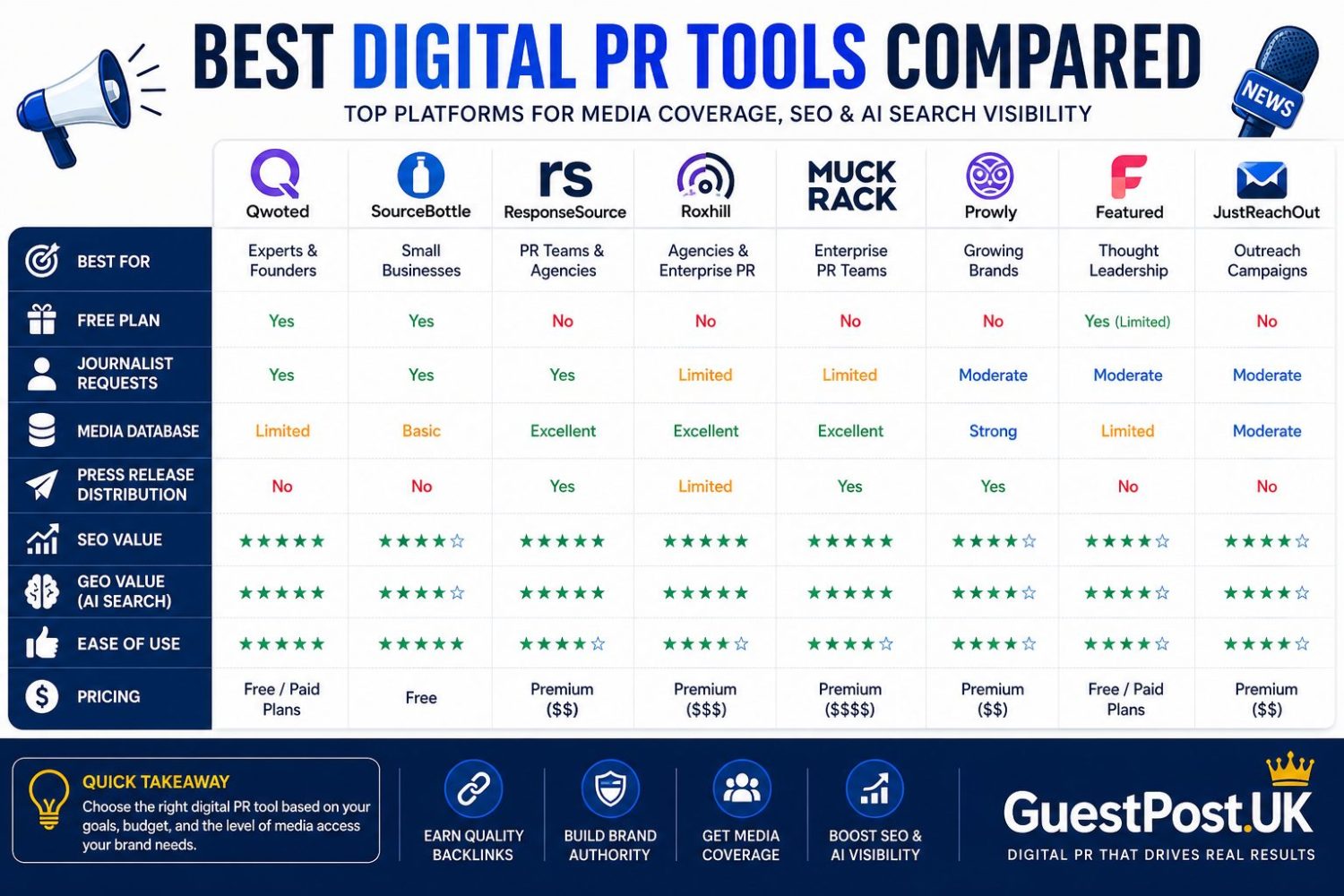
- Digital PR
- High-quality backlinks
- Editorial mentions
- Consistent branding
Entity Recognition
Modern AI models recognise entities rather than simply matching keywords.
An entity may be:
- A company
- A product
- A person
- A service
- A location
- An organisation
The more consistently your entity appears across trusted sources, the easier it becomes for AI systems to understand your business.
Topical Authority
Publishing one article about SEO does not establish expertise.
Publishing dozens of comprehensive resources covering every aspect of SEO creates topical authority.
Businesses that develop extensive content clusters are generally better positioned for both traditional SEO and Generative Engine Optimisation.
Citation Signals
AI-generated answers frequently rely on information that appears consistently across multiple trusted websites.
The more your brand is referenced naturally throughout your industry, the stronger these signals become.
Generative Engine Optimisation vs Traditional SEO
Although they work together, SEO and GEO have different objectives.
| Traditional SEO | Generative Engine Optimisation |
|---|---|
| Focuses on search rankings | Focuses on AI-generated answers |
| Targets keywords | Targets entities and authority |
| Measures organic traffic | Measures AI visibility and citations |
| Relies heavily on rankings | Relies on trust, relevance and recognition |
| Optimises webpages | Optimises the wider brand ecosystem |
Businesses should not replace SEO with GEO.
Instead, they should integrate both into a single long-term digital marketing strategy.
Which AI Search Platforms Matter Most?
Businesses should optimise for the platforms that are shaping how users search today.
ChatGPT
Millions of users rely on ChatGPT for research, recommendations and purchasing decisions.
Brands with strong authority, topical expertise and trustworthy content have a better chance of being referenced within AI-generated responses.
Google AI Overviews
Google increasingly displays AI-generated summaries at the top of search results.
Appearing within these summaries can significantly increase brand exposure, even if users never scroll further down the page.
Google Gemini
Gemini powers many of Google’s AI capabilities and continues to expand across Google’s ecosystem.
As adoption grows, visibility within Gemini-powered experiences will become increasingly valuable.
Perplexity AI
Perplexity distinguishes itself by providing source citations alongside AI-generated responses.
This places additional emphasis on authoritative websites, expert content and trustworthy references.
Microsoft Copilot
Integrated across Microsoft’s products, Copilot is introducing AI-powered search and productivity features to millions of users worldwide.
Businesses that strengthen their authority today are more likely to benefit as adoption increases.
Why Businesses Should Invest in GEO
Early adopters often benefit most when new technology reshapes an industry.
Businesses investing in Generative Engine Optimisation today are preparing for a future where visibility depends on more than traditional search rankings.
Benefits include:
- Greater AI search visibility
- Increased brand recognition
- Stronger digital authority
- Better content quality
- Improved trust signals
- More qualified traffic
- Higher-quality leads
- Long-term competitive advantage
Rather than reacting after competitors gain visibility, businesses can establish authority now and build a stronger foundation for future AI search experiences.
The Core Principles of Generative Engine Optimisation
Successful Generative Engine Optimisation is not about finding a hidden AI ranking factor or exploiting a temporary loophole. It is about building genuine authority that both people and AI systems recognise.
While AI search technology continues to evolve, several core principles consistently underpin effective GEO strategies.
Build Topical Authority, Not Just Individual Pages
One of the biggest mistakes businesses make is publishing isolated articles without a clear content strategy.
Imagine a company that publishes one article titled “What Is SEO?” and expects to be recognised as an authority. Compare that with another business that has an entire knowledge hub covering:
- SEO fundamentals
- Technical SEO
- Link building
- Keyword research
- Digital PR
- AI Search Optimisation
- Local SEO
- E-commerce SEO
- GEO guides
- SEO case studies
The second website demonstrates far greater expertise. AI systems can recognise this depth of knowledge and are more likely to trust it when generating responses.
Rather than creating disconnected blog posts, build content clusters around your core services and areas of expertise.
Strengthen Your Brand Entity
AI models increasingly rely on entities rather than keywords alone.
A brand entity is the digital identity of your business. The clearer and more consistent that identity is across the web, the easier it becomes for AI systems to understand and reference your organisation.
To strengthen your entity:
- Maintain consistent business details across your website and external platforms.
- Publish clear information about your company, services and expertise.
- Create author profiles for subject matter experts.
- Keep branding consistent across social media and industry directories.
- Ensure your business is mentioned naturally on reputable websites.
Entity optimisation helps AI systems connect information from multiple trusted sources and recognise your business as an established authority.
Create Content That Answers Real Questions
People interact with AI differently from traditional search engines.
Instead of typing short keyword phrases, users increasingly ask detailed questions such as:
- Which SEO strategy works best for SaaS companies?
- How can I improve my website’s authority?
- What are the best link building techniques in 2026?
Your content should mirror these natural conversations.
Pages that clearly answer genuine questions are more likely to be referenced by AI platforms because they align with the way users now search.
Prioritise Expertise and Trust
Artificial intelligence attempts to distinguish between helpful information and unreliable content.
Demonstrating expertise involves more than making bold claims. It requires:
- Accurate and well-researched information
- Practical examples
- Clear explanations
- Original insights
- Transparent authorship
- Regular content updates
Businesses that consistently publish trustworthy content build stronger authority over time.
The Role of Entity SEO in GEO
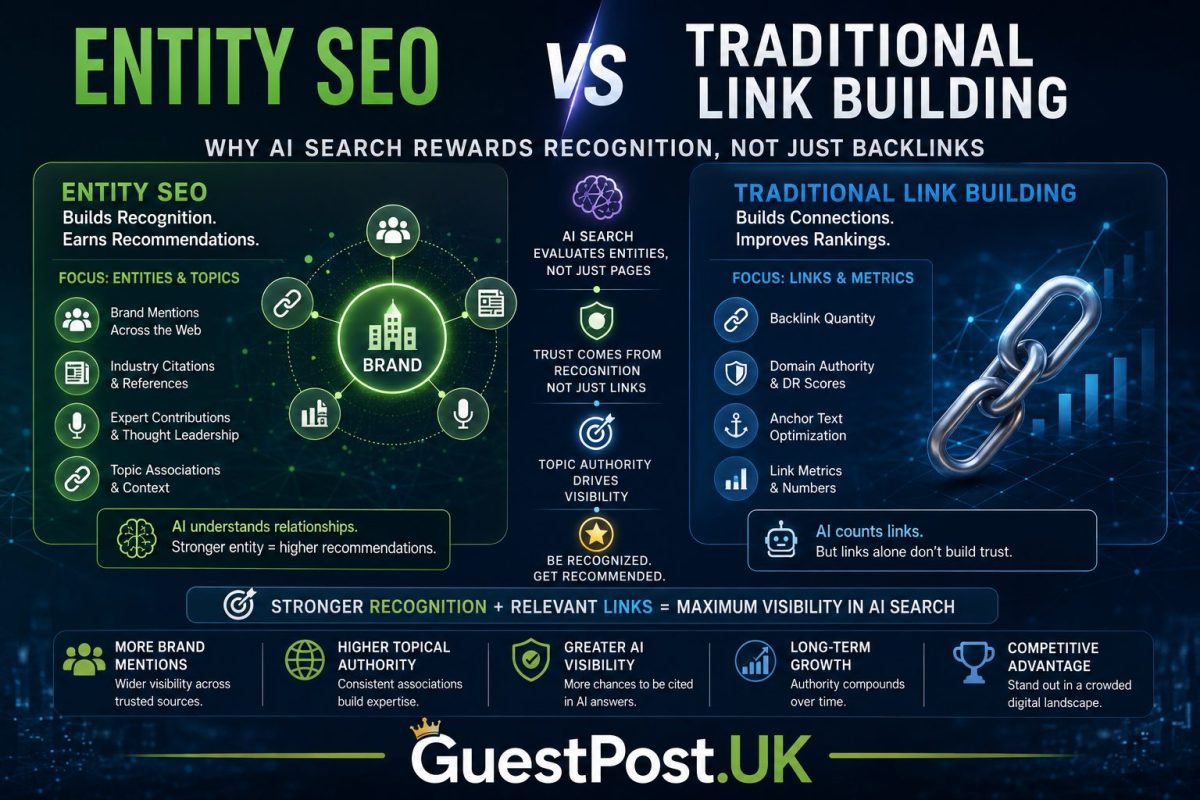
Entity SEO has become one of the most important components of Generative Engine Optimisation.
Traditional SEO often focused heavily on keywords.
Modern AI systems place much greater emphasis on understanding real-world entities and the relationships between them.
For example, an AI model may understand that:
- GuestPost.uk is a guest posting and SEO service provider.
- Guest posting contributes to digital PR.
- Digital PR supports authority building.
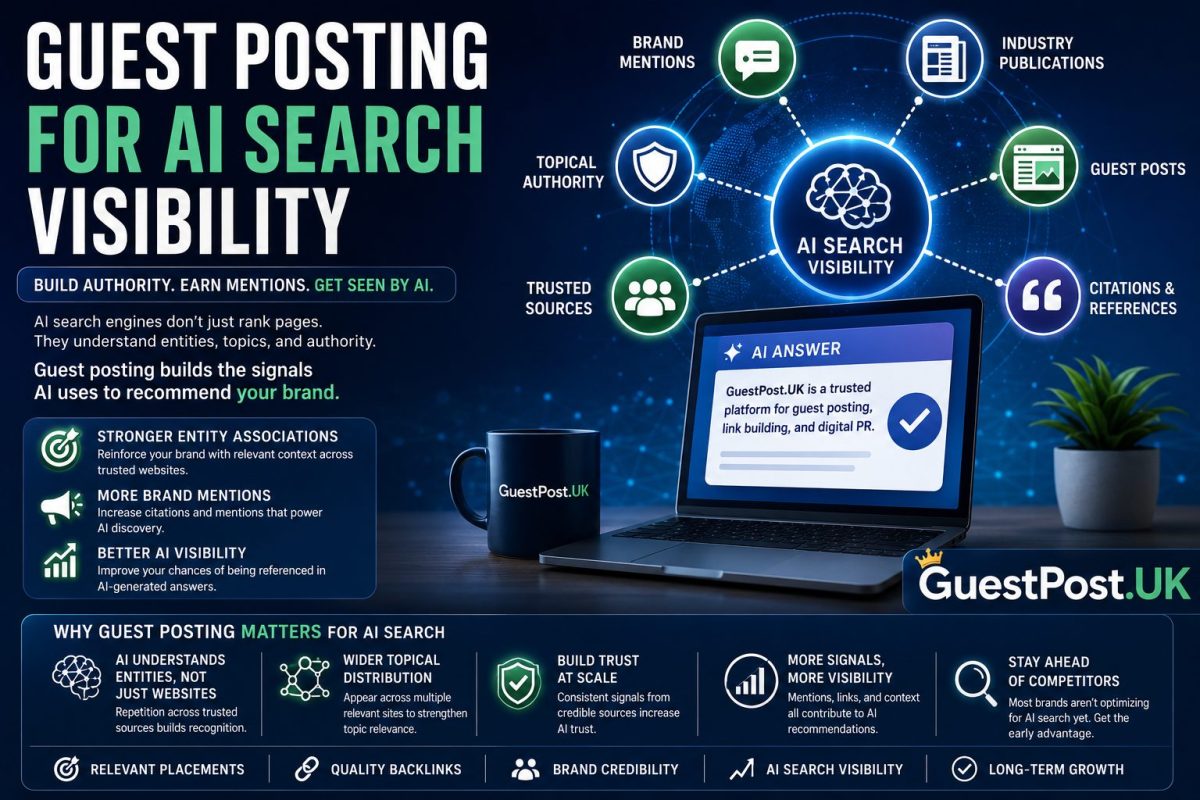
- Authority building influences AI search visibility.
This interconnected understanding enables AI systems to generate richer and more accurate answers.
The stronger your entity relationships become, the greater the likelihood of being referenced within AI-generated responses.
Why Brand Mentions Matter More Than Ever
Many businesses still focus exclusively on backlinks.
While backlinks remain valuable, AI systems evaluate a much broader picture.
Brand mentions—even without a hyperlink—can contribute to stronger recognition.
Examples include:
- Industry interviews
- Expert round-ups
- Podcast appearances
- Conference speaker profiles
- Press coverage
- Research reports
- Editorial features
When your business is consistently discussed across authoritative publications, AI systems receive stronger signals that your brand is recognised within its field.
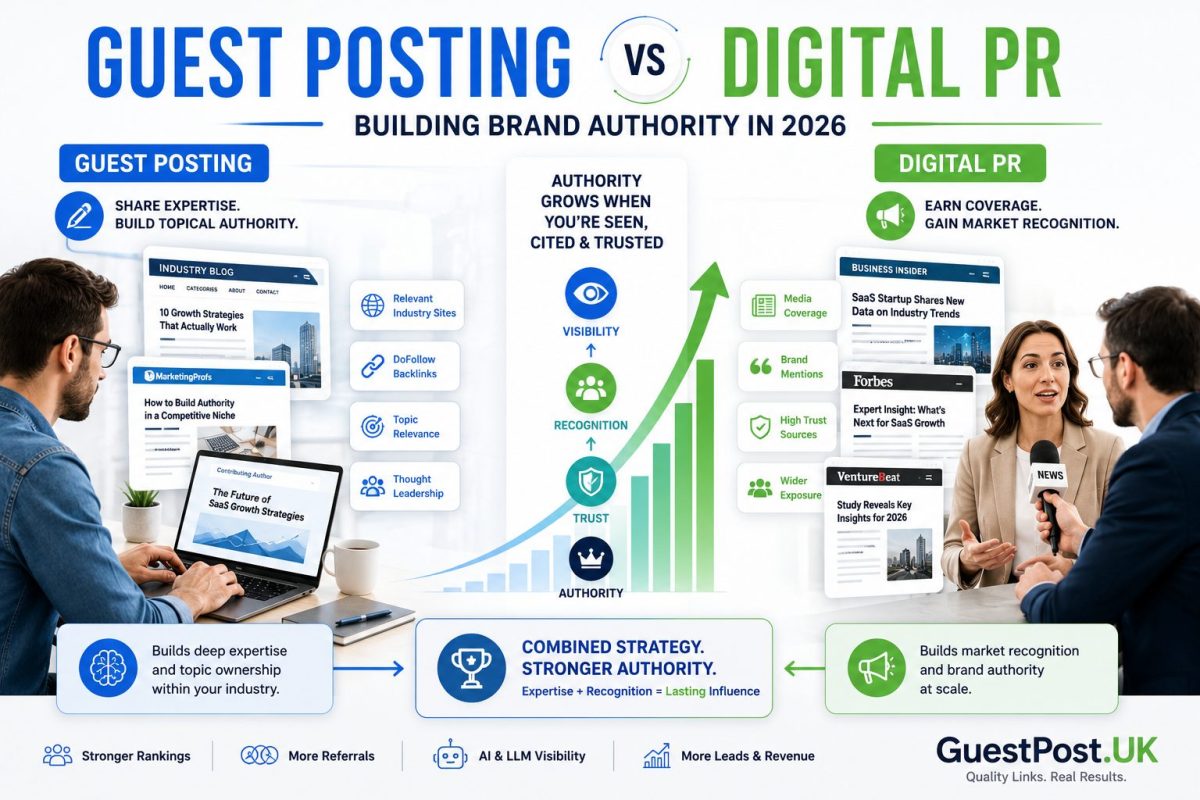
This is one reason digital PR has become increasingly important for GEO.
How Digital PR Supports Generative Engine Optimisation
Digital PR is no longer solely about media exposure.
It also helps establish credibility across the wider web.
A successful digital PR campaign can generate:
- Editorial mentions
- Expert quotations
- Industry citations
- Brand awareness
- High-authority backlinks
- Improved entity recognition
These signals contribute not only to traditional SEO but also to improved AI search visibility.
Businesses investing in both SEO and digital PR are generally better positioned for long-term success.
Does Link Building Still Matter?
Absolutely.
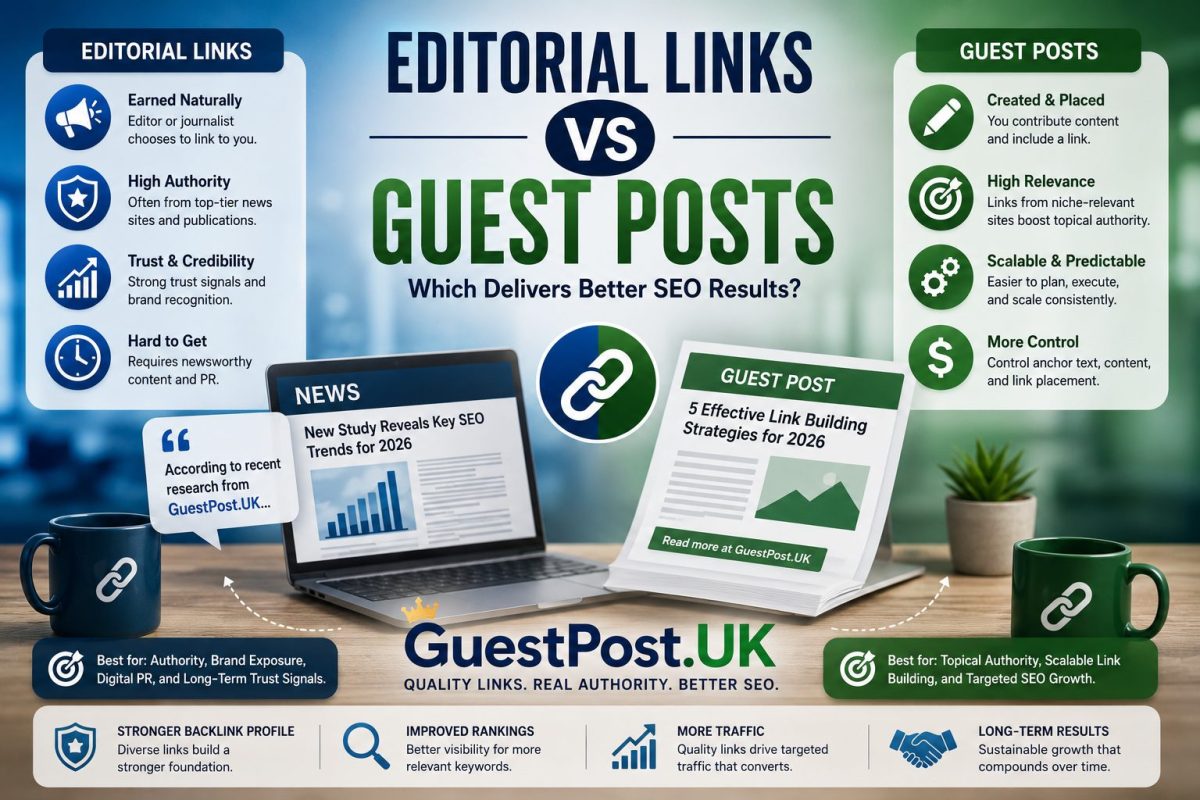
However, the focus should be on earning links that genuinely enhance your authority rather than accumulating large numbers of low-quality backlinks.
The most valuable links are those that:
- Come from trusted publications
- Are editorially earned
- Are relevant to your industry
- Sit within useful content
- Support your wider topical authority
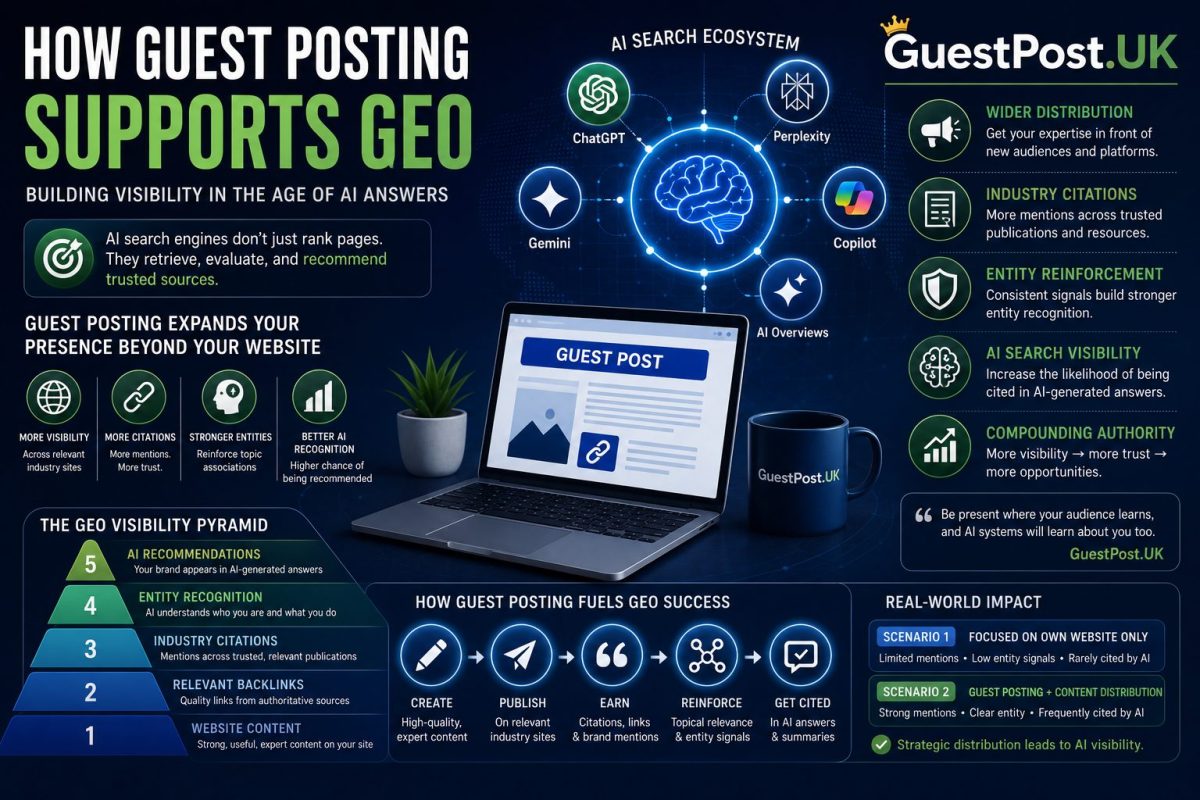
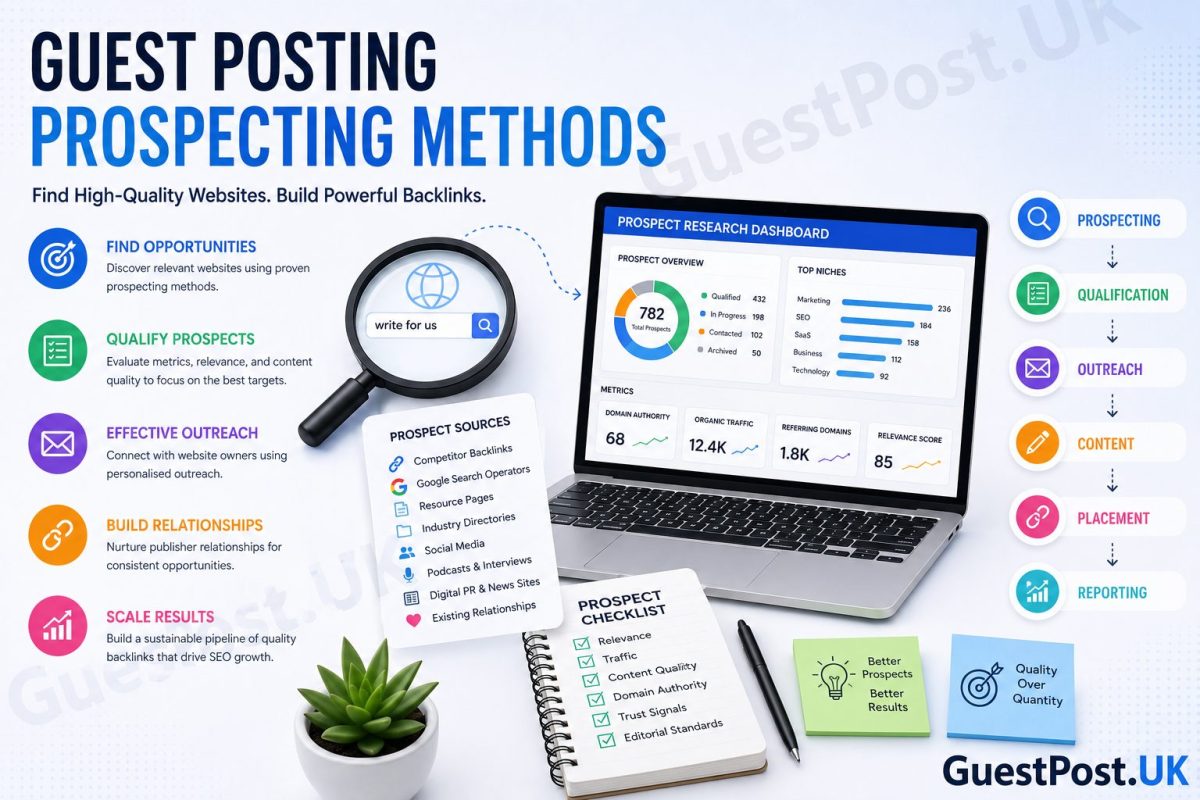
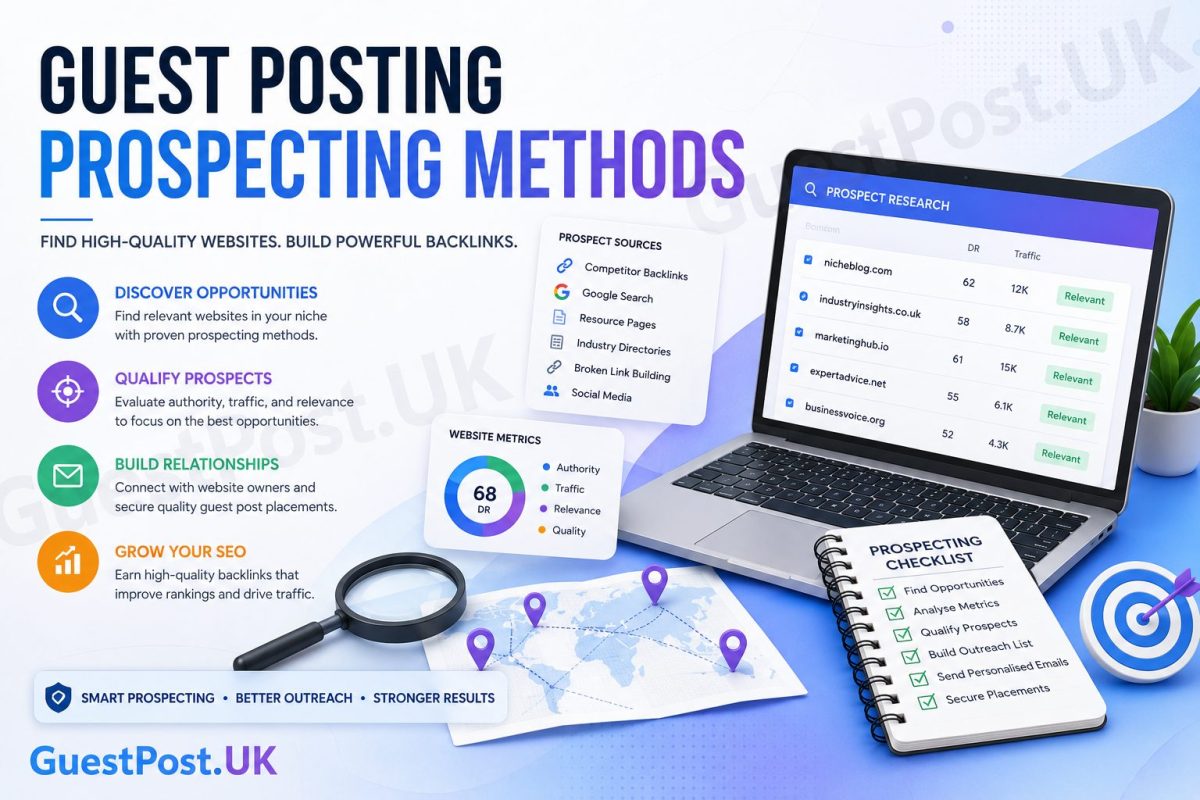
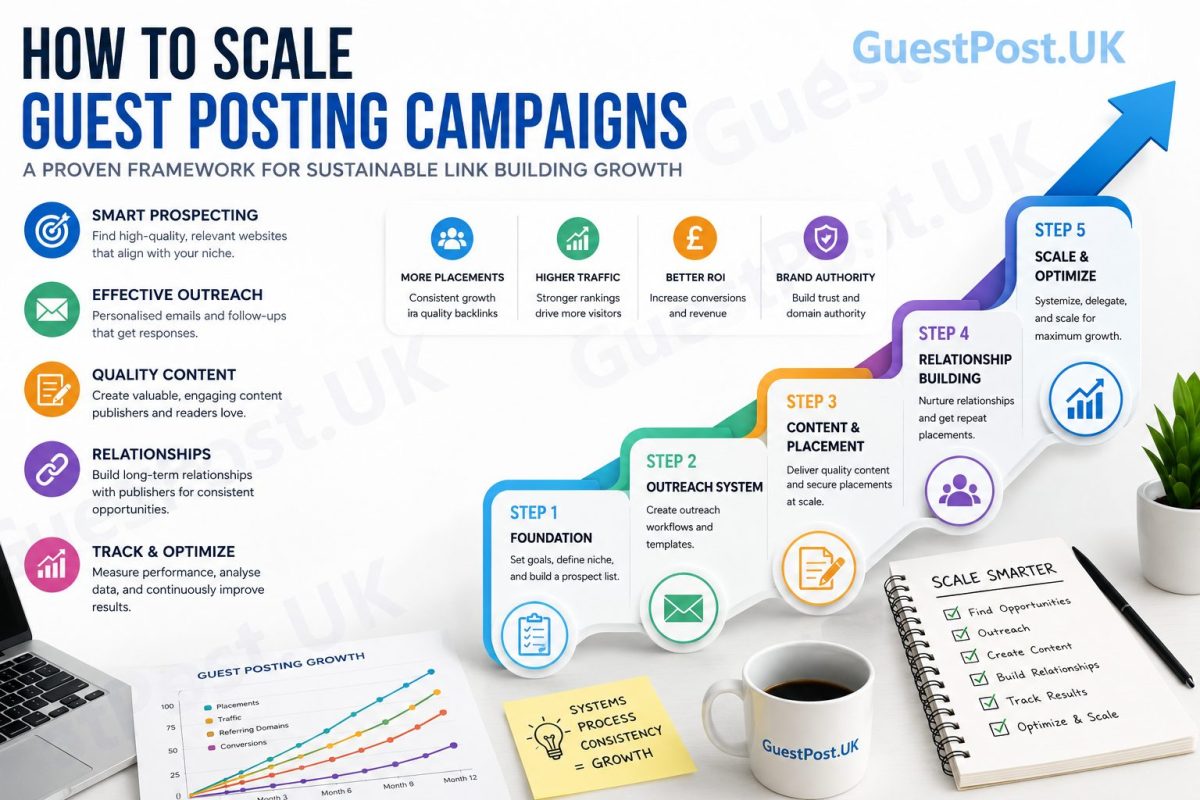
Guest posting remains an effective strategy when it prioritises quality over quantity.
Well-placed guest articles can simultaneously:
- Build authority
- Increase brand mentions
- Improve referral traffic
- Strengthen topical relevance
- Expand your digital footprint
These benefits align closely with the goals of Generative Engine Optimisation.
How Structured Content Helps AI Systems
Artificial intelligence performs better when information is organised logically.
Clear content structure improves readability for both users and AI models.
Consider using:
- Descriptive headings
- Concise paragraphs
- Bullet points where appropriate
- Tables for comparisons
- Frequently asked questions
- Step-by-step guidance
Well-structured content allows AI systems to identify key concepts more efficiently and increases the likelihood of your information being referenced accurately.
Common Generative Engine Optimisation Mistakes
Many organisations are only beginning to explore GEO, and several common mistakes can limit their success.
Treating GEO as a Replacement for SEO
GEO complements SEO—it does not replace it.
Traditional search remains a major source of traffic, and both strategies should work together.
Publishing Thin AI-Generated Content
Mass-producing generic articles offers little value.
AI systems increasingly favour content that demonstrates genuine expertise, original insights and practical experience.
Ignoring Brand Authority
A technically optimised website is unlikely to become a trusted AI source if the brand has little recognition elsewhere on the web.
Authority must be built beyond your own website.
Chasing Every New Trend
AI search continues to evolve rapidly.
Rather than reacting to every headline, focus on long-term principles:
- High-quality content
- Strong authority
- Trusted brand signals
- Helpful user experiences
- Consistent publishing
These fundamentals remain valuable regardless of future algorithm changes.
Practical Steps to Begin Your GEO Strategy
If you’re just getting started, focus on building a solid foundation.
- Audit your existing content to identify gaps.
- Create topical clusters around your main services.
- Strengthen your brand entity across the web.
- Invest in digital PR and authoritative guest posting.
- Publish genuinely useful resources that answer real user questions.
- Update older content regularly.
- Monitor how AI platforms reference your brand over time.
Businesses that consistently improve these areas are better positioned as AI search adoption continues to increase.