
Entity SEO vs Keyword SEO: Understanding the Shift in Search
The debate around entity SEO vs keyword SEO has intensified as search engines evolve beyond simple keyword matching. While traditional SEO relied heavily on optimising for exact-match phrases, modern algorithms interpret meaning, context, and relationships between topics.
If you’re still relying solely on keyword density and exact phrases, you’re likely leaving rankings—and traffic—on the table. Understanding entity SEO vs keyword SEO is now essential for anyone serious about organic growth, especially in competitive niches like SaaS, affiliate marketing, and guest posting.
What Is Keyword SEO?
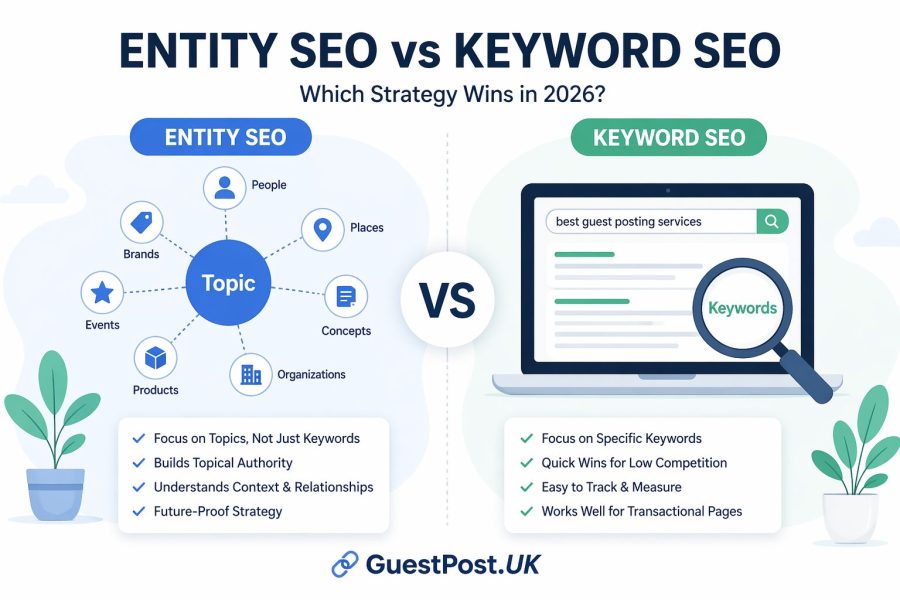
Keyword SEO is the traditional approach to search optimisation. It focuses on identifying specific search terms and optimising content around them.
Core Principles of Keyword SEO
- Targeting exact-match keywords
- Optimising title tags, headings, and meta descriptions
- Maintaining keyword density
- Using long-tail keyword variations
- Building backlinks with keyword-rich anchor text
Example
If your target keyword is “guest posting services”, keyword SEO would involve:
- Including the phrase in H1, H2s, and body content
- Using variations like “buy guest posts” or “guest blogging services”
- Structuring content around search queries
Strengths of Keyword SEO
- Clear and measurable
- Easy to implement
- Effective for low-competition niches
- Works well for transactional intent
Limitations
- Prone to over-optimisation
- Struggles with semantic understanding
- Less effective with modern search algorithms
- Can lead to thin or repetitive content
What Is Entity SEO?
Entity SEO is a more advanced, semantic approach. Instead of focusing purely on keywords, it optimises content around entities—people, places, concepts, brands, and relationships.
Search engines like Google use structured data and knowledge graphs to understand how entities connect.
Core Principles of Entity SEO
- Topic-based optimisation rather than keyword-based
- Use of structured data (schema markup)
- Building topical authority
- Linking related concepts and entities
- Contextual relevance over exact-match keywords
Example
Instead of just targeting “guest posting services”, entity SEO would include:
- Related entities like “link building”, “content marketing”, “domain authority”
- Mentions of recognised platforms, tools, or brands
- Contextual coverage of the broader topic
Entity SEO vs Keyword SEO: Key Differences
1. Approach to Optimisation
- Keyword SEO: Focuses on exact phrases
- Entity SEO: Focuses on meaning and relationships
2. Content Strategy
- Keyword SEO: Individual pages per keyword
- Entity SEO: Topic clusters and semantic coverage
3. Search Engine Understanding
- Keyword SEO: Matching words
- Entity SEO: Understanding intent and context
4. Longevity
- Keyword SEO: Short-term gains
- Entity SEO: Long-term authority
5. Algorithm Compatibility
- Keyword SEO: Works with older algorithms
- Entity SEO: Aligned with modern AI-driven search
Why Entity SEO Is Gaining Dominance
Search engines are no longer just matching strings—they’re interpreting meaning.
Key Drivers Behind the Shift
- AI-driven algorithms like BERT and MUM
- Increased use of voice search
- Rise of zero-click searches
- Knowledge graph expansion
When comparing entity SEO vs keyword SEO, it becomes clear that entity-based optimisation aligns better with how Google processes information today.
Real-World Applications: SEO and Guest Posting
Keyword SEO in Guest Posting
- Anchor text optimisation
- Targeting exact-match keywords in articles
- Building links for specific landing pages
Entity SEO in Guest Posting
- Publishing content on authoritative topics
- Linking to relevant entities and concepts
- Building topical authority across domains
Practical Example
Instead of writing 10 articles targeting variations of “buy backlinks”, an entity SEO approach would involve:
- Covering topics like “link earning strategies”
- Discussing “Google penalties”
- Referencing industry experts and tools
- Creating a content ecosystem
Features and Benefits of Each Approach
Keyword SEO Benefits
- Quick ranking improvements
- Easier to track performance
- Ideal for niche affiliate sites
- Lower barrier to entry
Entity SEO Benefits
- Stronger topical authority
- Better alignment with search intent
- Improved long-term rankings
- Higher content quality signals
Pros and Cons: Entity SEO vs Keyword SEO
Keyword SEO
Pros
- Simple implementation
- Predictable results
- Works for low competition
Cons
- Outdated in many contexts
- Vulnerable to algorithm updates
- Limited scalability
Entity SEO
Pros
- Future-proof strategy
- Better user experience
- Higher trust and authority signals
Cons
- More complex to execute
- Requires a deeper content strategy
- Slower initial results
Performance Comparison: Which Delivers Better Results?
Ranking Stability
Entity SEO tends to produce more stable rankings because it builds authority rather than targeting isolated keywords.
Traffic Quality
Entity-based content attracts more qualified traffic due to better intent matching.
Conversion Rates
Users engaging with entity-driven content are often further along the buyer journey.
Scalability
Keyword SEO struggles at scale due to duplication and overlap, whereas entity SEO thrives through topic expansion.
Graph Insights: Trends in SEO Evolution
If you were to visualise the evolution of entity SEO vs keyword SEO, you’d notice:
- A steady decline in reliance on exact-match keywords
- A sharp increase in semantic search adoption
- Growth in topic clusters and content hubs
- Higher engagement metrics for entity-driven content
Tools That Support Entity SEO
While keyword tools still dominate, several platforms now support entity-based optimisation.
Popular Tools
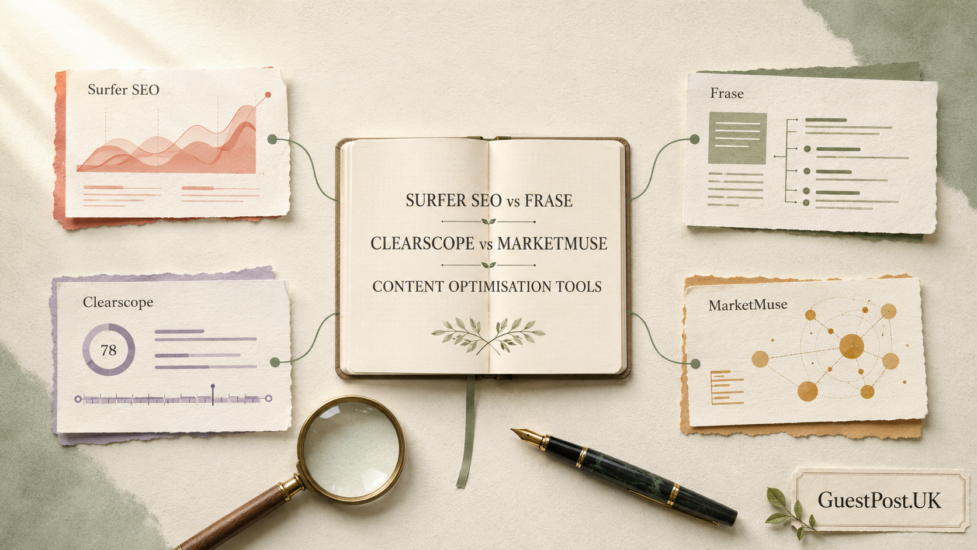
- Google NLP API
- Surfer SEO
- Clearscope
- MarketMuse
- InLinks
Mini Reviews
Surfer SEO
Best for combining keyword and entity optimisation. It provides NLP-based suggestions alongside keyword density.
Clearscope
Strong for content grading and semantic keyword inclusion.
MarketMuse
Advanced AI-driven platform focused on topic authority and content gaps.
InLinks
Specialises in entity SEO with internal linking automation and schema integration.
Best Use Cases: When to Use Each Strategy
Use Keyword SEO When:
- Targeting low-competition niches
- Running affiliate sites
- Launching new websites
- Focusing on quick wins
Use Entity SEO When:
- Building long-term authority
- Scaling SaaS or agency sites
- Competing in high-authority niches
- Creating content hubs
Entity SEO vs Keyword SEO for SaaS and Agencies
For SaaS companies and SEO agencies, the comparison between entity SEO vs keyword SEO becomes even more critical.
SaaS
- Entity SEO helps build topical authority around product categories
- Improves visibility for informational and commercial queries
Agencies
- Enables scalable content strategies
- Enhances client results through holistic optimisation
Common Mistakes to Avoid
Overusing Keywords
Keyword stuffing still happens—and it still hurts rankings.
Ignoring Context
Content that lacks semantic depth struggles to rank.
Poor Internal Linking
Entity SEO relies heavily on connecting related topics.
Thin Content
Both strategies fail when content lacks substance.
How to Combine Entity SEO and Keyword SEO
The smartest approach isn’t choosing one—it’s integrating both.
Hybrid Strategy
- Start with keyword research
- Expand into topic clusters
- Add semantic depth
- Use structured data
- Build internal links
This hybrid model bridges the gap in entity SEO vs keyword SEO, delivering both relevance and authority.
Final Verdict: Entity SEO vs Keyword SEO
The comparison of entity SEO vs keyword SEO isn’t about replacing one with the other—it’s about evolution.
- Keyword SEO still has value for targeting and structure
- Entity SEO is essential for scalability and long-term success
Recommendations
- Beginners: Start with keyword SEO, then layer in entity optimisation
- Intermediate SEOs: Transition to topic clusters and semantic content
- Advanced marketers: Focus heavily on entity SEO and knowledge graph alignment
If your goal is to rank competitively in 2026 and beyond, entity SEO should form the backbone of your strategy—with keyword SEO supporting it.
FAQs: Entity SEO vs Keyword SEO
What is the main difference between entity SEO and keyword SEO?
Keyword SEO focuses on specific phrases, while entity SEO focuses on concepts, context, and relationships between topics.
Is keyword SEO still relevant?
Yes, but it should be used alongside entity SEO rather than as a standalone strategy.
Does Google prefer entity SEO?
Modern algorithms favour semantic understanding, which makes entity SEO more effective in the long term.
Can I rank without using entity SEO?
In low-competition niches, yes. In competitive markets, it’s increasingly difficult.
How do I start with entity SEO?
Begin by building topic clusters, using structured data, and expanding content beyond single keywords.
Strategic Takeaway
If you’re serious about scaling organic traffic, the conversation around entity SEO vs keyword SEO shouldn’t be theoretical—it should directly influence how you build content, links, and authority.
Shift from chasing keywords to owning topics. That’s where sustainable rankings are built.