
Google has spent years helping users find answers.
Now it increasingly provides those answers directly.
With the rollout of Google AI Overviews, search behaviour is changing rapidly. Users can receive detailed AI-generated responses without clicking a single link.
For businesses, publishers, agencies, and SaaS companies, this creates both a challenge and an opportunity.
The challenge:
Getting traffic is becoming harder.
The opportunity:
Being featured inside an AI Overview can put your brand in front of thousands of potential customers before they even consider visiting competitors.
The question is no longer:
“How do I rank first?”
The question is becoming:
“How do I become one of the sources Google’s AI chooses to trust?”
This guide explains exactly how.
What Are Google AI Overviews?
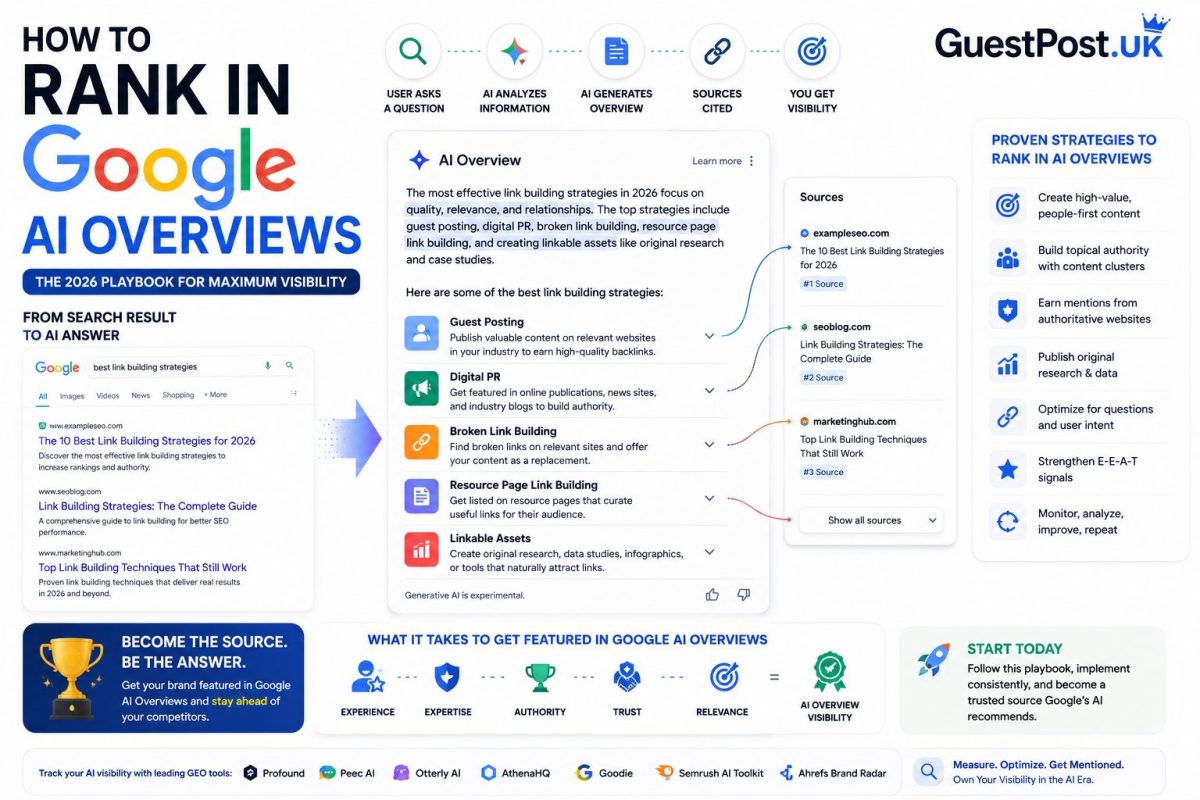
Google AI Overviews are AI-generated summaries displayed at the top of selected search results.
Instead of showing only traditional rankings, Google generates an answer by combining information from multiple trusted sources.
Users may see:
- Summaries
- Recommendations
- Comparisons
- Explanations
- Product suggestions
- Lists
alongside links to source websites.
Being included can generate:
- Brand exposure
- Authority signals
- Referral traffic
- Trust
- Increased visibility
even when users never click immediately.
Why Traditional Rankings Alone Are No Longer Enough
Imagine two websites.
Website A ranks #1.
Website B ranks #4.
Historically, Website A wins.
Now imagine Google’s AI Overview references Website B multiple times while Website A receives no mention.
Suddenly, the visibility equation changes.
This is why businesses are increasingly investing in GEO alongside traditional SEO.
The Google AI Overview Blueprint
Through analysing hundreds of AI Overview results, several recurring patterns become obvious.
Google consistently favours websites that demonstrate:
- Expertise
- Authority
- Trust
- Relevance
- Clarity
Let’s break down how to build each of these.
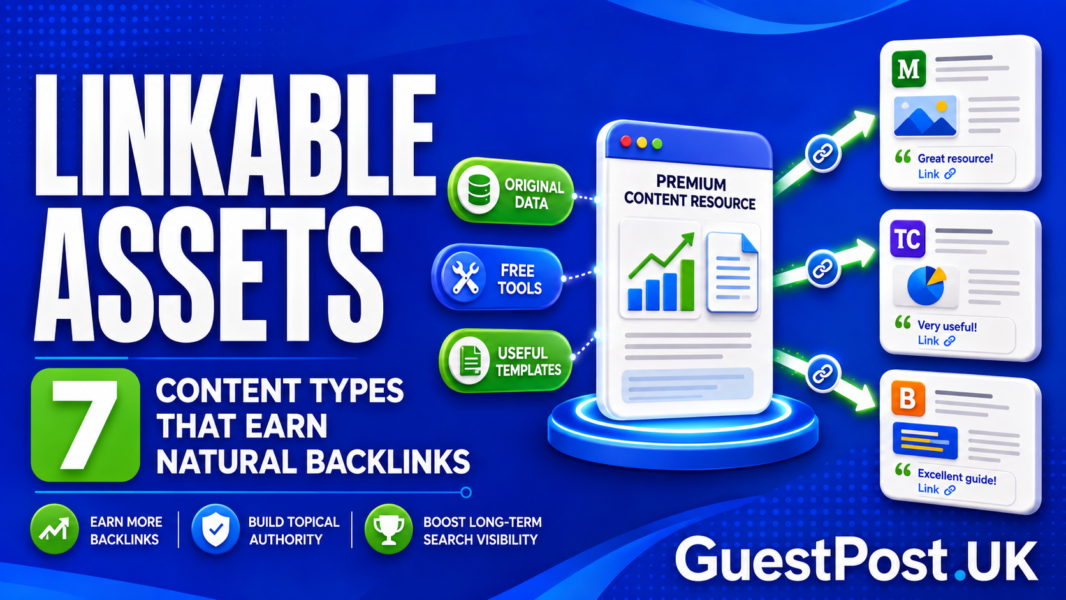
Step 1: Become the Best Source, Not Just Another Source
Many websites publish content.
Very few publish genuinely useful content.
Google’s AI systems appear particularly interested in content that:
- Solves a problem
- Provides practical guidance
- Includes examples
- Includes expert insight
- Includes original information
A generic article rarely stands out.
A useful article often does.
Weak Content Example
“Link building is important for SEO.”
Strong Content Example
“In our outreach campaigns, guest posts on industry-relevant websites generated 37% higher referral engagement than general directories.”
Which statement is more likely to be referenced?
The second.
Because it adds value.
Step 2: Build Topical Authority
One article won’t rank you in AI Overviews.
A content ecosystem might.
Google increasingly evaluates entire topic coverage.
For example, a guest posting website should build content around:
Not random unrelated subjects.
Think less about individual articles and more about topic ownership.
The Topic Cluster Formula
Hub Page
↓
Supporting Articles
↓
Case Studies
↓
Comparisons
↓
Statistics
↓
Expert Commentary
This structure creates authority signals that Google can recognise.
Step 3: Add First-Hand Experience
One thing becoming increasingly obvious is Google’s preference for experience-driven content.
Articles written by practitioners tend to perform better than articles written by observers.
For example:
“After building links for over 300 websites, we found that niche relevance consistently outperformed raw domain metrics.”
Statements like this signal experience.
Experience creates trust.
Trust increases citation potential.
Step 4: Earn Mentions Beyond Your Website
This is where many SEO campaigns fail.
Brands focus entirely on publishing.
Google pays attention to what other websites say, too.
Strong AI Overview performers often appear across:
- Industry blogs
- News websites
- Podcasts
- Interviews
- Roundups
- Research reports
This creates entity authority.
Why Digital PR Is Becoming Essential
One SEO strategist recently described digital PR this way:
“Backlinks help Google find you. Mentions help Google trust you.”
Whether completely accurate or not, the principle is important.
Visibility outside your own website matters.
Step 5: Create Content Worth Citing
Google’s AI systems frequently pull information from content that offers something unique.
Examples include:
Original Statistics
Industry data performs exceptionally well.
Surveys
Unique findings create citations.
Research Reports
Data-driven content attracts links and references.
Expert Opinions
Original viewpoints stand out.
Case Studies
Real-world examples increase credibility.
The goal is simple:
Become the source that other people reference.
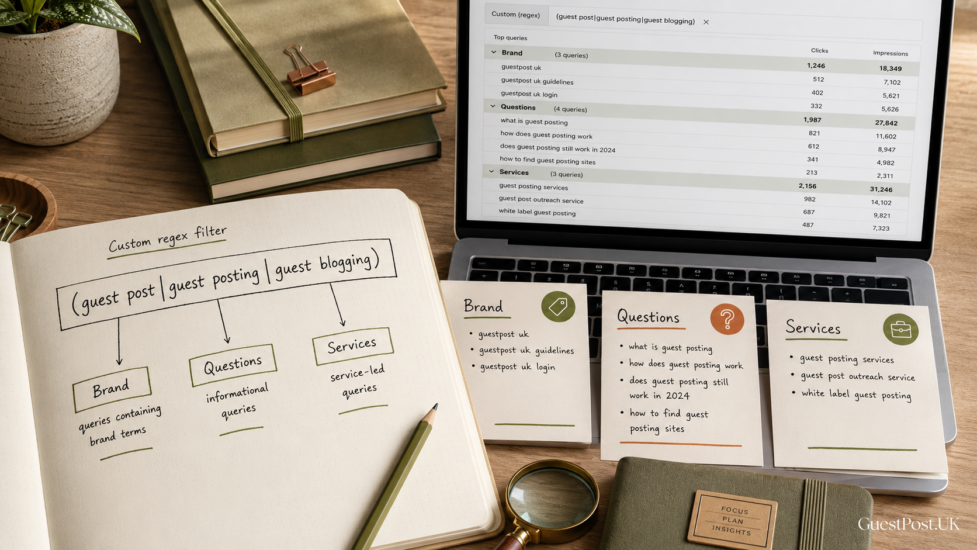
Step 6: Optimise for Questions
AI Overviews frequently respond to questions.
Structure content around:
- What
- Why
- How
- When
- Which
Examples:
What Is GEO?
Why Are AI Overviews Important?
How Does Guest Posting Help SEO?
Which Link Building Strategy Works Best?
This improves the chances of being selected for answer generation.
Step 7: Strengthen Your Entity Signals
Google increasingly understands entities rather than just keywords.
An entity may be:
- A person
- A company
- A product
- A service
- A brand
Strong entity signals include:
- Consistent branding
- Author profiles
- About pages
- Social profiles
- Industry mentions
- Structured data
The clearer Google understands your entity, the easier it becomes to associate your expertise with specific topics.
Step 8: Improve E-E-A-T Signals
Experience.
Expertise.
Authoritativeness.
Trustworthiness.
These signals continue influencing visibility.
Practical ways to improve E-E-A-T include:
- Expert author bios
- Case studies
- Testimonials
- Real images
- Transparent company information
- Cited sources
AI systems appear to favour trustworthy sources.
A Realistic 90-Day Action Plan
Month One
- Audit existing content
- Identify topic gaps
- Create pillar pages
- Improve author profiles
Month Two
- Publish supporting articles
- Add case studies
- Create comparison content
- Build internal links
Month Three
- Launch outreach campaigns
- Earn mentions
- Publish original research
- Monitor AI visibility
The businesses seeing success in AI Overviews are rarely doing one thing exceptionally well.
They’re doing many things consistently.
Common Mistakes That Prevent AI Overview Visibility
Publishing Generic Content
AI systems have seen it before.
Chasing Keywords Instead of Topics
Authority comes from depth.
Ignoring Brand Building
Recognition matters.
Weak Internal Linking
Topic relationships become unclear.
No Original Insights
Nothing worth citing.
Measuring Success
Google AI Overview visibility is still difficult to track perfectly.
Useful indicators include:
- Organic visibility
- Brand mentions
- Citation growth
- Referral traffic
- AI visibility reports
- Competitive monitoring
Tools such as:
- Profound
- Peec AI
- AthenaHQ
- Otterly AI
- Semrush AI Toolkit
- Ahrefs Brand Radar
can help monitor broader AI visibility trends.
The Future of AI Overview Optimisation
The websites dominating AI Overviews today share a common trait.
They don’t simply answer questions.
They answer questions better than everyone else.
That distinction is likely to become even more important over the next few years.
Google’s systems will continue improving.
Competition will continue increasing.
The demand for authoritative, trustworthy content will continue growing.
Final Verdict
Ranking in Google AI Overviews isn’t about discovering a secret tactic.
It’s about becoming a source Google trusts enough to feature.
Businesses that invest in:
- Topical authority
- Original content
- Digital PR
- Brand building
- E-E-A-T
- User value
They are placing themselves in the strongest position for long-term visibility.
The future belongs to websites that become sources, not just search results.
Google AI Overviews are simply accelerating that reality.