
Something unusual has happened over the past two years.
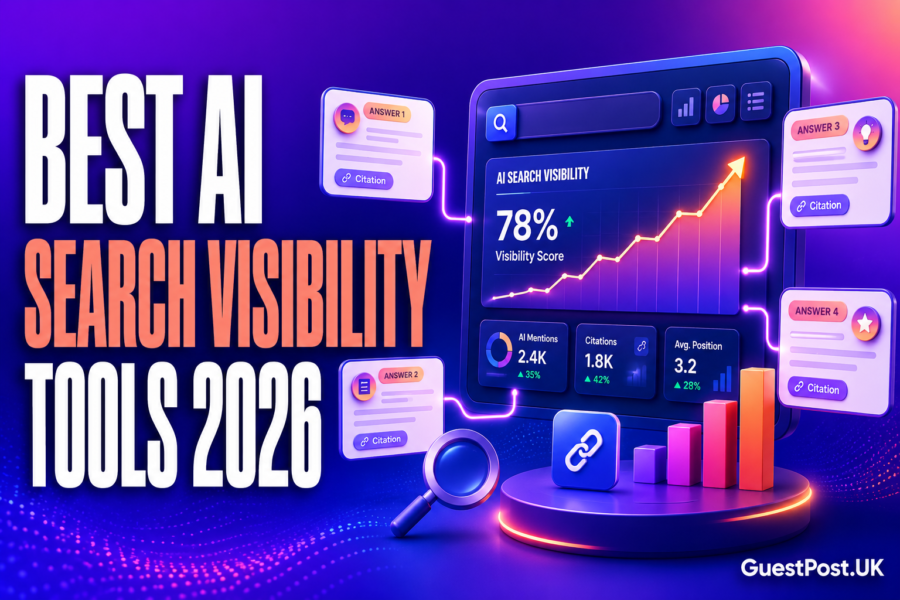
For the first time in decades, SEO professionals have started asking a question that doesn’t involve Google rankings.
The question is:
“How often does AI recommend my brand?”
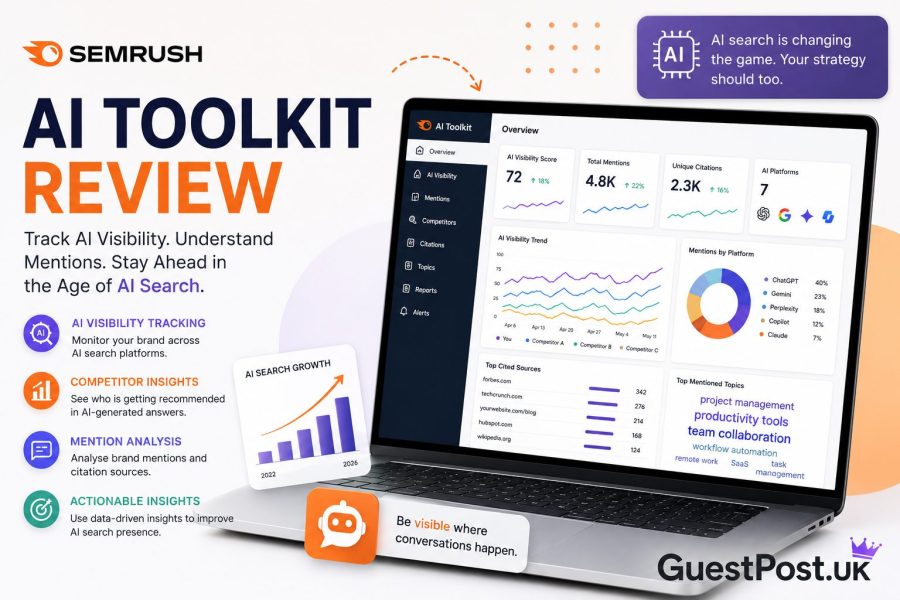
That single question explains why products like Semrush AI Toolkit now exist.
When one of the largest names in SEO decides to invest heavily in AI visibility monitoring, it’s usually worth paying attention.
Not because every new feature is revolutionary.
But it often signals where the industry is heading next.
After spending time analysing Semrush AI Toolkit, my biggest takeaway wasn’t actually about the software itself.
It was about what the software represents.
The Industry Is Chasing a New KPI
For years, the key performance indicators were obvious.
- Rankings
- Traffic
- Leads
- Revenue
Those metrics still matter.
But AI search is quietly creating a new KPI.
Recommendation Share.
Imagine two CRM companies.
Company A ranks #1.
Company B ranks #3.
Historically, Company A wins.
Now imagine ChatGPT recommends Company B in most relevant conversations.
Suddenly, rankings don’t tell the entire story anymore.
Semrush clearly recognises this shift.
The AI Toolkit appears to be their answer.
Why Semrush Entering GEO Matters
New startups entering GEO aren’t surprising.
Startups chase opportunities.
What is interesting is seeing established SEO companies enter the space.
Semrush has spent years helping businesses understand search engines.
Now they’re helping businesses understand answer engines.
That’s a significant distinction.
Search engines return results.
Answer engines return conclusions.
The optimisation strategy behind each is not identical.
The Most Interesting Insight I Found
The biggest insight wasn’t a feature.
It was a pattern.
Brands that perform well in AI-generated answers often share similar characteristics.
They tend to have:
- Strong topical authority
- Consistent publishing schedules
- Quality backlinks
- Industry mentions
- Recognisable branding
- High trust signals
In other words:
AI visibility appears heavily connected to good SEO.
This is reassuring because it suggests GEO isn’t replacing SEO.
It’s building on top of it.
Why Agencies Should Pay Attention
Many agency owners are currently making one of two mistakes.
Some are completely ignoring GEO.
Others are treating GEO as a replacement for SEO.
Neither approach is particularly wise.
The smarter position sits somewhere in the middle.
Agencies should view GEO as an additional reporting layer.
When clients ask:
“How visible are we in AI search?”
You need an answer.
Tools like Semrush AI Toolkit provide that answer.
A Practical Example
Let’s imagine a cybersecurity company invests in:
- Guest posting
- Digital PR
- Content marketing
- Industry research
Six months later, backlinks improve.
Traffic improves.
Keyword rankings improve.
The traditional SEO story looks positive.
However, something else may also be happening.
ChatGPT starts mentioning the company more often.
Gemini begins referencing its research.
Perplexity cites its articles.
That visibility might not appear in traditional SEO reports.
This is where GEO measurement becomes useful.
The Relationship Between GEO and Link Building
One area that particularly interests me is link building.
For years, link builders focused on:
- Domain authority
- Domain rating
- Referral traffic
The GEO era introduces another possibility.
Authority signals may influence AI-generated recommendations.
That means future outreach campaigns may need to consider:
- Citation potential
- Brand visibility
- Expert positioning
- Topic ownership
rather than simply chasing backlinks.
This doesn’t make links less important.
It makes them more strategic.
What Semrush Seems to Understand Better Than Most
Many GEO conversations focus on technology.
Semrush appears focused on business outcomes.
That’s a subtle but important difference.
Most marketing teams don’t care about AI models.
They care about:
- Visibility
- Market share
- Revenue
- Competitive advantage
The platform appears to be designed around those outcomes rather than out of technical curiosity.
The GEO Maturity Curve
Most industries move through predictable stages.
GEO appears to be following a similar pattern.
Stage One: Dismissal
“AI search isn’t important.”
Stage Two: Curiosity
“Maybe we should monitor this.”
Stage Three: Experimentation
“Let’s test some GEO strategies.”
Stage Four: Adoption
“This is now part of our reporting.”
Stage Five: Standard Practice
Every agency includes GEO metrics.
Every brand tracks AI visibility.
My view is that we’re currently somewhere between stages two and three.
A Prediction for the Next Three Years
Most SEO predictions age badly.
Here’s one I’m reasonably comfortable making.
By 2029, AI visibility reports will become as common as keyword ranking reports.
Not because traditional search disappears.
But businesses will want visibility across both environments.
The winners won’t be those who abandon SEO.
The winners will be those who successfully combine:
- SEO
- Digital PR
- Brand building
- Content marketing
- GEO
into a single strategy.
Where Semrush AI Toolkit Fits Today
I don’t think Semrush AI Toolkit is trying to become the ultimate GEO platform.
Instead, it appears to be helping existing Semrush users understand an emerging channel.
That’s a sensible approach.
Businesses already trust Semrush.
Adding AI visibility insights allows those users to start exploring GEO without having to learn an entirely new ecosystem.
The Question Every Marketer Should Ask
Forget software for a moment.
Forget dashboards.
Forget reports.
Ask yourself one question:
“If a potential customer asked ChatGPT for recommendations in my industry today, would my brand appear?”
Most businesses cannot answer that question.
That’s exactly why GEO platforms are gaining attention.
Final Thoughts
Semrush AI Toolkit isn’t interesting because it’s another SEO feature.
It’s interesting because it highlights a broader industry shift.
The future of search is unlikely to be a Google versus AI battle.
More likely, it will be Google plus AI.
Businesses will need visibility in both environments.
The marketers who understand this early will have a significant advantage over those who still measure success only with traditional search metrics.
Whether you ultimately choose Semrush AI Toolkit, Profound, AthenaHQ, Peec AI, or another GEO platform is almost secondary.
The important thing is recognising that AI visibility is becoming a measurable marketing channel.
And once something becomes measurable, it usually becomes important.