
Five years ago, if somebody had asked how to measure search visibility, the answer would have been simple.
Check rankings.
Monitor organic traffic.
Track conversions.
Today, those answers are no longer sufficient.
A growing percentage of users are discovering brands through AI-generated responses rather than traditional search results. Whether it’s ChatGPT, Gemini, Perplexity, Claude, or Copilot, people increasingly expect answers rather than links.
For SEO professionals, this creates a new challenge.
How do you measure visibility when users never visit a search engine results page?
This is where platforms such as Goodie AI Search Analytics enter the picture.
Rather than focusing exclusively on rankings, Goodie aims to help businesses understand their performance within AI-powered discovery environments.
The Hidden SEO Problem Most Businesses Haven’t Noticed Yet
Many marketing teams continue celebrating ranking improvements.
The problem is that rankings alone may no longer tell the full story.
Consider two software companies.
Both rank on page one.
Both generate traffic.
Both earn backlinks.
However, when users ask AI assistants for recommendations, only one brand consistently appears in generated answers.
That company gains visibility before the customer even visits a website.
Traditional SEO reports rarely reveal this advantage.
Goodie AI Search Analytics attempts to close that gap.
What Exactly Is Goodie AI Search Analytics?
Goodie is part of a growing category of platforms focused on Generative Engine Optimisation (GEO).
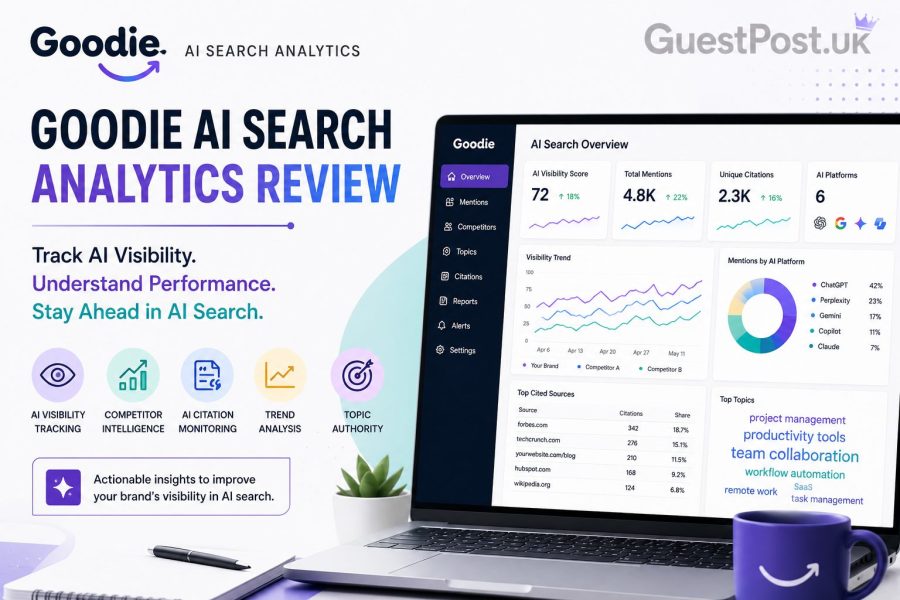
The platform is designed to monitor, analyse, and report how brands perform inside AI-generated search experiences.
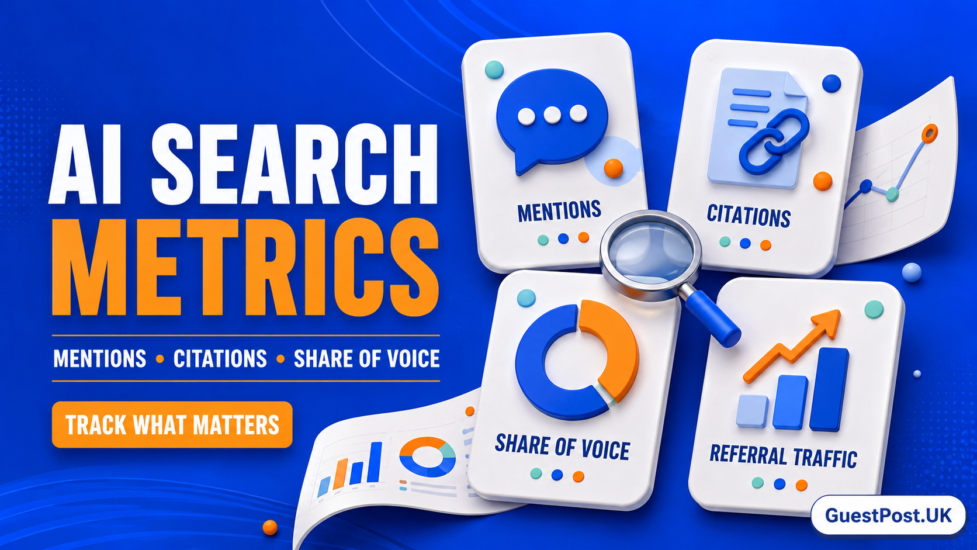
Instead of concentrating solely on rankings, Goodie focuses on:
- AI visibility
- Brand mentions
- Topic authority
- AI recommendation frequency
- Competitive positioning
- GEO performance measurement
The objective is to help businesses understand whether AI systems recognise them as authoritative sources within their market.
Why GEO Metrics Matter More Than Many People Realise
The SEO industry often adopts new concepts slowly.
We’ve seen it before with:
- Mobile-first indexing
- Core Web Vitals
- Voice search
- Entity SEO
GEO appears to be following a similar path.
Initially, only a handful of marketers pay attention.
Then adoption accelerates.
Eventually, the concept becomes standard practice.
The reason GEO is attracting attention is simple.
Users increasingly trust AI-generated recommendations.
If your brand isn’t appearing within those recommendations, visibility opportunities may be lost regardless of traditional rankings.
The Core Features That Make Goodie Interesting
AI Search Visibility Monitoring
Goodie’s primary function is to measure brand presence across AI search environments.
This allows marketers to answer important questions:
- Are we visible?
- Which topics trigger mentions?
- Which competitors appear more frequently?
- Is visibility improving?
For GEO campaigns, these insights provide a measurable benchmark.
Competitive Intelligence
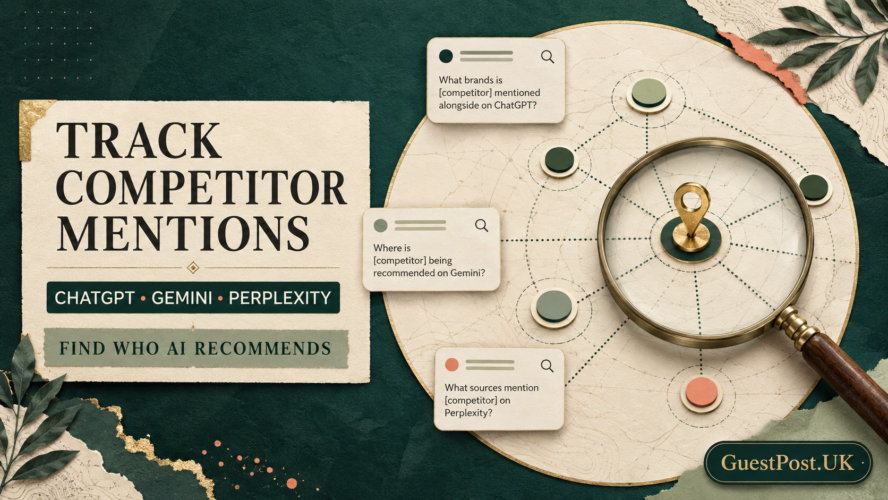
One of the most practical applications involves competitor analysis.
Businesses can identify:
- Which brands dominate AI recommendations
- Which companies are gaining momentum
- Which topics do competitors own
This creates strategic opportunities for content planning and authority building.
Topic-Level Analysis
Rather than measuring visibility only at a brand level, Goodie also helps marketers understand topic ownership.
This is useful because AI systems frequently associate brands with specific areas of expertise.
Examples might include:
- SEO software
- Cybersecurity
- Project management
- Email marketing
- CRM platforms
Understanding those associations can significantly influence content strategy.
Visibility Trend Tracking
One report means very little.
Long-term visibility trends are where genuine insight emerges.
Goodie enables marketers to monitor how AI visibility evolves over weeks and months.
This makes GEO performance measurable rather than speculative.
How Goodie Fits Into an Existing SEO Workflow
A common misconception is that GEO tools replace traditional SEO software.
They don’t.
In reality, they serve different purposes.
A modern SEO stack may look like this:
| Objective | Recommended Tool Type |
|---|---|
| Keyword Research | Traditional SEO Platform |
| Technical Audits | Traditional SEO Platform |
| Backlink Analysis | Traditional SEO Platform |
| AI Visibility Tracking | GEO Platform |
| AI Citation Monitoring | GEO Platform |
| Brand Recommendation Analysis | GEO Platform |
The two categories increasingly complement each other.
Who Will Benefit Most From Goodie?
SEO Agencies
Agencies need reporting frameworks for emerging search channels.
Goodie provides measurable GEO insights that clients can understand.
SaaS Businesses
Software companies are frequently recommended in AI-generated answers.
Monitoring that visibility can become a competitive advantage.
Digital PR Teams
Many GEO opportunities overlap with authority-building and brand visibility efforts.
Understanding which brands AI systems trust can shape outreach campaigns.
Content Marketing Teams
Goodie can help identify content gaps and emerging opportunities before competitors recognise them.
The Relationship Between GEO and Digital PR
This is one of the most interesting developments happening right now.
Historically, digital PR focused on:
- Brand awareness
- Media coverage
- Backlinks
It may increasingly influence AI visibility.
Why?
Because AI systems frequently rely on authoritative sources when generating answers.
Brands earning coverage on trusted publications often improve both traditional SEO and AI visibility simultaneously.
This overlap makes GEO particularly interesting for agencies offering guest posting, outreach, and digital PR services.
A Realistic Look at the Limitations
The GEO industry remains relatively young.
No platform currently provides perfect visibility across every AI ecosystem.
Businesses should understand several realities.
AI Platforms Change Frequently
Models evolve continuously.
Tracking methodologies must adapt.
Industry Standards Are Still Developing
Unlike keyword rankings, GEO metrics do not yet have universally accepted benchmarks.
Traditional SEO Remains Critical
Strong GEO performance rarely exists without strong SEO fundamentals.
Content quality, authority, expertise, and trust still matter.
Goodie AI Search Analytics vs Other GEO Platforms
Goodie vs Profound
Profound often appeals to larger organisations seeking enterprise reporting.
Goodie feels more focused on visibility insights and trend analysis.
Goodie vs AthenaHQ
AthenaHQ leans heavily into strategic intelligence.
Goodie provides a more focused approach to visibility monitoring.
Goodie vs Otterly AI
Otterly excels at prompt tracking and recommendation monitoring.
Goodie places greater emphasis on broader visibility analytics.
What the Future of GEO Might Look Like
A simplified progression could look like this:
2019
SEO Strategy = Rankings + Traffic
2023
SEO Strategy = Rankings + Traffic + Brand Signals
2026
SEO Strategy = Rankings + Traffic + Brand Signals + GEO
2030
SEO Strategy = SEO + GEO + AI Visibility Management
Whether that timeline proves perfectly accurate is less important than the underlying trend.
AI-generated discovery is becoming part of the search ecosystem.
Businesses that ignore it may eventually find themselves reacting rather than leading.
Common Questions About Goodie AI Search Analytics
Is Goodie an SEO tool?
Partly.
It focuses primarily on GEO and AI visibility rather than traditional SEO metrics.
Can Goodie improve rankings?
Not directly.
Its purpose is measurement and analysis rather than optimisation.
Does AI visibility matter today?
For many industries, yes.
Particularly SaaS, technology, B2B services, education, finance, and digital marketing.
Is GEO replacing SEO?
No.
GEO is emerging as an additional layer rather than a replacement.
Who should consider Goodie?
Agencies, content marketers, SaaS companies, digital PR professionals, and businesses preparing for the future of AI search.
Final Verdict: Is Goodie AI Search Analytics Worth Watching?
Goodie AI Search Analytics represents a growing shift within the SEO industry.
Rather than focusing solely on rankings and traffic, it helps businesses understand visibility inside AI-generated search experiences.
The platform won’t replace traditional SEO tools.
It doesn’t need to.
Its value lies in helping marketers measure a new layer of visibility that is becoming increasingly important as AI-assisted discovery grows.
For organisations exploring Generative Engine Optimisation and looking beyond conventional SEO metrics, Goodie AI Search Analytics is certainly a platform worth monitoring as the GEO market continues to mature.